
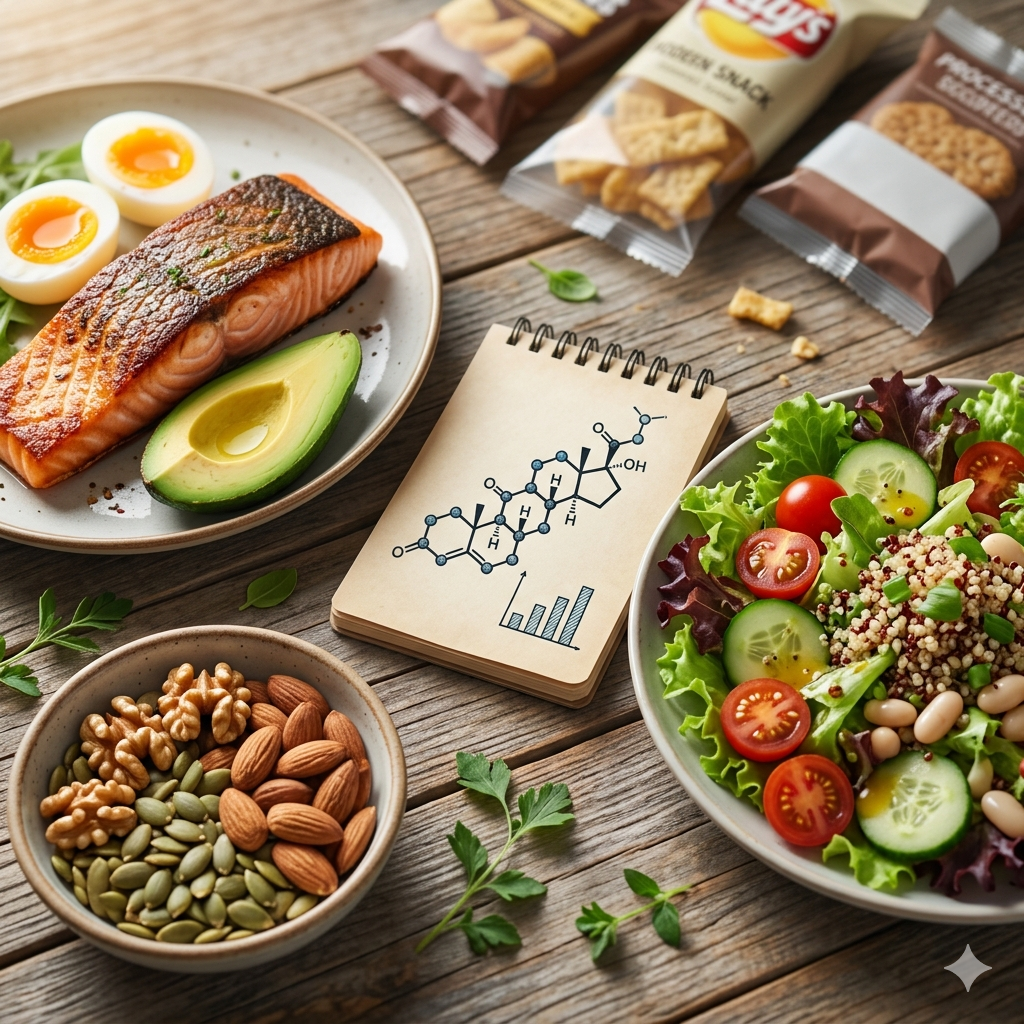
Imagine a dinner table where three guests are always arguing.
The first guest is cholesterol. It has a terrible reputation. People hear the word and immediately think of clogged arteries, blood tests, and foods they should avoid.
The second guest is fat. It has been blamed, feared, celebrated, restricted, and rebranded many times. One decade says “eat less fat.” Another says “eat more healthy fat.” Some people fear butter. Others add oil to everything.
The third guest is animal food. Meat, eggs, dairy, fish, shellfish, organs, and animal fats have nourished many traditional cultures, but they also sit at the center of modern debates about heart health, sustainability, ethics, and processed food.
These three guests are often discussed together, but they are not the same thing.
Cholesterol is not the same as fat.
Dietary cholesterol is not the same as blood cholesterol.
Animal foods are not all identical.
Fresh fish is not the same as processed meat.
Eggs are not the same as butter.
Yogurt is not the same as ice cream.
A traditional stew is not the same as a fast-food meal.
To understand cholesterol, fat, and animal foods, we need to move beyond fear and beyond hype.
The better question is not “Are animal foods good or bad?”
The better question is: what kind of animal food, prepared how, eaten how often, in what overall diet, and for which person?
Cholesterol: The Word That Scares People
Cholesterol is often treated like a villain, but the body actually needs cholesterol.
Cholesterol is a waxy substance found in the body. It is used to build cell membranes and make certain hormones, bile acids, and vitamin D-related compounds. The body produces cholesterol because it has important roles.
The confusion begins because cholesterol is also measured in blood tests. When people hear about “high cholesterol,” they are usually talking about blood cholesterol patterns, especially LDL cholesterol, HDL cholesterol, triglycerides, and related markers.
Food cholesterol and blood cholesterol are connected, but not in a simple one-to-one way.
Eating a food that contains cholesterol does not automatically mean the same amount of cholesterol appears in your blood. The body regulates cholesterol production and absorption in complex ways. However, diet still matters, especially overall dietary pattern, saturated fat intake, trans fat intake, fiber intake, body weight, genetics, activity, and metabolic health.
This is why cholesterol discussions become confusing.
A food can contain cholesterol but affect people differently depending on the whole diet and the person.
Dietary Cholesterol vs Blood Cholesterol
Dietary cholesterol is cholesterol found in foods. It is found only in animal-derived foods such as eggs, meat, poultry, fish, shellfish, and dairy.
Blood cholesterol refers to cholesterol carried in the bloodstream by particles such as LDL and HDL.
LDL is often called “bad cholesterol,” although it is more accurately a cholesterol-carrying particle involved in transport. High levels of LDL cholesterol are commonly used as a risk marker for cardiovascular disease. HDL is often called “good cholesterol,” though even HDL is more complex than the nickname suggests.
The key point is this: dietary cholesterol is only one part of the blood cholesterol story.
For many people, saturated fat has a stronger effect on LDL cholesterol than dietary cholesterol itself. Genetics also matter. Some people respond more strongly to dietary cholesterol than others. People with diabetes, genetic lipid disorders, or cardiovascular risk may need more personalized guidance.
This is why simple advice like “never eat eggs” or “cholesterol in food does not matter at all” can both be misleading.
The truth lives in context.
Fat Is Not One Thing
Fat is a broad category.
When people say “fat,” they may be talking about very different things:
Saturated fat
Monounsaturated fat
Polyunsaturated fat
Omega-3 fat
Omega-6 fat
Trans fat
Animal fat
Dairy fat
Fish fat
Nut and seed oils
Olive oil
Coconut oil
Industrial frying oils
Fat hidden in processed foods
These fats do not all behave the same way.
Some fats are essential, meaning the body needs them from food. Omega-3 and omega-6 fats are examples. Some fats are generally considered more beneficial when they replace less healthy fats, such as unsaturated fats from olive oil, nuts, seeds, avocado, and fish. Trans fats from partially hydrogenated oils are widely considered harmful and are avoided in modern nutrition guidance.
Saturated fat is more complicated in public discussion, but many health organizations still recommend limiting it, especially when it comes from fatty meats, butter, full-fat dairy, and many processed foods.
This does not mean every food containing saturated fat is automatically forbidden. It means saturated fat should be understood as part of the whole dietary pattern.
A person eating yogurt, vegetables, beans, fish, fruit, and whole foods is in a different situation than someone eating fast food, processed meats, pastries, fried snacks, and sugary drinks.
Animal Foods Are Not All the Same
Animal foods are often grouped together, but this can create confusion.
Consider the difference between:
Salmon
Sardines
Eggs
Plain yogurt
Aged cheese
Butter
Beef stew
Chicken soup
Organ meats
Shellfish
Processed deli meat
Bacon
Sausages
Fast-food burgers
Fried chicken
Ice cream
Sweetened dairy drinks
All of these are animal-derived or include animal foods, but they have very different nutritional profiles, preparation methods, and roles in the diet.
Fish may provide omega-3 fats. Eggs provide protein, choline, and cholesterol. Yogurt provides protein and fermented dairy cultures if live cultures are present. Cheese provides protein and calcium but can also be high in saturated fat and sodium. Butter is mostly fat. Processed meats can be high in sodium, preservatives, and saturated fat. Fried animal foods may include refined oils and breading.
This is why saying “animal foods are healthy” or “animal foods are unhealthy” is too broad.
The category is too large.
The real question is which animal food, how much, how often, and in what form.
Traditional Animal Foods vs Modern Animal Products
Traditional diets often used animal foods differently from modern diets.
In many traditional cultures, animal foods were valuable and respected. Meat was not always available daily. Fish was seasonal or tied to geography. Dairy was often fermented into yogurt, kefir, cheese, or cultured milk. Bones became broth. Organs were used. Fat was not wasted. Small amounts of preserved animal foods could flavor large meals.
Animal foods were part of a system.
A small amount of meat might enrich a pot of beans. Fish sauce could season rice and vegetables. Yogurt could balance spicy foods. Bone broth could stretch nutrients and flavor. Eggs could complete a simple meal. Cheese could preserve milk. Dried fish could last through difficult seasons.
Modern animal products are often different.
Meat may be eaten in large portions, several times a day. Processed meats may become daily breakfast or lunch staples. Dairy may appear as sweetened desserts. Fried chicken may replace home-cooked meals. Fast-food burgers may come with refined buns, fries, sauces, and soda.
The animal food itself is only part of the story. The modern food pattern around it changes everything.
The Saturated Fat Question
Saturated fat is found in many animal foods, especially fatty meats, butter, cheese, cream, and full-fat dairy. It is also found in some plant sources such as coconut oil and palm oil.
Saturated fat is important because it can raise LDL cholesterol in many people. LDL cholesterol is one of the major markers doctors look at when assessing cardiovascular risk.
This does not mean a single food containing saturated fat is automatically dangerous. It means habitual intake and overall dietary pattern matter.
For example, a small amount of cheese in a meal rich in vegetables, legumes, fruit, and whole foods is different from a diet based heavily on processed meats, butter-rich pastries, fried foods, and low fiber intake.
A helpful approach is to ask:
How much saturated fat am I eating regularly?
Is it coming from whole foods or ultra-processed foods?
What foods are replacing it?
Am I eating enough unsaturated fats, fiber, and plant foods?
Do I have high LDL cholesterol or other risk factors?
The replacement matters. Replacing saturated fat with refined sugar and white flour is not the same as replacing it with olive oil, nuts, seeds, legumes, or fish.
Cholesterol in Eggs: Why the Debate Continues
Eggs are one of the most debated cholesterol-containing foods.
Egg yolks contain cholesterol, but they also contain nutrients such as choline, fat-soluble vitamins, and other compounds. Eggs provide high-quality protein and are part of many traditional diets.
For many healthy people, moderate egg intake can fit into a balanced diet. But some individuals may need more caution, especially people with diabetes, high LDL cholesterol, familial hypercholesterolemia, or specific medical advice to limit cholesterol intake.
The way eggs are eaten also matters.
Eggs with vegetables, herbs, and a traditional starch are different from eggs eaten daily with bacon, sausage, fried potatoes, and refined toast. Boiled eggs in a salad are different from egg-heavy fast-food breakfast sandwiches.
The egg is not the whole breakfast.
A balanced view does not turn eggs into a miracle food or a forbidden food. It treats them as a nutrient-dense animal food that should fit the person’s health context and overall diet.
Dairy Fat: Yogurt, Cheese, Butter, and Ice Cream Are Different
Dairy is another category that causes confusion.
Milk, yogurt, kefir, cheese, butter, cream, and ice cream all come from dairy, but they are not nutritionally identical.
Plain yogurt and kefir are fermented dairy foods that may provide protein, calcium, and live cultures if not heat-treated after fermentation. Cheese is concentrated, often higher in sodium and saturated fat, but can provide protein and calcium. Butter is mostly dairy fat. Ice cream is a dessert that often contains sugar, fat, and flavorings.
Traditional dairy cultures often fermented milk because fresh milk spoils quickly. Fermentation also changed flavor, texture, and lactose content. Yogurt, kefir, and cheese were ways to preserve milk and make it more useful.
Modern dairy products can be very different. Sweetened yogurt, flavored milk, ice cream, whipped desserts, and processed cheese products may contain added sugar, refined ingredients, and additives.
When discussing dairy, it is better to separate fermented dairy, whole milk, cheese, butter, and sweetened dairy desserts.
They do not play the same role.
Meat: Fresh, Fatty, Lean, Processed, or Fast Food?
Meat is not one single food.
A lean piece of meat in a vegetable stew is different from processed sausage. Slow-cooked lamb with lentils is different from fast-food bacon cheeseburgers. Chicken soup is different from fried chicken nuggets. A small amount of meat used for flavor is different from oversized daily portions of fatty cuts.
Fresh meat can provide protein, iron, zinc, vitamin B12, and other nutrients. But fatty cuts can also provide more saturated fat. Processed meats may add sodium, preservatives, smoke compounds, and other concerns. Fried meats may add refined oils and breading.
This is why meat quality and preparation matter.
A balanced approach might include:
Choosing fresh or minimally processed meats more often
Using smaller portions when appropriate
Pairing meat with vegetables, legumes, herbs, and traditional starches
Choosing leaner cuts if saturated fat is a concern
Limiting processed meats
Avoiding frequent deep-fried meat meals
Using meat as part of a meal rather than the whole meal
Traditional meat wisdom was often about use, balance, and respect.
Modern meat habits often need more of that.
Fish Fat: A Different Animal Food Story
Fish is an animal food, but its fat profile can be very different from land animals.
Fatty fish such as sardines, salmon, mackerel, herring, trout, and anchovies can provide omega-3 fats EPA and DHA. These fats are important in the body and are one reason fish is often recommended in balanced eating patterns.
However, fish is not perfect. Mercury, pollutants, sustainability, allergies, and food safety all matter. Larger predatory fish may contain more mercury. Raw fish requires careful handling. Fried fish is not the same as grilled or steamed fish.
Still, fish is a useful example of why animal foods should not all be grouped together.
A sardine, an egg, a steak, butter, yogurt, and bacon are all animal foods, but they are very different.
The category “animal food” is too broad to judge without details.
Organ Meats: Nutrient-Dense but Not for Everyone
Traditional diets often used organ meats such as liver, heart, kidney, and other parts of animals. Organ meats can be nutrient-dense and provide vitamins and minerals in concentrated amounts.
Liver, for example, can contain high levels of vitamin A, iron, copper, and B vitamins. This can be useful in some contexts, but it also means portion and frequency matter. More is not always better. Excessive intake of certain nutrients, especially preformed vitamin A from liver, can be a concern, particularly during pregnancy or with frequent large portions.
Organ meats also require cultural acceptance. Many modern eaters avoid them because they are unfamiliar, strong-tasting, or emotionally uncomfortable.
The balanced view is this: organ meats can be traditional and nutrient-dense, but they are not necessary for everyone and should be eaten thoughtfully.
Nutrient density requires respect.
The Modern Processed Food Problem
Many cholesterol and fat problems in modern diets are not caused by traditional animal foods alone. They are caused by the modern processed food pattern.
This pattern often includes:
Processed meats
Fast food
Fried foods
Refined grains
Sweetened dairy desserts
Pastries made with butter or refined oils
Sugary drinks
Low fiber intake
Large portions
Frequent snacking
Low physical activity
Few vegetables and legumes
In this environment, animal foods may appear in their least helpful forms: bacon, hot dogs, sausage, fried chicken, processed cheese, ice cream, fast-food burgers, and creamy desserts.
This is very different from traditional animal-food meals built around soups, stews, fish, yogurt, eggs, vegetables, roots, fermented foods, herbs, and shared meals.
The problem is often the pattern, not one ingredient.
If a person improves the pattern, animal foods can be judged more clearly.
Fiber: The Missing Partner in Fat Discussions
When people discuss cholesterol and fat, they often forget fiber.
Fiber is found in plant foods such as beans, lentils, oats, barley, fruits, vegetables, nuts, seeds, and whole grains. Soluble fiber, in particular, can help support healthy cholesterol patterns as part of an overall diet.
Traditional diets that included animal foods often also included plant foods: roots, grains, beans, vegetables, herbs, fruits, fermented plant foods, and legumes.
Modern animal-heavy diets may lack fiber if they are built around meat, cheese, refined bread, fried foods, and few plants.
This matters.
If someone eats animal foods, it is still important to include fiber-rich foods unless medically restricted. A meal with fish, vegetables, beans, and olive oil is different from a meal of processed meat and refined bread.
Fat discussions should not ignore plants.
Unsaturated Fats: The Helpful Replacements
When reducing saturated fat, what you eat instead matters.
Replacing saturated fat with refined carbohydrates and sugar may not improve diet quality. Replacing some saturated fats with unsaturated fats from foods such as olive oil, nuts, seeds, avocado, and fish may be more helpful in many eating patterns.
This is why Mediterranean-style diets are often discussed in heart health contexts. They typically emphasize olive oil, fish, nuts, legumes, vegetables, fruits, and whole grains rather than large amounts of butter, processed meat, and refined snacks.
The practical lesson is not “never eat animal foods.” It is to improve the fat pattern.
Use more unsaturated fat sources.
Eat fatty fish if appropriate.
Include nuts and seeds in reasonable amounts.
Cook with oils intentionally.
Limit deep-fried and ultra-processed foods.
Use butter and high-saturated-fat foods thoughtfully.
Build meals around whole foods.
The replacement is the key.
Why Blood Tests Matter More Than Food Ideology
People respond differently to food.
One person may eat eggs regularly and have normal lipid markers. Another may see LDL rise with a high saturated fat or high cholesterol diet. Genetics, liver metabolism, gut health, weight, insulin sensitivity, thyroid status, medications, activity, and overall diet all matter.
This is why blood tests are useful.
Instead of arguing only from diet ideology, people can look at markers with a healthcare professional:
LDL cholesterol
HDL cholesterol
Triglycerides
Non-HDL cholesterol
ApoB when available
Blood pressure
Blood sugar markers
Inflammation markers when appropriate
Family history
Overall cardiovascular risk
Food choices should be guided by real health context.
A diet that feels good emotionally may still need adjustment if blood markers are concerning. A food that is generally fine for many people may not be ideal for someone with genetic high cholesterol.
Personal data matters.
The “Ancestral” View: Useful but Not Absolute
An ancestral nutrition perspective can help us understand animal foods, fat, and cholesterol.
Humans have eaten animal foods for a long time. Many traditional cultures used meat, fish, eggs, dairy, insects, shellfish, and animal fats in different ways. This suggests animal foods can fit human diets.
But ancestral eating does not automatically justify every modern animal-food pattern.
Our ancestors did not live in the same food environment. They did not eat fast food daily. They did not have unlimited processed meats. They did not combine large portions of fatty meat with refined flour, sugar, and low movement in the same way modern diets often do.
Ancestral nutrition gives clues, not permission for excess.
The best use of ancestral thinking is to ask:
Was this food traditionally eaten?
How was it prepared?
How often was it available?
What was it eaten with?
What lifestyle surrounded it?
How has the modern version changed?
These questions create a more intelligent view of animal foods.
A Better Framework for Animal Foods
Instead of asking whether animal foods are good or bad, use this five-part framework.
1. Type
Is it fish, eggs, yogurt, cheese, meat, organ meat, shellfish, butter, processed meat, or sweetened dairy?
2. Processing
Is it fresh, fermented, dried, smoked, cured, fried, ultra-processed, or sweetened?
3. Fat profile
Is it high in saturated fat, rich in omega-3, mostly lean protein, or mainly added fat?
4. Meal context
Is it eaten with vegetables, legumes, whole grains, roots, herbs, and fermented foods, or with refined starches and sugary drinks?
5. Personal health
What do your blood markers, family history, digestion, activity level, and medical needs suggest?
This framework is more useful than food fear.
Practical Ways to Eat Animal Foods More Wisely
Here are realistic strategies:
Choose fresh or minimally processed animal foods more often.
Eat fish regularly if it fits your needs and safety guidance.
Use eggs in balanced meals with vegetables and fiber-rich foods.
Choose plain yogurt or kefir over sweetened dairy desserts.
Use cheese as a flavor food, not the foundation of every meal.
Limit processed meats such as bacon, sausages, hot dogs, and deli meats.
Choose leaner cuts if saturated fat or LDL cholesterol is a concern.
Cook meat in soups, stews, or balanced dishes instead of always frying.
Pair animal foods with vegetables, beans, herbs, roots, or whole grains.
Use butter, cream, and high-saturated-fat foods thoughtfully.
Read labels for saturated fat, trans fat, sodium, and added sugar.
Check blood markers and consult professionals when needed.
These steps allow animal foods to fit into a balanced modern diet.
What About Low-Fat Diets?
Low-fat diets were popular for many years. Some people still do well with lower-fat eating patterns, especially when they emphasize whole foods, vegetables, fruits, legumes, and grains rather than low-fat processed products.
But low-fat does not automatically mean healthy.
Low-fat cookies, sweetened yogurts, refined cereals, and sugary snacks can still be poor choices. Removing fat but adding sugar and refined starch does not necessarily improve the diet.
The quality of the whole diet matters more than a simple fat percentage.
Some people feel better with moderate fat intake from fish, olive oil, nuts, seeds, eggs, yogurt, or avocado. Others need lower saturated fat because of cholesterol concerns.
The best approach depends on the person.
What About High-Fat Diets?
High-fat diets are also popular, especially low-carb and ketogenic approaches.
Some people report improved satiety, blood sugar control, or weight changes when reducing refined carbohydrates and increasing fat. But high-fat diets vary widely. A diet based on fish, olive oil, eggs, vegetables, nuts, and whole foods is different from one based heavily on butter, bacon, processed meats, cream, and low-fiber foods.
High saturated fat intake can raise LDL cholesterol in many people. Some individuals experience significant LDL increases on high-fat or ketogenic diets. That does not happen to everyone, but it is important enough to monitor.
If someone follows a high-fat diet, they should track blood markers and work with a healthcare professional, especially if they have cardiovascular risk factors.
Feeling good is valuable, but objective markers matter too.
How to Read Labels for Fat and Cholesterol
Food labels can help readers make better choices.
Look for:
Total fat
Saturated fat
Trans fat
Cholesterol
Sodium
Added sugars
Serving size
Ingredients
Fiber
Protein
Serving size matters because a small label number can become large if the real portion is bigger.
For example, a food may list moderate saturated fat per serving, but if someone eats three servings, the intake changes. Processed meats may be high in sodium. Sweetened dairy may contain added sugar. Packaged snacks may contain refined oils.
Labels are not perfect, but they help reveal hidden fats and additives.
Traditional whole foods do not always come with labels, but packaged foods do. Use that information.
Common Myths About Cholesterol, Fat, and Animal Foods
Myth 1: All cholesterol in food is dangerous
Dietary cholesterol affects people differently. The whole diet, saturated fat intake, genetics, and health status matter.
Myth 2: Fat is always bad
The body needs fat. The type, amount, source, and overall diet pattern matter.
Myth 3: Animal foods are all the same
Fish, eggs, yogurt, cheese, butter, fresh meat, and processed meat are very different foods.
Myth 4: If a food is ancestral, it is automatically healthy today
Traditional context matters. Modern portions, processing, and sedentary lifestyles change the effect of foods.
Myth 5: Saturated fat does not matter at all
Many guidelines still recommend limiting saturated fat, especially for people with LDL cholesterol concerns. Individual response should be monitored.
Myth 6: Plant foods do not matter in cholesterol discussions
Fiber-rich plant foods can play an important role in balanced eating patterns.
Myth 7: Processed meat is the same as traditional meat
Processed meats often contain more sodium, preservatives, and processing-related concerns. They should not be treated as identical to fresh meat.
A Simple Plate Example
A more balanced animal-food meal might look like this:
A protein source: fish, eggs, chicken, yogurt, lean meat, shellfish, or legumes
A plant base: vegetables, greens, herbs, mushrooms, or fermented vegetables
A fiber-rich food: beans, lentils, oats, barley, fruit, roots, or whole grains if tolerated
A fat source: olive oil, nuts, seeds, avocado, fish fat, or modest dairy fat
A flavor element: vinegar, lemon, herbs, spices, yogurt sauce, mustard, or fermented condiment
This kind of plate respects both traditional food wisdom and modern nutrition science.
It does not require fear. It requires balance.
When to Seek Professional Guidance
Cholesterol and fat intake should be personalized if you have:
High LDL cholesterol
High triglycerides
Heart disease
Diabetes
Kidney disease
Liver disease
Familial hypercholesterolemia
High blood pressure
History of stroke or heart attack
Pregnancy-related concerns
Eating disorder history
Major dietary changes planned
Medication use that affects lipids or bleeding risk
A qualified healthcare professional can help interpret blood tests and recommend an appropriate diet.
General articles can educate, but they cannot replace personal medical care.
Conclusion: From Fear to Understanding
Cholesterol, fat, and animal foods are often misunderstood because they are discussed too simply.
Cholesterol is not just a villain. The body needs it, but blood cholesterol patterns matter. Fat is not one thing. Different fats have different effects. Animal foods are not one category. Fish, eggs, yogurt, butter, meat, organ meats, shellfish, and processed meats all deserve separate thinking.
The most useful approach is not fear and not blind enthusiasm.
It is context.
What food is it?
How processed is it?
What kind of fat does it contain?
How often do you eat it?
What do you eat with it?
What are your blood markers?
What does your doctor or dietitian recommend for your situation?
Does the food fit a pattern of long-term wellbeing?
Traditional diets teach us that animal foods can be valuable, but they were often used with respect, preparation, and balance. Modern nutrition science teaches us that saturated fat, trans fat, fiber, LDL cholesterol, and overall dietary patterns matter.
The wisest approach combines both.
Eat real foods more often.
Limit ultra-processed foods.
Choose animal foods thoughtfully.
Include fiber-rich plants.
Use unsaturated fats wisely.
Be careful with processed meats.
Monitor your health markers.
Personalize your diet.
Cholesterol, fat, and animal foods do not need to be feared. They need to be understood.
And once they are understood, the dinner table becomes less of a battlefield and more of a place for informed, balanced choices.
Disclaimer: This article is for educational purposes only and is not medical advice. Cholesterol, fat intake, and animal food choices should be personalized based on health status, blood lipid levels, family history, medications, cardiovascular risk, kidney function, pregnancy-related concerns, and dietary needs. Consult a qualified healthcare professional before making major dietary changes.