
Most people think about fat in simple categories.
Fat is good.
Fat is bad.
Eat less fat.
Eat more healthy fat.
Avoid saturated fat.
Choose plant oils.
Eat fish oil.
Use olive oil.
Cut fried foods.
But the real story of dietary fat is more interesting than that.
Inside the foods we eat are different families of fats, each with different roles in the body. Two of the most discussed are omega-3 and omega-6 fatty acids. They are both essential, which means the body needs them and cannot make enough on its own. We must get them from food.
That sounds simple, but modern eating has made it complicated.
For most of human history, people got fats from whole foods: fish, shellfish, wild animals, eggs, nuts, seeds, olives, coconuts, dairy, insects, and traditional animal fats. Today, many people get a large amount of fat from refined oils, fried foods, packaged snacks, fast food, processed meats, pastries, chips, dressings, sauces, and ultra-processed products.
This shift changed not only how much fat people eat, but also what kinds of fats dominate the diet.
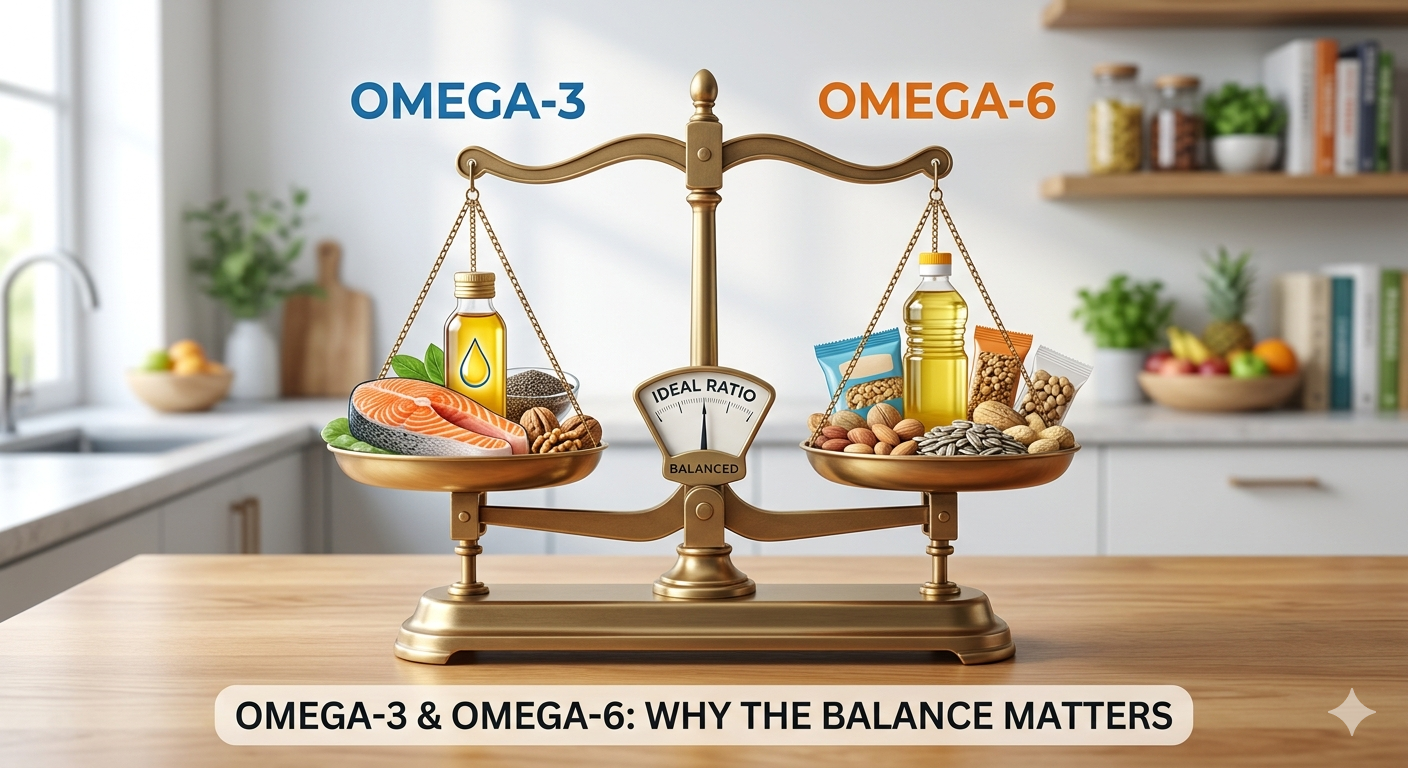
Omega-3 and omega-6 are not enemies. The body needs both. But the balance between them, and the food sources they come from, can influence how the body handles inflammation, cell signaling, brain function, and overall metabolic wellbeing.
The goal is not to fear omega-6 or worship omega-3. The goal is to understand the relationship.
What Are Omega-3 and Omega-6 Fats?
Omega-3 and omega-6 fats are types of polyunsaturated fatty acids. They are called “essential fats” because the body needs them for important functions but cannot produce them in sufficient amounts from scratch.
They help form cell membranes, support signaling between cells, and play roles in immune and inflammatory responses. They are not just stored energy. They are active parts of biology.
The main omega-3 fats include:
ALA, found in plant foods such as flaxseeds, chia seeds, walnuts, and some leafy plants.
EPA, found mainly in fatty fish, seafood, and algae-based sources.
DHA, found mainly in fatty fish, seafood, and algae-based sources.
The main omega-6 fat is:
LA, or linoleic acid, found in many seeds, nuts, and vegetable oils such as soybean oil, corn oil, sunflower oil, safflower oil, and many processed foods made with these oils.
The body can convert some ALA into EPA and DHA, but this conversion is usually limited. That is why marine omega-3 sources such as fatty fish are often emphasized.
Omega-6 fats are also essential. The body uses them for normal growth, skin health, cell function, and signaling. The issue is not that omega-6 is “bad.” The issue is that modern diets can provide omega-6 in very high amounts while omega-3 intake may remain low.
The Balance Idea: Not a War, but a Conversation
It is tempting to turn nutrition into a battle.
Omega-3 is good.
Omega-6 is bad.
But this is too simple.
Omega-3 and omega-6 fats are more like two voices in the body’s signaling system. Both are needed. Both can be useful. Problems may appear when one voice becomes extremely loud while the other becomes too quiet.
Omega-6 fats can be used to produce compounds involved in inflammatory responses. That does not mean omega-6 causes “bad inflammation” automatically. Inflammation is not always bad. It is part of healing, immune defense, and normal body function.
Omega-3 fats can help produce compounds involved in resolving or balancing inflammatory processes. But omega-3 does not mean “more is always better.” Too much supplementation or unbalanced intake can also be inappropriate for some people.
The point is balance.
A healthy body needs the ability to create a response and resolve a response. Omega-6 and omega-3 fats both help participate in that larger system.
The modern problem is often not that omega-6 exists. It is that omega-6-rich refined oils and processed foods have become extremely common, while omega-3-rich foods such as fatty fish are eaten less often by many people.
How Traditional Diets Got Fats Differently
Traditional diets usually got fats from whole foods.
A coastal community might get more omega-3 from fish, shellfish, seaweed, and marine foods. A pastoral community might get fats from dairy, meat, and animal products. A Mediterranean community might use olives, nuts, fish, and seasonal foods. A tropical community might use coconut, fish, insects, nuts, seeds, or other local fats.
In most traditional settings, fat came with a food matrix.
Fish came with protein, minerals, and traditional cooking methods. Nuts and seeds came with fiber and minerals. Dairy came with protein and fermentation in many cultures. Eggs came with other nutrients. Animal fat came with whole-animal cooking. Plant fats came from olives, coconuts, nuts, seeds, or whole ingredients rather than large amounts of refined industrial oils.
Modern diets changed this.
Now, many fats come from invisible oils hidden inside processed foods. People may not think they are eating much oil, but they may consume it through chips, crackers, fried foods, sauces, dressings, pastries, packaged meals, fast foods, and snack products.
This makes the omega-3 and omega-6 conversation more important.
The issue is not only the fat itself. It is the food system delivering it.
Why Modern Diets Can Be High in Omega-6
Omega-6 fats are found naturally in many foods, including nuts and seeds. But modern diets often get large amounts from refined vegetable oils.
Common omega-6-rich oils include:
Soybean oil
Corn oil
Sunflower oil
Safflower oil
Cottonseed oil
Grapeseed oil
Some blended vegetable oils
These oils are often used in processed foods because they are affordable, widely available, and useful for manufacturing. They appear in salad dressings, mayonnaise, fried foods, chips, crackers, frozen meals, baked goods, sauces, and many packaged snacks.
A person may not pour soybean oil into a pan at home, but they may still consume it through restaurant meals and packaged foods.
This matters because omega-6 intake has increased in many modern diets as industrial seed oils and ultra-processed foods have become more common.
Again, omega-6 itself is essential. The concern is the pattern: high intake of refined omega-6-rich oils, low intake of omega-3-rich foods, and frequent consumption of ultra-processed foods.
Why Omega-3 Intake Is Often Low
Omega-3 intake can be low for several reasons.
Many people do not eat fatty fish regularly. Some dislike the taste. Some live far from fresh seafood. Some avoid fish for ethical, religious, environmental, allergy, or cost reasons. Some eat fish occasionally but choose lean fish that are lower in omega-3. Some rely mainly on processed foods that contain little omega-3.
Plant omega-3 sources such as flaxseeds, chia seeds, and walnuts can provide ALA, but the body does not convert ALA into EPA and DHA very efficiently for many people. This does not make plant sources useless. They can be valuable foods. But they may not fully replace marine sources of EPA and DHA for everyone.
This is why omega-3 is often discussed in relation to fatty fish.
Foods such as sardines, salmon, mackerel, herring, anchovies, and trout can provide EPA and DHA. Algae-based sources can be an option for people who do not eat fish.
A balanced approach asks: where are your omega-3 fats actually coming from?
Omega-3 Foods: More Than Fish Oil
Omega-3 is often sold as a supplement, but food should be the first topic.
Omega-3-rich foods include:
Fatty fish such as sardines, salmon, mackerel, herring, anchovies, and trout
Some shellfish
Algae-based foods or supplements
Flaxseeds
Chia seeds
Walnuts
Hemp seeds
Certain pastured eggs or enriched eggs
Some leafy greens in smaller amounts
Fatty fish provides EPA and DHA directly. Plant foods provide ALA, which the body can convert in limited amounts.
The traditional food wisdom approach is to think in meals, not isolated pills.
Sardines with salad and potatoes.
Salmon with vegetables and rice.
Mackerel with fermented vegetables.
Chia seeds in yogurt.
Walnuts with fruit.
Ground flaxseed in oats.
Anchovies used in a sauce.
Trout with herbs and roots.
These foods bring more than omega-3. They bring protein, minerals, fiber, flavor, texture, and meal satisfaction.
Supplements may be useful for some people, but they should not distract from the value of real foods.
Omega-6 Foods: Whole Sources vs Refined Sources
Omega-6 fats are not only found in refined oils. They are also found in whole foods.
Whole-food omega-6 sources include:
Sunflower seeds
Pumpkin seeds
Sesame seeds
Walnuts
Almonds
Peanuts
Soy foods
Certain grains and legumes
Chicken and pork to varying degrees depending on feed
Eggs to varying degrees
These foods are different from refined oils in processed snacks.
A handful of seeds contains omega-6, but it also contains fiber, minerals, protein, and structure. A spoonful of tahini is not the same as a fried snack made with refined oil. Nuts and seeds can fit into a balanced diet when eaten in reasonable amounts.
The main concern is not usually omega-6 from whole foods. It is the large amount of refined omega-6-rich oils hidden in processed foods.
This distinction matters.
Instead of fearing nuts and seeds, many people would benefit more from reducing packaged snacks, fried foods, and refined oil-heavy meals.
The Omega Ratio: Useful but Not Everything
You may hear about the omega-6 to omega-3 ratio.
This ratio compares how much omega-6 a person eats compared with omega-3. Some researchers and nutrition writers argue that traditional diets had a lower ratio, while modern diets often have a much higher ratio.
The ratio can be useful as a general concept, but it should not become an obsession.
Why? Because total diet quality matters too.
A person could improve the ratio by eating more fish, but if they still eat a lot of ultra-processed food, their diet may not be balanced. Another person could reduce seed oils but still lack vegetables, protein, fiber, and overall nutrient diversity.
The ratio is a clue, not the whole map.
A practical approach is simpler:
Eat more omega-3-rich whole foods if they fit your diet.
Reduce ultra-processed foods made with refined oils.
Use stable, minimally processed fats for cooking.
Eat nuts and seeds in reasonable whole-food forms.
Build meals from real ingredients.
This approach improves the overall pattern without requiring constant math.
Inflammation: A Word That Needs Care
Omega-3 and omega-6 are often discussed in relation to inflammation. But “inflammation” is one of the most overused words in wellness.
Inflammation is not always bad. It is part of the immune system. It helps the body respond to injury and infection. Problems arise when inflammatory processes are excessive, unresolved, or linked with chronic disease patterns.
Omega-6 fats can contribute to compounds involved in inflammatory signaling. Omega-3 fats can contribute to compounds involved in balancing and resolving inflammatory responses. This is one reason balance matters.
However, inflammation is influenced by many things:
Sleep
Stress
Physical activity
Body composition
Smoking
Alcohol intake
Gut health
Food quality
Blood sugar patterns
Nutrient status
Medical conditions
Environmental exposures
Omega balance is only one piece.
A person cannot fix a highly processed diet, poor sleep, chronic stress, and low movement by taking fish oil alone.
That is why food pattern matters more than supplement thinking.
Fish: The Traditional Omega-3 Food
Fish is one of the most important traditional omega-3 foods, especially fatty fish.
Coastal and river communities often developed diets that included fish regularly. Fish could be eaten fresh, dried, smoked, fermented, salted, or cooked into soups and stews. Small fish could be eaten whole. Fish sauces and pastes could add umami to staple meals.
Fatty fish is especially valuable because it provides EPA and DHA directly.
Examples include:
Sardines
Anchovies
Herring
Mackerel
Salmon
Trout
Sablefish
Some types of tuna, though mercury levels require caution
Small oily fish are often excellent choices because they may provide omega-3 while generally being lower in mercury than large predatory fish.
The traditional lesson is not just “eat fish.” It is “choose fish wisely, prepare it simply, and eat it as part of a balanced meal.”
Mercury and Seafood Safety
Fish can be valuable, but seafood requires awareness.
Some large predatory fish may contain higher levels of mercury. Mercury exposure is especially important for pregnant people, breastfeeding people, young children, and those who need to follow specific health guidance.
Higher-mercury fish may include some large tuna, swordfish, shark, king mackerel, marlin, and certain regional species. Lower-mercury options often include sardines, anchovies, salmon, trout, herring, and many smaller fish.
Seafood safety also includes freshness, storage, cooking, and source. Raw or undercooked fish can carry foodborne illness risks. Shellfish allergies can be serious. Local water contamination can affect certain fish.
This does not mean fish should be avoided by everyone. It means fish should be chosen intelligently.
Omega-3 benefits should not make people ignore seafood safety.
What If You Do Not Eat Fish?
Not everyone eats fish.
Some people avoid fish because of allergies, taste, ethical concerns, cost, religious reasons, environmental concerns, or dietary preference.
If you do not eat fish, you can still include omega-3 sources. Plant foods such as flaxseeds, chia seeds, walnuts, and hemp seeds provide ALA. Algae-based EPA and DHA supplements may be an option for some people, especially those following vegan or vegetarian diets.
However, because conversion of ALA to EPA and DHA can be limited, people who avoid fish may want to be more intentional.
A practical plant-based omega-3 approach might include:
Ground flaxseed in oatmeal or yogurt alternatives
Chia seeds in puddings or smoothies
Walnuts as snacks or salad toppings
Hemp seeds in bowls
Algae-based DHA/EPA if appropriate
Reducing excessive refined omega-6 oils from processed foods
For those with medical conditions or pregnancy-related concerns, professional guidance is best.
Cooking Oils: Choosing with Context
Cooking oils are one of the biggest sources of hidden fat in modern diets.
Different oils have different fatty acid profiles, flavors, smoke points, and uses. Instead of labeling one oil as perfect, it is better to choose based on purpose and overall diet.
Olive oil is a traditional choice in Mediterranean-style diets and works well for dressings and moderate-heat cooking. Avocado oil is often used for higher heat. Coconut oil is used traditionally in some tropical diets, though it is high in saturated fat. Butter and ghee are traditional in some cuisines but may not suit everyone in large amounts. Refined seed oils are common in processed foods and restaurant frying.
The practical issue for many people is not the small amount of oil used in home cooking. It is the large amount of refined oils consumed through packaged and restaurant foods.
A useful strategy is:
Cook more at home.
Use oils intentionally.
Avoid repeatedly deep-fried foods.
Choose simple dressings.
Read labels on packaged foods.
Do not let oil-heavy processed snacks become daily staples.
Fats should support meals, not dominate them invisibly.
The Hidden Oil Problem
Many people worry about fat they can see but ignore fat they cannot see.
Visible fats include oil added to a pan, butter on bread, or dressing on salad. Hidden fats appear in:
Chips
Crackers
Cookies
Pastries
Fast food
Fried foods
Granola bars
Frozen meals
Instant noodles
Commercial sauces
Packaged baked goods
Processed meats
Restaurant meals
These hidden fats often come with refined starch, sugar, salt, and flavor additives. They are easy to overeat because they are built into ultra-palatable foods.
This is where omega-6 intake can rise quietly.
A person may eat very little fish, few omega-3-rich foods, and many processed foods made with refined oils. Over time, the fat pattern shifts.
The solution is not to fear every oil. The solution is to reduce the processed food base and return to more whole-food meals.
Whole-Food Fat Sources Are Different
Whole-food fat sources behave differently from refined oils.
Examples include:
Fish
Eggs
Nuts
Seeds
Olives
Avocados
Coconut
Full-fat yogurt or cheese if tolerated
Meat in moderate amounts
Shellfish
Nut and seed butters
These foods contain fat, but they also contain structure, protein, fiber, minerals, or other nutrients. They require chewing. They fit into meals. They are less likely to disappear invisibly than oils hidden in ultra-processed snacks.
This does not mean unlimited nuts, cheese, or fatty foods are ideal. Portions still matter. But whole-food fats are easier to understand and use intentionally.
Traditional diets often relied more on whole-food fats and less on industrially refined oils.
That is a useful lesson for modern eating.
Omega-3 and Brain Health: A Careful View
DHA, one of the main marine omega-3 fats, is an important structural fat in the brain and eyes. This is one reason omega-3 is often discussed in relation to brain development and cognitive health.
However, it is important to avoid exaggerated claims. Eating fish or taking omega-3 does not guarantee sharper thinking, better mood, or disease prevention. Brain health is influenced by many factors: sleep, movement, learning, social connection, stress, blood pressure, blood sugar, nutrient status, and overall diet.
Still, getting enough essential fats is part of a well-rounded nutrition pattern.
For pregnant people, breastfeeding people, and children, omega-3 intake should be discussed carefully with healthcare professionals, especially because seafood choices must balance DHA benefits with mercury safety.
The balanced message is this: omega-3 matters, but it is one piece of a larger health picture.
Omega-3 and Heart Health: A Careful View
Omega-3 fats have been widely studied in relation to heart health. Fatty fish is often included in dietary patterns associated with cardiovascular wellbeing.
But again, context matters.
A person who eats fish as part of a balanced diet rich in vegetables, legumes, whole foods, and healthy fats is following a different pattern than someone who adds fish oil to a diet high in ultra-processed foods.
Heart health is influenced by many factors: blood pressure, blood lipids, blood sugar, smoking, activity, sleep, stress, body composition, genetics, and overall dietary pattern.
Fish can be part of a heart-supportive diet, but it is not a magic shield.
The best approach is food pattern first, supplements only when appropriate.
Should You Take Fish Oil?
Fish oil supplements are popular, but they are not automatically necessary for everyone.
Some people may benefit from omega-3 supplements under professional guidance, especially if they do not eat fish or have specific medical needs. Others may not need supplements if they regularly eat omega-3-rich seafood.
Supplements also vary in quality, dose, freshness, and suitability. Fish oil can interact with certain medications or be inappropriate in high doses for some people. It may also cause digestive symptoms or fishy aftertaste.
A good rule is not to treat supplements as a substitute for a healthy diet.
Before taking omega-3 supplements regularly, especially at higher doses, speak with a qualified healthcare professional if you have medical conditions, take blood-thinning medication, are pregnant, or are preparing for surgery.
How to Improve Omega Balance Without Obsessing
You do not need to calculate every gram of omega-3 and omega-6 to improve your fat pattern.
Start with simple changes:
Eat fatty fish once or twice per week if it fits your diet and safety needs.
Choose smaller low-mercury fish more often.
Add ground flaxseed, chia seeds, or walnuts to meals.
Reduce ultra-processed snacks made with refined oils.
Cook more meals at home.
Use oils intentionally rather than heavily.
Choose whole nuts and seeds instead of oil-heavy snack foods.
Read labels on packaged foods.
Avoid frequent deep-fried meals.
Use fish sauce, anchovies, or sardines as traditional flavor tools if you enjoy them.
These steps improve the overall pattern without turning eating into a math problem.
A Simple Omega Plate
A balanced omega-aware meal might look like:
A protein source such as fatty fish, eggs, legumes, tofu, poultry, or yogurt
A plant base such as vegetables, greens, herbs, or colorful produce
A traditional starch such as potatoes, rice, oats, beans, or whole grains if tolerated
A fat source such as olive oil, avocado, nuts, seeds, or fish fat
A flavor element such as vinegar, lemon, fermented vegetables, herbs, spices, or traditional condiments
Examples:
Sardines with potatoes, greens, and lemon
Salmon with rice, vegetables, and fermented pickles
Oatmeal with ground flaxseed, walnuts, and berries
Lentil soup with olive oil and herbs
Eggs with vegetables, avocado, and salsa
Mackerel with cucumber salad and roasted roots
Chia pudding with plain yogurt and fruit
This is how omega balance becomes a meal, not a supplement label.
Common Myths About Omega-3 and Omega-6
Myth 1: Omega-6 is bad
Omega-6 fats are essential. The concern is excessive intake from refined oils and processed foods, especially when omega-3 intake is low.
Myth 2: Omega-3 fixes everything
Omega-3 is important, but it is not a cure-all. Overall diet and lifestyle matter.
Myth 3: All fish are high in omega-3
Fatty fish are usually richer in EPA and DHA than lean white fish.
Myth 4: Plant omega-3 is the same as fish omega-3
Plant foods provide ALA. Fish and algae provide EPA and DHA. The body converts ALA to EPA and DHA only in limited amounts.
Myth 5: Supplements are always better than food
Whole foods provide nutrients, structure, flavor, and meal satisfaction. Supplements may be useful in some cases but are not a replacement for a good diet.
Myth 6: The omega ratio is the only thing that matters
The ratio is useful, but total diet quality, food sources, lifestyle, and personal health matter too.
A Practical Omega-3 and Omega-6 Checklist
Ask yourself:
Do I eat fatty fish or another EPA/DHA source regularly?
Do I rely heavily on packaged snacks or fried foods?
Do I eat nuts and seeds as whole foods or mostly oils in processed foods?
Do I use cooking oils intentionally?
Do I eat enough vegetables and whole foods with my fats?
Do I have pregnancy, allergy, mercury, or medical considerations?
Do I need professional guidance before taking supplements?
This checklist is more useful than obsessing over exact ratios.
Who Should Be More Careful?
Some people should pay extra attention to omega intake and seafood choices:
Pregnant people
Breastfeeding people
Young children
People with fish or shellfish allergies
People taking blood-thinning medications
People with bleeding disorders
People preparing for surgery
People with heart disease or high triglycerides under medical care
People who avoid all animal foods
People with limited diets
People eating large amounts of high-mercury fish
These situations do not mean omega-3 is bad. They mean guidance matters.
The Traditional Lesson: Fats Should Come with Food
Perhaps the most useful lesson from traditional diets is that fats usually came with food.
Fish came as fish.
Seeds came as seeds.
Nuts came as nuts.
Olives came as olives or olive oil.
Dairy fat came in milk, yogurt, cheese, butter, or ghee.
Animal fat came with meat, broth, or whole-animal cooking.
Modern diets often separate fat from food and hide it inside products.
That is the shift worth noticing.
When fats come with whole foods, they are easier to understand, taste, and moderate. When fats come through processed snacks, they become invisible and easy to overconsume.
Omega balance begins with returning fat to real food.
Conclusion
Omega-3 and omega-6 fats both matter.
They are essential fats, not enemies. The body needs both for cell function, signaling, and normal biological processes. The issue is balance, food source, and modern dietary pattern.
Traditional diets often got fats from whole foods such as fish, nuts, seeds, eggs, olives, dairy, and animal foods. Modern diets often get large amounts of omega-6-rich refined oils through packaged snacks, fried foods, sauces, fast food, and ultra-processed meals. At the same time, omega-3-rich foods such as fatty fish may be eaten too rarely.
The solution is not fear. It is awareness.
Eat more omega-3-rich foods if they fit your needs.
Choose fatty fish wisely and consider mercury safety.
Use plant omega-3 sources such as flax, chia, and walnuts.
Reduce ultra-processed foods rich in refined oils.
Choose whole-food fat sources.
Cook more at home.
Use supplements only when appropriate.
Think in meals, not isolated nutrients.
Omega balance is not about chasing perfection. It is about restoring proportion.
When your fats come mostly from real foods and your meals are built with care, omega-3 and omega-6 can return to their proper roles: not diet buzzwords, but essential parts of a balanced human diet.
Disclaimer: This article is for educational purposes only and is not medical advice. Omega-3 and omega-6 needs vary by individual. If you are pregnant, breastfeeding, have a bleeding disorder, take blood-thinning medication, have seafood allergies, manage cardiovascular disease, or have specific dietary needs, consult a qualified healthcare professional before making major dietary changes or using supplements.