
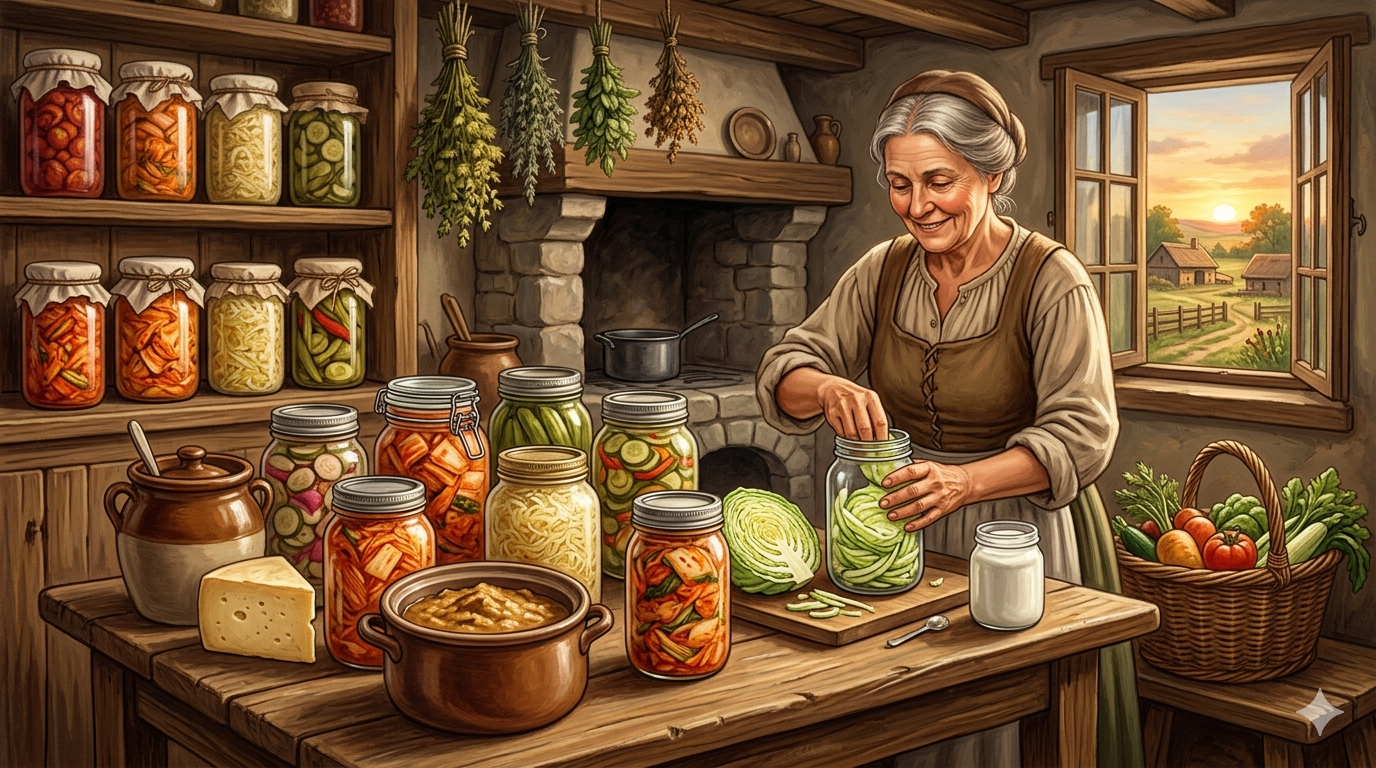
Long before refrigeration, food factories, vitamin labels, probiotic supplements, and modern nutrition science, people around the world were already using one of the most powerful food technologies ever discovered: fermentation.
They fermented milk into yogurt, kefir, cheese, and cultured dairy. They fermented cabbage into sauerkraut and kimchi. They fermented soybeans into miso, tempeh, natto, and soy sauce. They fermented fish into fish sauce, shrimp paste, and preserved seafood. They fermented grains into sourdough bread, beer, porridges, and traditional batters. They fermented fruits into vinegar, wine, and preserved condiments.
At first, fermentation may seem like a strange practice. Why would people intentionally let food sit until microbes change it?
The answer is simple: fermentation helped humans survive.
Fermented foods became important in traditional diets because they solved real problems. They helped preserve seasonal foods. They made certain foods safer. They improved flavor. They changed texture. They sometimes made foods easier to digest. They allowed communities to store nutrients for difficult seasons. They also became part of identity, family memory, trade, ritual, and culture.
Today, fermented foods are often discussed only in terms of probiotics or gut health. That is useful, but incomplete. Fermentation is much more than a health trend. It is one of the oldest bridges between food, microbes, culture, and human survival.
What Is Fermentation?
Fermentation is a natural process in which microorganisms such as bacteria, yeasts, or molds transform food.
These microbes feed on sugars, starches, proteins, or other compounds in food and produce new substances such as acids, alcohol, gases, enzymes, and flavor molecules. This transformation can change the taste, smell, texture, shelf life, and nutritional qualities of food.
Different types of fermentation create different foods.
Lactic acid fermentation helps produce foods such as sauerkraut, kimchi, yogurt, pickles, and some fermented grain batters. Yeast fermentation helps bread rise and creates alcohol in beer and wine. Mold fermentation helps create foods such as certain cheeses, tempeh, miso, and soy-based products. Acetic acid fermentation turns alcohol into vinegar.
Fermentation is not one single method. It is a family of food transformations.
What makes fermentation special is that it uses living organisms to do part of the cooking, preserving, and flavor-building work. Instead of relying only on heat, humans learned to work with invisible microbial life.
In a traditional kitchen, fermentation was not just a technique. It was a partnership with nature.
Fermentation Began as a Survival Strategy
Modern people often think of fermented foods as optional health foods. In traditional societies, they were often survival foods.
Before refrigerators, freezers, vacuum packaging, chemical preservatives, and global shipping, food spoiled quickly. Milk turned sour. Vegetables rotted. Fish decayed. Grains molded. Fruits fermented on their own. Meat became unsafe. Seasonal abundance could disappear in days if people did not preserve it.
Fermentation helped solve this problem.
When beneficial microbes dominate a food, they can create an acidic, salty, alcoholic, or otherwise protective environment that makes it harder for many harmful microbes to grow. This does not mean all fermentation is automatically safe, but properly controlled traditional fermentation helped communities extend the life of foods.
A cabbage harvest could become sauerkraut or kimchi. Fresh milk could become yogurt or cheese. Fish could become fermented sauce or paste. Soybeans could become miso or tempeh. Grain dough could become sourdough. Fruit juice could become vinegar or wine.
In this way, fermentation turned temporary abundance into future nourishment.
That is why many traditional fermented foods were born from practical need, not luxury.
Fermentation Helped Preserve Seasonal Foods
Seasonality shaped traditional diets. People did not have constant access to every food all year. A region might have an abundance of vegetables during one season, milk during another, fish during another, or fruit during another. Without preservation, much of that food would be lost.
Fermentation allowed people to keep eating seasonal foods after the season had passed.
This was especially important in places with long winters, dry seasons, rainy seasons, or unpredictable harvests. Fermented vegetables could help provide flavor and nutrients when fresh vegetables were scarce. Fermented dairy could preserve milk beyond the day it was collected. Fermented fish and sauces could add protein-rich flavor when fresh seafood was not available. Fermented grains could make staple foods more useful and enjoyable.
Fermentation also helped reduce waste. Instead of throwing away excess vegetables, milk, fruit, grains, or fish, people could transform them into foods with longer shelf lives.
In modern life, we often forget how important this was. We can buy fresh produce in any season, often from another part of the world. But traditional food cultures were built around the urgent question: how do we make food last?
Fermentation was one of the answers.
Fermentation Made Simple Foods More Flavorful
Fermented foods are not important only because they last longer. They also taste different.
Fermentation creates sourness, depth, umami, aroma, complexity, and richness. It can turn simple ingredients into foods that feel deeply satisfying.
Cabbage becomes tangy and layered. Milk becomes creamy and tart. Soybeans become savory and rich. Fish becomes intensely flavorful. Grain dough becomes aromatic. Fruit becomes vinegar or wine. Tea becomes kombucha. Rice, lentils, and grains can become sour batters, porridges, and drinks.
This flavor transformation mattered in traditional diets because many staple foods were simple. Rice, millet, wheat, tubers, beans, and vegetables can be nourishing, but they may become repetitive if eaten plainly every day. Fermented condiments, pickles, sauces, dairy, and sour foods helped make basic meals more enjoyable.
A small amount of fermented food can change an entire meal.
Think of a bowl of rice with fermented vegetables, a soup seasoned with miso, bread made from sourdough, fish served with fermented sauce, or potatoes eaten with cultured dairy. The fermented element adds brightness, saltiness, acidity, aroma, and complexity.
Traditional diets were often built on this principle: simple staples become satisfying when paired with powerful flavors.
Fermentation turned survival food into cuisine.
Fermentation and Digestion
Many people today connect fermented foods with digestion, and for good reason. Fermentation can change how foods interact with the digestive system.
In some foods, fermentation partially breaks down carbohydrates, proteins, or fibers before we eat them. This may make certain foods easier for some people to tolerate. For example, yogurt and kefir often contain less lactose than fresh milk because microbes consume part of the milk sugar during fermentation. Sourdough fermentation can change grain dough before baking. Fermented legumes and soy foods may be easier for some people to digest than their unfermented forms.
Fermentation can also create organic acids and enzymes that change flavor and texture. In some cases, fermented foods may introduce live microbes, though not all fermented foods contain living cultures by the time they are eaten. Some are heated, pasteurized, baked, or processed after fermentation.
It is important to be balanced. Fermented foods are not magic, and not everyone tolerates them well. Some people with histamine sensitivity, digestive disorders, immune issues, or specific medical conditions may need caution. Fermented foods can also be high in salt or strong compounds depending on how they are made.
But in traditional diets, fermentation often helped make challenging foods more usable.
This is a key ancestral nutrition lesson: humans did not only choose foods; they transformed foods.
Fermentation and the Gut Microbiome
The gut microbiome is the community of microorganisms living in the digestive tract. These microbes help process certain fibers, interact with the immune system, produce compounds, and influence digestion in complex ways.
Fermented foods may support gut health in several ways, depending on the food and the person.
Some fermented foods contain live microorganisms. Some provide compounds created during fermentation. Some add acidity that changes the eating experience. Some help people eat more vegetables, dairy, legumes, or grains in forms they enjoy. Some may increase food diversity, which can support a more varied diet.
However, fermented foods should not be reduced to the word “probiotic.” Many traditional fermented foods were not created because people knew about probiotic bacteria in a modern scientific sense. They were created because they worked: they preserved food, improved flavor, helped digestion, and became culturally meaningful.
Modern probiotic supplements isolate specific strains. Traditional fermented foods are more complex. They are whole foods transformed by microbial activity, often carrying flavor, history, texture, nutrients, and culinary purpose.
For gut health, fermented foods may be useful, but they are only one part of the picture. Fiber, sleep, stress, movement, hydration, food diversity, and overall diet quality also matter.
Fermentation Helped Make Plant Foods More Useful
Many plant foods are nutritious but complicated.
Grains, legumes, seeds, and certain vegetables can contain fibers, starches, or natural compounds that are difficult for some people to digest. Some contain phytates, tannins, enzyme inhibitors, or other compounds that can affect nutrient availability or digestive comfort.
Traditional food cultures developed preparation methods to manage these challenges. Fermentation was one of the most important.
Fermented grain batters, sourdough breads, fermented soybean products, pickled vegetables, and fermented legume dishes all show how cultures used microbes to transform plant foods.
For example, sourdough fermentation changes dough before baking. Fermented soy foods such as tempeh, miso, and natto transform soybeans into very different foods. Fermented vegetables become more acidic, flavorful, and shelf-stable. In some cuisines, rice and lentils are fermented into batters for pancakes, breads, or steamed cakes.
This does not mean every fermented plant food is automatically healthier than every unfermented one. But it does show that traditional cultures often understood something modern eaters forget: preparation changes food.
The same grain, bean, or vegetable can behave differently depending on whether it is raw, boiled, soaked, sprouted, fermented, refined, or industrially processed.
Fermentation Helped Preserve Animal Foods
Fermentation was not only used for plant foods. It also played an important role in preserving animal foods.
Milk is one of the clearest examples. Fresh milk spoils quickly, especially without refrigeration. By fermenting milk, traditional communities created yogurt, kefir, cultured cream, sour milk, cheese, and other dairy foods. These products lasted longer and sometimes became easier to digest.
Fish and seafood were also fermented in many cultures. Fermented fish sauces, shrimp pastes, fish pastes, and preserved seafood condiments became central to many coastal and river-based cuisines. These foods provided intense flavor and helped people preserve protein-rich foods that would otherwise spoil quickly.
In some regions, meat was also preserved through fermentation, drying, curing, or aging. These methods required skill because animal foods can become unsafe if handled poorly.
Fermented animal foods show how practical and creative traditional diets were. People did not waste valuable protein. They found ways to preserve it, intensify its flavor, and use small amounts to enrich larger meals.
This is why a few drops of fish sauce, a spoonful of fermented shrimp paste, or a piece of aged cheese can carry so much culinary power.
Fermented Foods as Condiments
Not all fermented foods were eaten in large amounts. Many were used as condiments.
This is important because modern people sometimes think they need to eat large servings of fermented foods to benefit from them. Traditional diets often used fermented foods strategically.
A spoonful of miso can season soup. A small portion of kimchi can brighten a rice meal. A little sauerkraut can balance rich foods. A few drops of fish sauce can deepen a broth. A small serving of yogurt can cool spices. A splash of vinegar can sharpen a dish. A piece of cheese can add richness to bread or vegetables.
Fermented foods often served as flavor bridges.
They connected bland staples with stronger tastes. They balanced fat with acidity. They added saltiness, sourness, umami, and aroma. They helped meals feel complete.
This is one reason fermented foods became culturally powerful. They did not need to dominate the plate. They could transform the plate.
Fermentation and Food Safety
Fermentation can support food safety, but it must be understood carefully.
Proper fermentation can create conditions that discourage many harmful microbes. Acidity, salt concentration, alcohol, temperature, oxygen levels, and microbial competition all affect safety. Traditional fermentation methods were often passed down because they worked reliably in a specific environment.
However, fermentation is not automatically safe just because it is natural. Poor hygiene, wrong temperatures, incorrect salt levels, contaminated ingredients, improper storage, or misunderstood methods can create risk.
This is especially important for home fermentation. Many traditional foods require skill, experience, and careful attention. Some are forgiving, while others are not.
A balanced modern approach respects fermentation without romanticizing it. It recognizes that traditional knowledge and modern food safety can work together.
If someone wants to ferment foods at home, they should follow reliable instructions, use clean equipment, understand salt ratios and temperature, and be cautious with foods that carry higher risk.
Traditional does not mean careless. In many cultures, fermentation was a respected skill.
Why Fermented Foods Became Part of Identity
Fermented foods often become strongly tied to cultural identity.
A person may remember the smell of sourdough from childhood, the taste of yogurt made by grandparents, the sharpness of pickled vegetables at family meals, the aroma of fish sauce in a kitchen, or the comfort of fermented bean paste in soup.
These foods carry memory.
They are not only ingredients; they are symbols of home, place, ancestry, survival, and belonging. Many fermented foods are made through slow processes that require patience. They may be prepared in families, villages, monasteries, farms, markets, or seasonal rituals.
Fermentation also connects generations. A starter culture, sourdough mother, vinegar mother, yogurt culture, or family recipe can be passed down. Even when the microbes are invisible, the continuity is visible.
This cultural meaning is one reason fermented foods survive. People do not keep making them only because they are healthy. They keep making them because they taste like identity.
Fermentation and Traditional Meal Balance
Fermented foods often helped balance meals.
Many traditional diets were based on staples such as rice, wheat, millet, potatoes, maize, beans, or other simple foods. Fermented foods added contrast.
A sour fermented vegetable can balance a fatty meat dish. Yogurt can balance spicy food. Vinegar can brighten heavy meals. Sourdough can make bread more complex. Fermented bean paste can add savory depth to vegetable soup. Fermented fish sauce can add umami to simple rice and greens.
This balance is not only nutritional. It is sensory.
Human appetite responds to flavor, texture, temperature, aroma, and contrast. Traditional cuisines often used fermented foods to create satisfying meals from modest ingredients.
Modern ultra-processed foods often create intensity through sugar, refined fat, salt, and artificial flavors. Traditional fermented foods create intensity through transformation, time, microbes, acidity, and umami.
That difference matters.
Fermentation Before Refrigeration vs Fermentation Today
The role of fermentation has changed.
In traditional diets, fermentation was often necessary. It preserved food, prevented waste, supported survival, and made seasonal foods available longer.
Today, fermentation is often optional. People can buy fresh food all year. Refrigerators slow spoilage. Freezers preserve food. Global shipping brings produce from distant places. Packaged foods fill pantries.
Because of this, fermented foods are often marketed as wellness products instead of everyday survival foods.
This shift has advantages and disadvantages. On one hand, people can rediscover fermented foods for flavor and digestive support. On the other hand, marketing can exaggerate their benefits, turning them into expensive health trends.
A traditional view is more grounded.
Fermented foods do not need to be exotic or expensive. They can be simple: yogurt, sauerkraut, kimchi, pickles, sourdough, miso, tempeh, kefir, vinegar, fermented sauces, or traditional cultured foods from your own background.
The goal is not to chase the newest probiotic trend. The goal is to understand why fermented foods existed in the first place.
Are All Fermented Foods Healthy?
No. This is an important point.
Fermentation does not automatically make a food healthy for everyone.
Some fermented foods are high in salt. Some contain alcohol. Some may trigger symptoms in people sensitive to histamine or certain compounds. Some commercial fermented foods are pasteurized and no longer contain live cultures. Some are sweetened heavily. Some are made with poor-quality ingredients. Some fermented drinks contain significant sugar. Some fermented foods may not be appropriate for people with certain medical conditions.
Context matters.
A small serving of fermented vegetables with a meal is different from drinking large amounts of sweetened kombucha. Plain yogurt is different from a sugary yogurt dessert. Traditional sourdough is different from a sweet refined bread product with a sour flavor added. Naturally fermented pickles are different from vinegar-pickled products, though both can have culinary value.
The question should not be “Is fermented food healthy?” The better question is:
What food was fermented?
How was it made?
Does it contain live cultures?
How much salt, sugar, or alcohol does it contain?
How much are you eating?
Does your body tolerate it?
What role does it play in the whole diet?
This balanced view is more useful than treating fermentation as magic.
Fermented Foods and Modern Gut Health Trends
Gut health has become a major wellness topic. This has helped many people rediscover fermented foods, but it has also created confusion.
Some people believe fermented foods can fix every digestive problem. Others believe every fermented food is probiotic. Some assume more is always better. These ideas are too simple.
Fermented foods may support a healthy diet, but they are not a cure-all. The gut is influenced by many factors: diet diversity, fiber intake, stress, sleep, physical activity, medications, illness, alcohol, hydration, and overall lifestyle.
For some people, fermented foods are helpful. For others, they may cause bloating, discomfort, or reactions. Introducing them slowly is often wise.
The traditional approach was rarely extreme. Fermented foods were usually part of meals, not isolated health hacks. They were eaten in amounts that fit the cuisine.
This is a useful lesson for modern wellness: fermented foods work best as part of a food culture, not as a miracle product.
How to Add Fermented Foods to a Modern Diet
Adding fermented foods does not need to be complicated.
Start small. Choose one fermented food that fits your taste and culture. Eat it with meals rather than forcing it as a separate health routine. Pay attention to how your body responds.
Examples include:
Plain yogurt with fruit or nuts
Kefir in small servings
Sauerkraut with eggs, potatoes, or meat
Kimchi with rice, soup, or vegetables
Miso in soup or sauces
Tempeh in stir-fries or bowls
Sourdough bread if tolerated
Naturally fermented pickles
Aged cheese in moderate amounts
Vinegar-based dressings
Traditional fermented sauces used as seasoning
It is not necessary to eat all fermented foods. One or two that fit your life may be enough.
If you are new to fermented foods, begin with small portions. Strong fermented foods can surprise the digestive system. If you have a medical condition, immune compromise, severe digestive disorder, histamine intolerance, or are pregnant, it is best to consult a qualified healthcare professional before adding unfamiliar fermented foods.
How to Choose Better Fermented Foods
When buying fermented foods, look carefully.
For yogurt or kefir, choose plain versions with live and active cultures when possible. Avoid products with high amounts of added sugar.
For fermented vegetables, look for products that are refrigerated and labeled as naturally fermented if you want live cultures. Shelf-stable pickles may be vinegar-based rather than live-fermented, which can still be tasty but is different.
For sourdough, remember that not all sourdough bread is traditionally fermented. Some commercial breads use flavoring or short fermentation. A true sourdough usually relies on a starter culture and longer fermentation.
For kombucha, check sugar content and serving size. Some bottles contain more sugar than expected.
For miso, tempeh, natto, and fermented soy foods, choose products that fit your dietary needs and tolerance.
For fermented fish sauces or pastes, use them as condiments because they are often salty and intense.
Better fermented foods are usually simple. They do not need long ingredient lists, artificial flavors, or heavy sweeteners.
Home Fermentation: Useful but Not Careless
Home fermentation can be rewarding. It can reconnect people with traditional food skills and reduce dependence on packaged products.
However, home fermentation requires respect.
Use clean jars and utensils. Follow reliable recipes. Use correct salt levels. Keep foods submerged when required. Understand temperature. Watch for signs of spoilage. Be cautious with high-risk foods. When in doubt, throw it out.
Vegetable fermentation is often a common starting point because it can be relatively simple when done properly. Dairy, meat, fish, and some other ferments require more care and knowledge.
Traditional communities learned fermentation through experience and observation. Modern beginners should use good guidance rather than guessing.
Fermentation is a living process. That is what makes it powerful, but also why it must be handled responsibly.
What Fermented Foods Teach Us About Traditional Diets
Fermented foods teach us several important lessons about traditional nutrition.
First, they show that humans were never passive eaters. We actively transformed food.
Second, they show that microbes are not only enemies. In the right context, microbes are partners in preservation, flavor, and digestion.
Third, they show that traditional food wisdom was practical. Fermentation was not invented as a wellness trend. It was a survival technology.
Fourth, they show that health is not only about nutrients. Texture, flavor, storage, culture, safety, and meal balance all matter.
Fifth, they show that modern food processing and traditional food processing are not the same. Fermentation is processing, but it is a form of processing that often deepens food rather than stripping it down.
This is one of the key differences between traditional diets and modern industrial diets.
Traditional diets often transformed food slowly to make it more useful. Modern industrial diets often transform food quickly to make it more profitable and easier to overeat.
Common Myths About Fermented Foods
Myth 1: All fermented foods are probiotics
Not all fermented foods contain live microbes when eaten. Some are heated, pasteurized, baked, filtered, or processed after fermentation. Sourdough bread, for example, is baked, so it does not usually provide live cultures, though fermentation still changes the dough.
Myth 2: More fermented food is always better
More is not always better. Some people tolerate fermented foods well, while others may experience discomfort. Start with small amounts and observe your response.
Myth 3: Fermented foods can cure digestive problems
Fermented foods may support some people’s digestion, but they are not a cure. Digestive symptoms can have many causes and may require professional evaluation.
Myth 4: Fermented foods are always low in sugar or salt
Some fermented foods are salty. Some fermented drinks contain sugar. Always check the food and the serving size.
Myth 5: Fermentation is the same as rotting
Fermentation is controlled microbial transformation. Rotting is uncontrolled spoilage. Traditional fermentation uses conditions that encourage desirable microbes and discourage harmful ones.
A Simple Fermented Food Framework
A practical way to think about fermented foods is to ask four questions.
1. What problem did this food originally solve?
Was it made to preserve milk, vegetables, fish, grains, or fruit? Was it a way to survive winter, reduce waste, or make food more digestible?
2. What role does it play in the meal?
Is it a staple, condiment, drink, side dish, protein source, flavor enhancer, or preservation method?
3. How processed is the modern version?
Is it naturally fermented, or is it heavily sweetened, pasteurized, flavored, or industrially altered?
4. How does your body respond?
Does it support your digestion and enjoyment, or does it cause discomfort?
This framework keeps fermented foods grounded in real life rather than hype.
Conclusion
Fermented foods became important in traditional diets because they helped humans solve the basic problems of food and survival.
They preserved seasonal abundance.
They reduced waste.
They transformed simple ingredients.
They improved flavor.
They supported food safety when done properly.
They helped make certain foods more digestible.
They created condiments, staples, drinks, and cultural identities.
They connected people with microbes long before microbiome science existed.
Today, fermented foods are often promoted as modern gut health products, but their importance is much older and deeper. They are part of the long human story of learning how to live with nature, not against it.
The best way to appreciate fermented foods is not to treat them as magic. It is to understand them as traditional food wisdom: slow, practical, flavorful, microbial, cultural, and deeply human.
You do not need to eat every fermented food. You do not need to follow every trend. But adding a few well-chosen fermented foods to a balanced diet can help reconnect modern eating with older patterns of nourishment.
Fermentation reminds us that food is alive with history. It shows that time, patience, microbes, and culture can turn simple ingredients into something more lasting, more flavorful, and sometimes more nourishing.
Disclaimer: This article is for educational purposes only and is not medical advice. Fermented foods may not be suitable for everyone. If you have a medical condition, immune system disorder, histamine intolerance, digestive disorder, food allergy, pregnancy-related concern, or specific dietary need, consult a qualified healthcare professional before making major changes to your diet.