
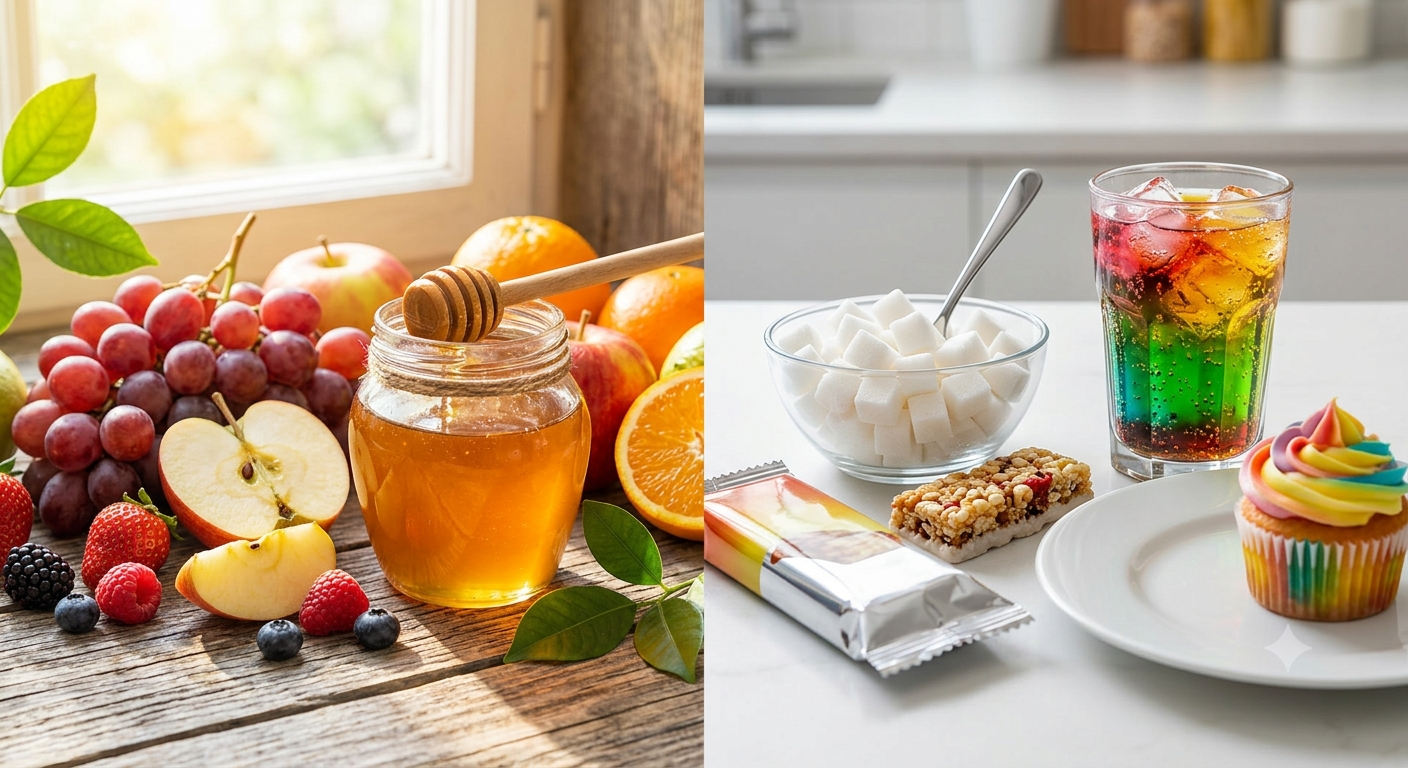
Sweetness used to be a signal.
For most of human history, sweetness usually meant something useful: ripe fruit, honey, breast milk, or a rare energy-rich food found in nature. Sweet taste helped humans identify calories, ripeness, and quick energy in environments where food was not always easy to obtain.
But modern life changed sweetness.
Today, sweetness is no longer rare. It is everywhere.
It is in soda, candy, breakfast cereal, flavored yogurt, sweet coffee drinks, sauces, snack bars, pastries, protein products, fruit drinks, desserts, bread, instant oatmeal, salad dressings, frozen meals, and even foods that do not taste obviously sweet.
Refined sugar took an ancient survival signal and turned the volume up.
This is why refined sugar is so different from natural sweetness. The issue is not only that sugar tastes sweet. The issue is that refined sugar is concentrated, easy to add, easy to hide, easy to overconsume, and often separated from the natural food structures that once slowed sweetness down.
A berry is sweet.
A soda is sweet.
A mango is sweet.
A candy bar is sweet.
A spoonful of honey is sweet.
A breakfast cereal is sweet.
But these foods are not the same.
To understand modern diet and metabolic health, we need to understand the difference between sweetness in whole foods and sweetness extracted, refined, concentrated, and engineered into products.
Natural Sweetness Came with Limits
In nature, sweetness usually comes with natural limits.
Fruit comes with fiber, water, skin, seeds, texture, volume, and chewing. Honey is sweet, but in ancestral environments it required effort, risk, and seasonality. Sweet roots or tubers needed digging and cooking. Sweetness was often tied to availability, physical effort, and natural structure.
These limits mattered.
You can eat an orange, but it takes time to peel and chew. You can eat berries, but they contain water and fiber. You can eat a banana, but it is still a whole food with texture and volume.
Refined sugar removes many of those limits.
It can be dissolved into drinks, mixed into sauces, baked into flour products, added to snacks, blended into desserts, and hidden in packaged foods. It does not require chewing when consumed as a drink. It does not come with fiber. It can appear in large amounts without making a food look large.
This is the first major difference:
Natural sweetness often arrives inside a food.
Refined sugar is often added to a product.
That difference changes how we eat.
Refined Sugar Is Sweetness Without the Whole Food
Refined sugar is extracted from plants such as sugarcane or sugar beets and processed into concentrated sweeteners. Other refined sweeteners may come from corn, rice, agave, or other sources.
The original plant may contain fiber, water, minerals, and structure. But refined sugar is mostly separated from that original structure.
That is why it behaves differently from whole fruit or naturally sweet foods.
An apple contains sweetness, but it also contains water, fiber, acids, aroma, skin, texture, and plant compounds. A spoonful of sugar contains sweetness without the apple.
This does not mean the apple is magic. It simply means the food matrix matters.
The food matrix is the whole structure of a food: fiber, water, protein, fat, minerals, plant compounds, texture, and how everything is packaged together.
Refined sugar removes sweetness from the matrix and makes it easy to add anywhere.
That is powerful.
And because it is powerful, it needs awareness.
Why Humans Like Sweetness So Much
Humans are not weak for liking sweetness. Sweetness is biologically meaningful.
Sweet taste can signal energy. In the past, this was useful. A sweet fruit could provide calories, water, and nutrients. Honey could provide concentrated energy. Sweetness also appears in breast milk, which helps explain why the human relationship with sweetness begins early.
The problem is not that humans like sweetness.
The problem is that modern food systems can exploit that preference.
When sweetness was rare, liking sweetness helped humans find valuable foods. When sweetness is available all day in concentrated forms, the same preference can lead to overconsumption.
This is a classic mismatch: an old biological preference placed inside a new food environment.
The body did not evolve in supermarkets filled with sweetened products. It evolved in environments where sweetness usually required nature, effort, and season.
Modern refined sugar bypasses those older limits.
Sugar Became Invisible
One of the biggest differences between natural sweetness and refined sugar is visibility.
Natural sweetness is visible. You can see the fruit. You can see the honey. You can see the dates. You know you are eating something sweet.
Refined sugar is often invisible.
It can hide in:
Breakfast cereals
Flavored yogurt
Granola bars
Protein bars
Coffee drinks
Fruit drinks
Ketchup
Barbecue sauce
Salad dressing
Bread
Instant oatmeal
Crackers
Frozen meals
Packaged soups
Canned sauces
Nut butters with added sugar
“Healthy” snacks
Children’s foods
This hidden sugar changes the diet because people may consume more sweetness than they realize.
A person may think they only had dessert once, but their whole day may have included sweet cereal, sweet coffee, sweet yogurt, sweet sauce, sweet bread, and a sweet snack.
Natural sweetness usually announces itself.
Refined sugar often sneaks in.
Sweet Drinks Are a Major Turning Point
Sweet drinks are one of the clearest examples of how refined sugar differs from natural sweetness.
When you eat whole fruit, you chew. The fruit has volume. The fiber and water contribute to fullness. The eating experience takes time.
When you drink soda, sweet tea, fruit drinks, energy drinks, sweet coffee beverages, or large sweetened smoothies, sweetness arrives quickly. There is little or no chewing. Calories can be consumed in seconds.
This matters because liquid sweetness may not create the same fullness as whole food.
A person may drink a large sweet beverage and still eat a full meal. Over time, sweet drinks can become a background habit rather than an occasional treat.
Traditional diets had sweet drinks too, but modern sweet beverages are different in scale, frequency, portion size, and availability.
A cup of sweetened tea at a special gathering is not the same as carrying large sweet drinks throughout the day.
If there is one simple step many people can take, it is this:
Eat sweetness more often than you drink it.
Whole fruit is usually a better everyday choice than sweet drinks.
Refined Sugar Changed Breakfast
Breakfast shows how deeply refined sugar changed modern eating.
In many traditional diets, breakfast was savory or simple: porridge, soup, eggs, leftovers, rice, bread with cheese, yogurt, beans, fish, or cooked grains.
Modern breakfast often became sweet:
Sweet cereal
Pastries
Flavored yogurt
Granola bars
Muffins
Pancakes with syrup
Sweet coffee drinks
Fruit juice
Instant sweet oatmeal
Breakfast cookies
This matters because breakfast can set the taste pattern for the day.
When the first meal is very sweet, the palate may expect sweetness again and again. Plain foods may feel boring. Water may feel dull. Unsweetened yogurt may taste too sour. Oats may need sugar. Coffee may need syrup.
A less sweet breakfast can help reset the palate.
That does not mean breakfast must be perfect. It means breakfast does not need to be dessert.
Better options might include eggs with vegetables, plain yogurt with fruit and nuts, oats with seeds and berries, soup, leftovers, beans, or whole-grain toast with protein.
The goal is not strictness. The goal is to lower the sweetness volume.
Refined Sugar Trains the Palate
Taste is adaptable.
If someone eats very sweet foods often, mildly sweet foods may start to taste less satisfying. Fruit may not taste sweet enough. Plain yogurt may taste unpleasant. Tea without sugar may feel impossible. Vegetables may seem boring.
This is not a personal failure. It is taste training.
The palate learns from repetition.
Modern processed foods train the palate toward high sweetness, strong flavors, and rapid reward. This makes simple whole foods seem less exciting by comparison.
The good news is that taste can retrain.
When people gradually reduce added sugar, natural sweetness often becomes more noticeable. Fruit tastes sweeter. Milk tastes sweeter. Roasted carrots taste sweeter. Cinnamon, vanilla, and fruit can provide flavor without as much sugar.
Retraining the palate is not about punishment. It is about recovering sensitivity.
A quieter diet makes natural sweetness easier to hear.
Natural Sweetness Has Texture and Time
Natural sweetness usually asks you to participate.
You peel an orange.
You chew an apple.
You wash berries.
You cut a melon.
You remove seeds.
You notice ripeness.
You feel texture.
You taste sourness, bitterness, aroma, and sweetness together.
Refined sugar often removes participation.
You open a package.
You drink quickly.
You bite into softness.
You swallow fast.
You reach for more.
Texture and time are part of satiety.
A whole fruit slows the eating experience. A sweet drink speeds it up. A chewy dried fruit has one kind of limit. A candy drink has another. A homemade dessert eaten at a table has a different context than candy eaten mindlessly from a bag.
When sweetness loses texture and time, it becomes easier to overconsume.
This is one reason whole foods matter.
The Dessert Problem: From Occasional to Daily
Dessert has existed in many cultures. Sweet foods can be part of celebration, hospitality, festivals, family memories, and pleasure.
The problem is not dessert itself.
The problem is when dessert becomes daily background food.
Cake-like breakfast.
Candy-like snacks.
Dessert-like yogurt.
Sweet drinks.
Sweet sauces.
Sweet coffee.
Sweet protein bars.
Sweet cereal.
Sweet packaged “health” foods.
Modern food culture spreads dessert across the whole day.
Traditional food cultures often gave sweets a place. They belonged to festivals, rituals, guests, seasons, or special meals. Modern processed food removes the boundary. Sweetness becomes ordinary.
A useful modern principle is:
Keep sweet foods meaningful.
A dessert enjoyed slowly after a meal can be part of life. Sweetness scattered mindlessly throughout the day can reshape appetite.
The issue is not joy. The issue is frequency.
Refined Sugar and the Snack Cycle
Refined sugar often appears in snacks because it creates quick pleasure.
A sweet snack can feel like energy, comfort, reward, or stress relief. But sweet snacks are often low in protein, fiber, and long-lasting satiety. This can lead to a cycle:
Energy dips.
You crave something sweet.
You eat a sweet snack.
You feel better briefly.
Hunger returns.
You reach for another snack.
Not everyone experiences this cycle the same way, but many modern snack patterns are built around quick reward rather than real nourishment.
A more stable snack usually includes protein, fiber, or fat:
Fruit with yogurt
Nuts with fruit
Boiled eggs
Cheese with fruit if tolerated
Hummus with vegetables
Oats with seeds
Plain yogurt with berries
Leftover soup
Canned fish on toast
Beans or lentil salad
These foods may not produce the same instant sugar hit, but they often support longer satisfaction.
The goal is not to never snack. The goal is to snack in a way that does not keep the body chasing sweetness.
Honey, Maple Syrup, and “Natural” Sweeteners
Many people replace white sugar with honey, maple syrup, coconut sugar, agave, date syrup, or other natural sweeteners.
These sweeteners may have different flavors, trace minerals, or traditional uses. Honey, for example, has a long history in human diets. Maple syrup has cultural significance in certain regions. Date syrup and molasses carry distinct flavors.
But from a practical nutrition perspective, they are still concentrated sweeteners.
They may be less refined in some ways, but they can still add a lot of sugar to the diet. A dessert made with honey is still a dessert. A drink sweetened with maple syrup is still a sweet drink. A “natural” energy bar with multiple syrups may still behave like a sweet product.
This does not mean natural sweeteners must be avoided. It means they should be used with the same awareness as sugar.
Natural does not automatically mean unlimited.
A small amount used intentionally is different from constant sweetening.
Fruit Is Different, but Not Unlimited Magic
Whole fruit is different from refined sugar because it contains water, fiber, structure, vitamins, minerals, and plant compounds. It requires chewing and is usually more satisfying than sweet drinks or candy.
Fruit can be a valuable way to enjoy sweetness in a whole-food form.
But fruit is not unlimited magic.
Fruit juice, dried fruit, oversized smoothies, and fruit-based snacks can concentrate sweetness. Modern fruits are often sweeter and more available than wild fruits. Some people with blood sugar concerns, digestive issues, or specific medical needs may need personalized guidance.
The balanced view is:
Whole fruit is usually a good everyday sweet choice.
Fruit juice should be more limited.
Dried fruit should be portion-aware.
Smoothies should be balanced with protein, fat, or fiber.
Fruit should not fully replace vegetables.
Personal tolerance matters.
The goal is to enjoy fruit as fruit, not turn it into another refined sugar delivery system.
Sugar and Ultra-Processed Foods
Refined sugar rarely works alone in modern processed foods.
It often teams up with refined flour, refined oils, salt, flavorings, colors, emulsifiers, and soft or crunchy textures. This combination can make foods highly appealing and easy to overeat.
Examples include cookies, cakes, donuts, pastries, sweet cereals, snack bars, candy, flavored chips, sweetened dairy desserts, and many packaged snacks.
These foods are not just sweet. They are engineered experiences.
They combine multiple reward signals:
Sweetness
Fat
Salt
Softness
Crunch
Aroma
Color
Portability
Convenience
Low chewing effort
This is why it is not enough to say “just eat less sugar.” The broader issue is ultra-processed food design.
A homemade sweet food eaten occasionally is different from a packaged product designed for daily repeat consumption.
Sugar Hides Behind Health Claims
Many sweetened products use health language.
Made with real fruit.
Organic.
Natural.
Gluten-free.
Plant-based.
High-protein.
Low-fat.
Whole grain.
No artificial colors.
Energy boosting.
For kids.
Fortified with vitamins.
These claims may be true in a narrow sense, but they can distract from added sugar.
A cereal can contain whole grains and still be very sweet. A yogurt can contain protein and still be a dessert. A juice drink can contain vitamin C and still be a sweet beverage. A protein bar can contain protein and still taste like candy.
A good rule is to look past the front label.
Check the ingredients. Check added sugar. Check serving size. Ask whether the product is mostly food or mostly sweetened product.
Marketing often makes refined sugar look healthier than it is.
The Many Names of Added Sugar
Added sugar appears under many names.
Common examples include:
Sugar
Cane sugar
Brown sugar
Raw sugar
Corn syrup
High-fructose corn syrup
Dextrose
Maltose
Sucrose
Glucose syrup
Rice syrup
Barley malt
Malt syrup
Agave nectar
Honey
Maple syrup
Molasses
Fruit juice concentrate
Evaporated cane juice
Coconut sugar
Date syrup
These ingredients may differ in flavor and processing, but they all add sweetness.
A product can contain several types of sugar so that no single one appears first on the ingredient list. This can make the food look less sweet than it is.
Learning sugar names helps readers understand labels.
The point is not paranoia. The point is awareness.
Refined Sugar and Children
Children are especially shaped by sweetness.
Early repeated exposure to very sweet foods can influence preferences. If children regularly eat sweet cereals, sweet drinks, candy, flavored yogurts, fruit snacks, sweet bars, and desserts, they may expect sweetness in most foods.
This can make vegetables, plain yogurt, water, and less sweet foods harder to accept.
Parents do not need to ban all sweets. Strict restriction can sometimes make sweets more emotionally powerful. But daily sugar habits matter.
Practical steps include:
Offer water as the default drink.
Keep sweet drinks occasional.
Choose plain yogurt and add fruit.
Serve fruit instead of packaged sweets most of the time.
Avoid using candy as the main reward.
Teach children to enjoy savory breakfasts.
Cook simple meals at home when possible.
Let desserts be meaningful rather than constant.
Children can learn to enjoy real foods when sweetness does not dominate the food environment.
Refined Sugar and Emotional Eating
Sugar often becomes emotional.
Sweet foods can feel comforting, rewarding, nostalgic, calming, or celebratory. A cookie may remind someone of childhood. Chocolate may feel like relief after stress. Ice cream may feel like comfort. Sweet coffee may feel like a daily ritual.
There is nothing wrong with food having emotion.
The issue is when refined sugar becomes the main tool for managing stress, boredom, sadness, fatigue, or loneliness.
Modern processed foods make this easy because sweet foods are available everywhere and require no preparation.
A healthier approach is not to remove pleasure from eating. It is to build more forms of comfort:
Tea
Fruit
Warm meals
Soup
Shared dinners
Walks
Rest
Journaling
Music
Cooking rituals
Small desserts eaten mindfully
Connection with people
Sweetness can remain part of life without becoming the only emotional language.
How to Reduce Refined Sugar Without Feeling Deprived
Reducing refined sugar works better when it is gradual and practical.
Start with drinks. Sweet drinks are often the easiest place to make a meaningful change. Replace soda or sweet tea with water, sparkling water, unsweetened tea, or lightly flavored water.
Then look at breakfast. Choose less sweet options more often: eggs, oats, plain yogurt, fruit, nuts, soup, leftovers, or whole-grain toast with protein.
Next, check snacks. Replace sweet packaged snacks with foods that contain protein, fiber, or fat.
Then adjust desserts. Keep desserts you truly enjoy, but reduce random low-quality sweets that you barely notice.
Finally, retrain the palate. Use cinnamon, vanilla, fruit, roasted roots, nuts, coconut, or yogurt to create flavor without always adding sugar.
The goal is not to hate sweetness.
The goal is to stop being controlled by it.
Better Sweet Choices
Some sweet choices are more supportive than others.
Better everyday options may include:
Whole fruit
Plain yogurt with berries
Oats with cinnamon and fruit
Dark chocolate in small amounts
Baked apples
Chia pudding with fruit
Dates used sparingly with nuts
Homemade desserts with less sugar
Fruit with nut butter
Smoothies balanced with protein and fiber
More occasional options may include:
Candy
Soda
Sweet coffee drinks
Pastries
Dessert bars
Sugary cereals
Packaged cakes
Sweetened yogurt desserts
Fruit juice
Sweetened snack bars
This is not a moral ranking. It is a frequency guide.
Some foods belong every day. Some belong sometimes.
The “Sweetness Budget” Idea
A helpful way to think about sugar is to imagine a sweetness budget.
You do not need to remove sweetness completely. But you cannot spend the budget everywhere.
If breakfast is sweet, coffee is sweet, drinks are sweet, snacks are sweet, sauces are sweet, and dessert is sweet, the whole day becomes sweet.
Instead, choose where sweetness matters most.
Maybe you prefer fruit at breakfast.
Maybe you enjoy dessert after dinner.
Maybe you want honey in tea.
Maybe you like a small piece of chocolate.
Choose the sweetness you actually enjoy and reduce the sweetness you do not notice.
This approach feels less restrictive because it protects pleasure while reducing background sugar.
The goal is intentional sweetness.
A Simple Sugar Awareness Checklist
Before eating a sweet food, ask:
Is this whole food or added sugar?
Am I eating it or drinking it?
Is it replacing a less helpful sweet food or adding more sweetness?
Does it contain protein, fiber, or fat?
Is this a meaningful treat or a habit?
Would I still want it if I had to sit down and eat it slowly?
Is the portion clear?
How often do I eat this kind of food?
These questions create awareness without guilt.
Food awareness is more sustainable than food shame.
Common Myths About Refined Sugar
Myth 1: Natural sweeteners can be eaten freely
Honey, maple syrup, agave, and coconut sugar may have different flavors, but they are still concentrated sweeteners.
Myth 2: Fruit is the same as candy
Whole fruit contains water, fiber, structure, vitamins, minerals, and plant compounds. It is not the same as candy.
Myth 3: Sugar is only a problem in desserts
Sugar also appears in drinks, sauces, cereals, breads, snacks, yogurts, and packaged meals.
Myth 4: You must eliminate all sugar to be healthy
Most people do not need total elimination. Reducing added sugar and improving food quality is more realistic.
Myth 5: Low-fat foods are always better
Many low-fat products add sugar to improve taste. Read labels carefully.
Myth 6: Cravings mean your body needs sugar
Cravings can come from habit, stress, poor sleep, low protein intake, blood sugar swings, or emotional triggers. They do not always mean the body needs refined sugar.
A Seven-Day Sugar Reset Without Extremes
This is a gentle way to reduce sugar without feeling punished.
Day 1: Replace one sweet drink
Choose water, sparkling water, or unsweetened tea instead.
Day 2: Choose a savory or less sweet breakfast
Try eggs, oats with fruit, plain yogurt, soup, or leftovers.
Day 3: Read three labels
Look for added sugar in foods you already eat.
Day 4: Replace one sweet snack
Choose fruit with nuts, yogurt, boiled eggs, or hummus with vegetables.
Day 5: Reduce sugar in coffee or tea
Use slightly less than usual. Let your palate adjust gradually.
Day 6: Eat dessert slowly
Choose one dessert you truly enjoy. Sit down and eat it without distraction.
Day 7: Notice natural sweetness
Try fruit, roasted carrots, sweet potatoes, or plain yogurt with berries. Notice how your taste has shifted.
This is not a detox. It is palate retraining.
When to Seek Professional Guidance
Sugar intake may need special attention for people with:
Diabetes
Insulin resistance
Reactive hypoglycemia
Dental concerns
Fatty liver concerns
Eating disorder history
Digestive disorders
Pregnancy-related concerns
Children with specific medical needs
People taking medications affecting blood sugar
A qualified healthcare professional can help personalize guidance.
General education is useful, but individual health needs matter.
Conclusion: Sweetness Should Be Heard, Not Shouted
Refined sugar is different from natural sweetness because it removes sweetness from its original limits.
Natural sweetness usually comes with fiber, water, texture, chewing, seasonality, and food structure. Refined sugar is concentrated, portable, invisible, and easy to add to almost anything. It turns sweetness from a rare signal into a constant background noise.
This does not mean sweetness is bad.
Sweetness can be joyful. Fruit can be nourishing. Honey can be meaningful. Desserts can belong to celebrations. A sweet taste can be part of a balanced life.
The problem is when refined sugar becomes everywhere, all day, hidden in foods that do not need it, and powerful enough to retrain the palate away from real food.
The goal is not to fear sugar. The goal is to put sweetness back in its proper place.
Eat fruit more often than candy.
Drink fewer sweet calories.
Choose desserts that are worth it.
Read labels.
Reduce hidden sugar.
Make breakfast less dessert-like.
Retrain the palate slowly.
Let sweetness be intentional, not automatic.
Sweetness should be heard.
Modern refined sugar made it shout.
A wiser diet turns the volume down so real food can taste good again.
Disclaimer: This article is for educational purposes only and is not medical advice. Sugar tolerance and dietary needs vary by individual. If you have diabetes, blood sugar concerns, dental issues, digestive disorders, pregnancy-related questions, eating disorder history, or specific medical needs, consult a qualified healthcare professional before making major dietary changes.