
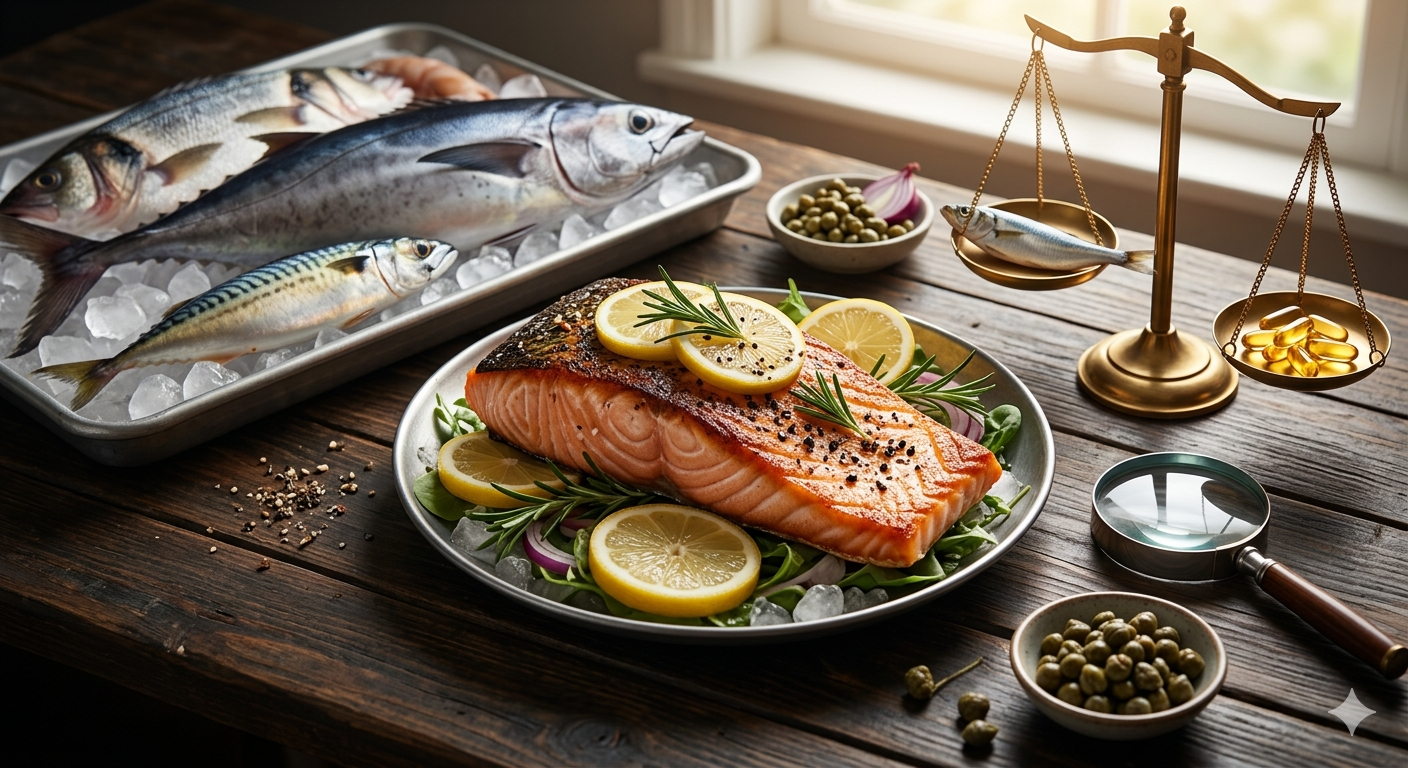
Fish has one of the best reputations in nutrition.
It is often described as light, clean, protein-rich, heart-friendly, brain-supportive, and more natural than many modern processed foods. Coastal cultures have eaten fish for generations. Traditional cuisines around the world use fish in soups, stews, grilled dishes, fermented sauces, dried foods, and everyday meals.
But fish also has another story.
Some fish may contain mercury. Some seafood can carry pollutants. Raw or poorly stored fish can cause food safety problems. Some fish populations are overharvested. Farmed fish varies widely in quality. Fried fish sandwiches and heavily processed fish sticks are not the same as fresh fish in a traditional meal.
So is fish really a perfect health food?
The honest answer is no.
Fish can be an excellent food, but it is not perfect. It is powerful, valuable, and sometimes deeply nourishing, but it also requires context. The type of fish matters. The source matters. The cooking method matters. The portion matters. The person eating it matters. The environmental story matters too.
This article takes a balanced look at fish: why humans value it, what nutrients it offers, what risks deserve attention, and how to eat fish more wisely in modern life.
Why Fish Became Important in Human Diets
Fish became important because water has always been a food source.
Rivers, lakes, oceans, wetlands, and coastal areas provided humans with fish, shellfish, seaweed, crustaceans, and other aquatic foods. For many communities, seafood was not a luxury. It was survival.
Fish could provide protein, fat, minerals, and energy. It could be eaten fresh, dried, smoked, salted, fermented, or cooked in soups and stews. In coastal regions, fish often shaped entire cuisines. In river regions, fish became part of daily life. In island cultures, seafood could be central to identity and trade.
Fish was also practical.
Compared with large land animals, fish could sometimes be caught in smaller portions, shared quickly, preserved, or used to season staple foods. A small amount of dried fish or fermented fish sauce could flavor a large pot of rice, vegetables, or soup.
This is one reason fish has a special place in traditional diets. It is both a main food and a flavoring food. It can be delicate or intense, fresh or preserved, simple or deeply complex.
Fish is not just nutrition. It is geography on a plate.
The Nutritional Strengths of Fish
Fish can provide several valuable nutrients.
Most fish are good sources of high-quality protein. Protein helps build and repair tissues and supports satiety. Fish also provides minerals such as iodine, selenium, phosphorus, and sometimes calcium if small fish are eaten with bones.
Fatty fish can provide omega-3 fatty acids, especially EPA and DHA. These fats are important in the body and are one reason fish is often discussed in relation to heart and brain health. Fatty fish may include salmon, sardines, mackerel, herring, anchovies, trout, and some other species.
Fish may also provide vitamin D, depending on the species and fat content. This can be especially relevant in places where sunlight exposure is limited, though vitamin D levels vary widely.
Small fish eaten whole can be especially interesting because they may provide calcium from bones and minerals from the whole animal. Traditional diets often made use of small fish in ways modern diets sometimes overlook.
In short, fish can be nutrient-dense. But the nutrient profile depends greatly on the species.
A sardine is not the same as tilapia. Salmon is not the same as cod. Shellfish are not the same as tuna. A fried fish stick is not the same as grilled mackerel.
Details matter.
Omega-3: The Nutrient That Made Fish Famous
Fish is often praised because of omega-3 fatty acids.
Omega-3 fats are a family of fats that includes ALA, EPA, and DHA. ALA is found in plant foods such as flaxseed, chia seeds, and walnuts. EPA and DHA are found mainly in marine foods such as fatty fish and some algae.
EPA and DHA are important because they are involved in cell membranes, inflammatory processes, and nervous system function. This is why fatty fish has been studied widely.
However, omega-3 is not equally high in all fish.
Fatty fish usually contain more EPA and DHA than lean white fish. Sardines, salmon, herring, anchovies, and mackerel are often richer sources. Cod, tilapia, and many lean fish provide protein but much less omega-3 fat.
This does not make lean fish useless. Lean fish can still be a valuable protein source. But if someone is eating fish specifically for omega-3, the type of fish matters.
A useful question is: are you eating fish for protein, omega-3, minerals, flavor, or cultural reasons?
The answer affects which fish makes sense.
Fish Is More Than Omega-3
Modern nutrition sometimes reduces fish to omega-3, but fish is more than one nutrient.
Fish can be:
A protein source
A mineral source
A traditional food
A cultural ingredient
A preserved seasoning
A light meal
A source of culinary diversity
A replacement for processed meat
A connection to coastal or river food traditions
This broader view is important.
A fish soup made with herbs, vegetables, and broth is not just omega-3. It is hydration, flavor, minerals, warmth, and meal structure. A small dried fish used in a stew is not just protein. It is umami and preservation. Fish sauce is not a main protein source in the usual sense, but it can carry the memory and flavor of preserved seafood.
Traditional diets rarely treated fish as a supplement. They treated it as food.
That is a better way to think about it today.
The Mercury Question
One reason fish is not a “perfect” health food is mercury.
Mercury is a heavy metal that can accumulate in aquatic food chains. Larger predatory fish often contain higher levels because they eat smaller fish over time. This process is called biomagnification.
Fish that may be higher in mercury include some large tuna, swordfish, shark, king mackerel, marlin, and tilefish, depending on region and species. Smaller fish such as sardines, anchovies, herring, and many types of salmon are often lower in mercury.
Mercury matters especially for pregnant people, breastfeeding people, young children, and those who may be more vulnerable to neurological effects. These groups should follow official seafood safety guidance in their country or region.
This does not mean avoiding all fish is necessary. In fact, many health authorities encourage choosing lower-mercury fish because fish can provide valuable nutrients. The key is choosing wisely.
A simple rule: smaller, shorter-lived fish are often safer choices than large predatory fish when mercury is a concern.
Pollutants and Modern Waters
Mercury is not the only concern. Some fish may contain environmental pollutants such as PCBs, dioxins, microplastics, or other contaminants depending on water quality, species, and source.
This is one way modern life changes the meaning of seafood.
Traditional fish-eating communities depended on local waters. If the water was clean and the ecosystem healthy, fish could be a valuable food. But modern pollution changes the equation. Industrial activity, plastic waste, agricultural runoff, and chemical contamination can affect aquatic environments.
This does not make all fish unsafe. It means source matters.
Where was the fish caught?
Is it wild or farmed?
Is the species known for contamination concerns?
Is there local advisory guidance?
How often is it eaten?
Is it a large predator or a small fish?
Modern seafood choices require modern awareness.
Wild-Caught vs Farmed Fish
People often ask whether wild-caught fish is better than farmed fish.
The answer depends.
Wild fish may have more natural diets and ecosystems, but wild fisheries can be affected by overfishing, pollution, and sustainability issues. Farmed fish can reduce pressure on wild populations, but farming practices vary widely. Some farms use better feed, cleaner systems, and responsible practices. Others may raise concerns about crowding, water quality, antibiotics, environmental impact, or nutritional differences.
The species also matters. Farmed salmon is not the same as farmed tilapia. Farmed shellfish is not the same as farmed carnivorous fish. Wild tuna is not the same as wild sardines.
Instead of assuming wild is always good and farmed is always bad, ask better questions:
What species is it?
Where does it come from?
How was it raised or caught?
Is it from a reliable supplier?
Is it considered sustainable?
How often do you eat it?
Seafood quality is not one simple label.
Raw Fish: Tradition, Taste, and Safety
Raw fish appears in many cuisines, including sushi, sashimi, ceviche, poke, and other traditional preparations.
Raw fish can be delicious, but it also requires careful handling. Freshness, freezing protocols, parasite control, cleanliness, temperature, and professional preparation matter. Eating raw or undercooked fish carries a higher risk than properly cooked fish, especially for certain groups.
Pregnant people, young children, older adults, and people with weakened immune systems are often advised to avoid raw or undercooked seafood.
This does not mean raw fish traditions are careless. Many traditional and professional systems include careful methods. But raw fish is not something to treat casually.
If you eat raw fish, choose reputable sources and understand that safety depends on handling.
Cooking remains the safer option for many people.
Fish Spoils Quickly
Fish is delicate.
Compared with many other foods, fish can spoil quickly if not handled properly. This is why traditional cultures developed many preservation methods: drying, smoking, salting, fermenting, pickling, and cooking fish into soups or sauces.
Fresh fish requires good storage, cold temperatures, and careful cooking. A fish that smells strongly unpleasant, feels slimy in the wrong way, or has been poorly stored should be avoided.
Food safety is one reason fish is different from many other foods. It is valuable, but it must be respected.
Modern refrigeration helps, but it does not remove the need for caution.
A good fish meal begins before cooking. It begins with sourcing and storage.
Traditional Fish Preservation
Before refrigeration, fish preservation was essential.
Many coastal and river communities caught fish seasonally or in large amounts. Without preservation, much of it would spoil. So people used salt, smoke, sun, fermentation, and drying.
Dried fish could be stored and carried.
Salted fish could last longer.
Smoked fish gained flavor and durability.
Fermented fish became sauces and pastes.
Fish broths used bones and scraps.
Small fish could be eaten whole.
These practices did more than prevent waste. They created some of the world’s most powerful flavors.
Fish sauce, shrimp paste, dried anchovies, smoked fish, salted cod, fermented seafood pastes, and fish-based broths all show how preservation turned a fragile food into lasting cuisine.
However, preserved fish foods can be high in salt or strong compounds. They are often best used as condiments or meal components rather than large daily portions.
Traditional preservation teaches respect and moderation.
Fish Sauce: A Small Food with a Big Story
Fish sauce is one of the clearest examples of fish as culture.
It is usually made by fermenting fish with salt over time. The result is a salty, savory liquid with deep umami flavor. A small amount can transform soups, rice dishes, vegetables, marinades, and sauces.
Fish sauce is not eaten like a fillet of fish. It functions as a concentrated flavor tool. It allows a small amount of preserved seafood to influence a large meal.
This is traditional food intelligence.
Instead of wasting fish, communities turned it into a shelf-stable seasoning. Instead of needing large portions of animal protein at every meal, a small amount of fermented fish could add depth and satisfaction.
Modern eaters can learn from this: flavor does not always require large quantities. Sometimes a few drops of a traditional condiment can make simple foods more satisfying.
Fried Fish Is Not the Same as Grilled or Stewed Fish
Cooking method matters.
Fish can be grilled, steamed, baked, poached, stewed, fermented, dried, smoked, or fried. Each method changes the meal.
Steamed fish with herbs is different from deep-fried fish.
Fish soup with vegetables is different from fish nuggets.
Sardines on whole-grain toast are different from a fried fish sandwich.
Grilled salmon with vegetables is different from heavily breaded fish sticks.
Fried fish can be enjoyable occasionally, but it should not define fish as a health food. Deep frying may add refined oils, calories, breading, and salt, depending on preparation.
If the goal is to gain the benefits of fish, simpler cooking methods often make more sense:
Steaming
Baking
Grilling without excessive charring
Poaching
Stewing
Adding fish to soups
Using canned fish packed simply
Pairing fish with vegetables and traditional starches
Fish is often best when the preparation lets the fish remain recognizable.
Canned Fish: Underrated or Overlooked?
Canned fish can be a practical option.
Sardines, salmon, tuna, mackerel, and anchovies are often available canned. Canned fish is affordable, shelf-stable, and convenient. It can help people eat fish without needing fresh seafood every week.
Small canned fish such as sardines may provide omega-3 fats, protein, and calcium if eaten with bones. Canned salmon can also be useful. Tuna is popular but should be eaten with mercury awareness, especially for pregnant people and children.
When choosing canned fish, consider:
Species
Mercury level
Sodium content
Packing liquid
Added ingredients
Sustainability labels
Serving frequency
Canned fish can support healthy meals when used well. It can be added to salads, rice bowls, soups, whole-grain toast, vegetables, or traditional dishes.
Convenience does not have to mean ultra-processed.
Small Fish vs Big Fish
One of the most useful seafood principles is to pay attention to fish size and food chain position.
Small fish such as sardines, anchovies, and herring often have advantages. They tend to be lower in mercury than large predatory fish, reproduce more quickly, and can be rich in omega-3 fats. Some are eaten whole, providing minerals from bones.
Large predatory fish may be impressive, but they are more likely to accumulate mercury and other contaminants. This does not mean they can never be eaten, but frequency and population group matter.
Traditional diets often used many small fish because they were available, practical, and easy to preserve.
Modern consumers often focus on large fillets, but small fish may be one of the most underappreciated seafood choices.
Shellfish: A Different Seafood Category
Shellfish include clams, mussels, oysters, scallops, shrimp, crab, and lobster. They are different from finfish and have their own nutritional and safety considerations.
Many shellfish are rich in minerals such as zinc, selenium, iodine, and iron. Oysters, for example, are known for zinc. Mussels and clams can be nutrient-dense and are often considered relatively sustainable when farmed responsibly.
However, shellfish can also carry allergy risks. Shellfish allergy can be serious. Shellfish can also be affected by water quality, algal toxins, and food safety issues. Raw shellfish carries higher risk than cooked shellfish.
Shellfish can be valuable foods, but they require careful sourcing and preparation.
Again, seafood is not one category. A salmon fillet, canned sardines, oysters, shrimp, tuna, and fermented fish sauce are all very different.
Fish and Children
Fish can provide nutrients important for growth, but children are also more vulnerable to mercury and food safety risks.
For children, lower-mercury fish choices are generally preferred. Portions should be age-appropriate. Bones must be handled carefully to avoid choking. Raw fish is usually not recommended for young children due to food safety concerns.
Parents should follow local seafood guidance for children, especially regarding mercury.
Fish can be part of a child’s diet when chosen and prepared wisely. Mild fish, salmon, sardines carefully mashed with bones if appropriate, or simple fish soups may fit some families.
The key is safety, moderation, and species choice.
Fish During Pregnancy
Pregnancy is one of the most important times to choose seafood carefully.
Fish can provide protein, iodine, vitamin D, and omega-3 fats such as DHA, which are important nutrients. At the same time, mercury exposure is a concern. Pregnant people are usually advised to choose lower-mercury fish and avoid high-mercury species.
Raw or undercooked seafood is also generally avoided during pregnancy due to foodborne illness risk.
Because guidelines vary by country, pregnant people should follow official local recommendations and consult healthcare professionals.
The balanced message is not “avoid all fish.” It is “choose safer fish wisely.”
How Often Should You Eat Fish?
There is no perfect answer for everyone.
Many nutrition guidelines suggest eating fish regularly, often around two servings per week, with emphasis on fatty fish and low-mercury choices. However, individual needs, access, allergies, pregnancy status, cultural diet, budget, and sustainability concerns all matter.
Some people eat fish several times per week. Others eat it occasionally. Some avoid fish because of allergy, ethics, taste, cost, or environmental concerns. Those who do not eat fish may need to consider other sources of omega-3s, such as algae-based DHA/EPA supplements under professional guidance if needed.
A practical approach is:
Choose fish you enjoy.
Favor lower-mercury options.
Include fatty fish when possible.
Avoid relying on fried or processed fish.
Use canned fish when fresh fish is not practical.
Respect your budget and values.
Follow medical guidance for pregnancy, children, or health conditions.
How to Choose Fish Wisely
Use this simple framework.
1. Species
Is it a fatty fish, lean fish, shellfish, or large predatory fish?
2. Mercury level
Is it known to be high or low in mercury?
3. Source
Is it wild-caught, farmed, local, imported, or from a supplier you trust?
4. Preparation
Is it grilled, steamed, baked, canned, fried, smoked, fermented, or heavily processed?
5. Frequency
Is this an occasional food or a frequent staple?
6. Personal context
Are you pregnant, feeding children, allergic, immunocompromised, or managing a health condition?
This framework is more useful than asking whether fish is simply good or bad.
Better Ways to Prepare Fish
Fish does not need complicated cooking.
Simple methods often work best.
Bake fish with herbs, lemon, and olive oil.
Steam fish with ginger, scallions, or vegetables.
Make fish soup with broth, greens, and roots.
Grill fish carefully without burning it.
Add canned sardines to salads or rice bowls.
Use anchovies or fish sauce as small flavor boosters.
Pair fish with vegetables, potatoes, rice, or legumes.
Use yogurt sauces, herbs, citrus, vinegar, or fermented condiments for balance.
Fish pairs well with acidity and herbs because these flavors balance its richness and aroma.
Traditional cuisines understood this. Fish is rarely only fish. It often comes with sourness, salt, herbs, spice, broth, starch, or vegetables.
Fish Meals That Feel Balanced
Here are examples of balanced fish meals:
Sardines with whole-grain toast, salad, and lemon
Salmon with roasted vegetables and potatoes
Steamed white fish with rice, greens, and ginger
Fish soup with tomatoes, herbs, and root vegetables
Mackerel with cucumber salad and fermented vegetables
Tuna salad made with beans, herbs, and olive oil
Anchovies used in a vegetable pasta sauce
Grilled trout with herbs and cooked grains
Canned salmon patties with salad and yogurt sauce
Fish curry with vegetables and rice
These meals use fish as part of a whole pattern. That is where fish works best.
When Fish May Not Be the Best Choice
Fish may not be appropriate for everyone or every situation.
Some people have fish or shellfish allergies. Some cannot tolerate the smell or taste. Some have ethical or environmental concerns. Some regions have local contamination advisories. Some people are pregnant and need to avoid high-mercury species. Some people are immunocompromised and need to avoid raw seafood. Some fish products are too expensive or unavailable.
A healthy diet does not require forcing one food.
If fish does not fit, other protein sources can be used: eggs, dairy, legumes, poultry, meat, tofu, tempeh, nuts, seeds, or carefully planned plant-based options. For omega-3 needs, algae-based sources may be considered.
The best diet is one that fits the person.
The Problem with Calling Any Food “Perfect”
Fish is a good example of why the word “perfect” is risky in nutrition.
When we call a food perfect, we stop thinking carefully. We ignore source, preparation, portion, risk, and context. We turn food into a symbol instead of understanding it as part of a pattern.
Fish can be excellent. But it can also be contaminated, poorly stored, deep-fried, overconsumed in high-mercury forms, or unsustainable.
No food escapes context.
The goal is not to worship fish. The goal is to respect it.
Common Myths About Fish
Myth 1: All fish are high in omega-3
Not true. Fatty fish are usually richer in EPA and DHA than lean white fish.
Myth 2: Fish is always safer than meat
Fish has benefits, but it can carry mercury, pollutants, parasites, or spoilage risks depending on type and handling.
Myth 3: Wild-caught is always better than farmed
It depends on the species, source, farming practices, sustainability, and contamination issues.
Myth 4: Fried fish has the same benefits as simply cooked fish
Fried fish may add refined oils, breading, and salt. Preparation matters.
Myth 5: Bigger fish are better
Large predatory fish may contain more mercury. Smaller fish can be excellent choices.
Myth 6: Fish sauce and fish fillets are nutritionally the same
They are very different. Fish sauce is a concentrated condiment, not a main protein source.
A Practical Seafood Checklist
Before choosing fish, ask:
Is this a low-mercury species?
Is it fresh, canned, frozen, smoked, or processed?
Is it prepared simply or deep-fried?
Do I know where it comes from?
Is it appropriate for children or pregnancy?
Does it fit my budget and values?
Am I eating a variety of seafood or relying on one type?
Does it help me build a balanced meal?
This checklist helps fish become a thoughtful food choice rather than a vague health label.
Conclusion
So, is fish really a perfect health food?
No food is perfect.
Fish can be one of the most valuable foods in a balanced diet. It can provide high-quality protein, omega-3 fats in fatty species, minerals, flavor, and deep cultural meaning. It has nourished coastal, river, and island communities for generations. It can be fresh, dried, fermented, smoked, canned, grilled, steamed, or cooked into soups.
But fish also has risks.
Mercury matters. Pollutants matter. Food safety matters. Raw fish requires caution. Sustainability matters. Farmed and wild fish vary. Fried and processed fish are not the same as simply prepared fish. Large predatory fish are not the same as small oily fish.
The best view is balanced.
Choose fish with awareness. Favor lower-mercury options. Include fatty fish when possible. Use simple cooking methods. Respect traditional preservation but watch salt and frequency. Be careful with raw seafood. Follow guidance for pregnancy and children. Pair fish with vegetables, herbs, traditional starches, and fermented foods.
Fish is not perfect, but it can be powerful.
When chosen wisely, prepared carefully, and eaten in context, fish can be one of the most meaningful bridges between ancestral nutrition and modern wellness.
Disclaimer: This article is for educational purposes only and is not medical advice. Fish and seafood choices may need to be personalized based on allergies, pregnancy, breastfeeding, age, mercury exposure, immune status, kidney disease, local contamination advisories, and dietary needs. Consult a qualified healthcare professional or local food safety authority for guidance specific to your situation.