
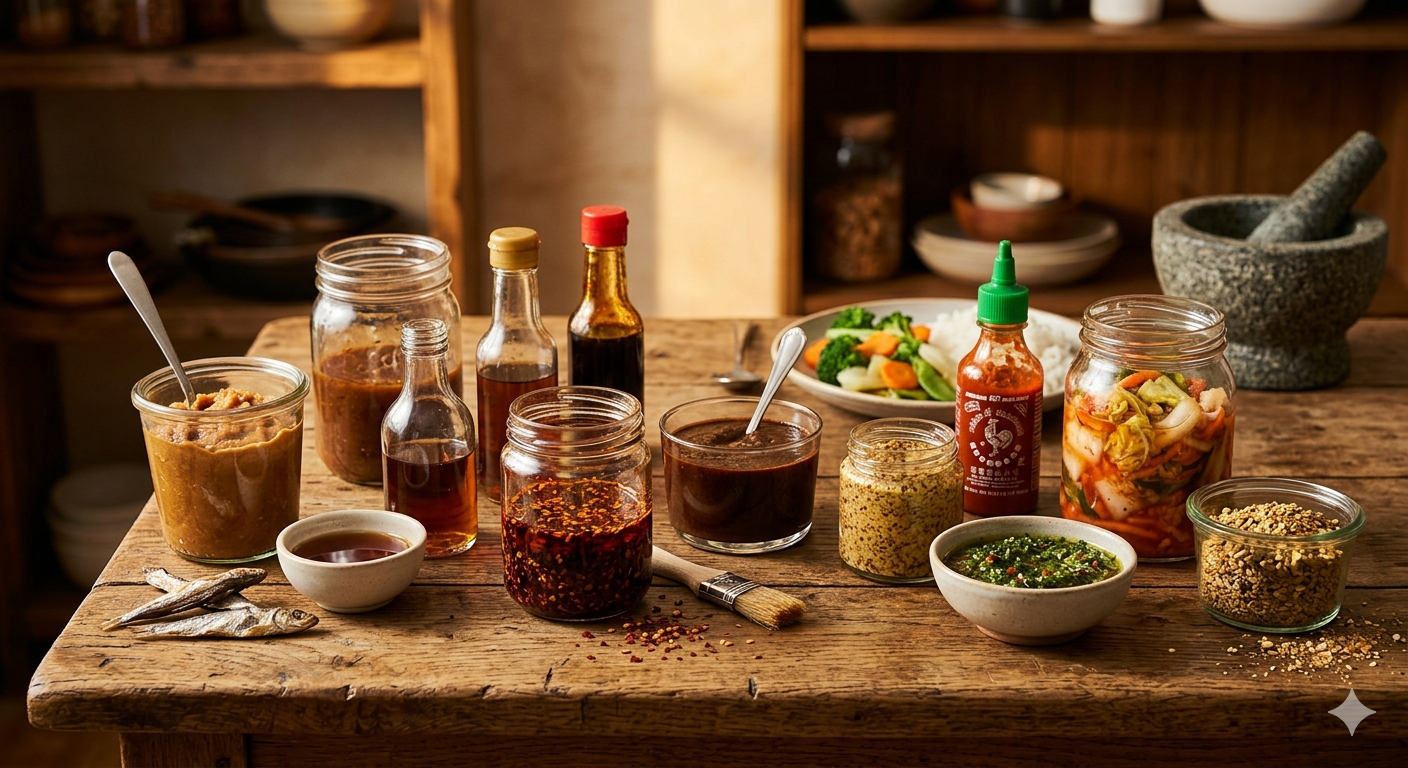
A spoonful of sauce can change an entire meal.
Plain rice becomes satisfying with a few drops of fish sauce. Simple vegetables become brighter with vinegar and herbs. A bowl of soup becomes deeper with miso. Grilled meat becomes more balanced with a fermented chili paste, yogurt sauce, or sour condiment. Bread becomes more meaningful with olive oil, cheese, cultured butter, chutney, or pickled vegetables.
Modern eaters often treat sauces and condiments as small extras. They are seen as toppings, dips, spreads, flavor boosters, or optional additions. But in traditional diets, sauces and condiments often played a much deeper role.
They helped preserve food.
They made simple staples more satisfying.
They added salt, acid, fat, spice, aroma, and umami.
They helped reduce waste.
They carried concentrated nutrition or minerals in small amounts.
They connected meals to place, climate, culture, and memory.
They allowed people to eat humble foods with more pleasure and variety.
Traditional sauces and condiments are not just about flavor. They are condensed food wisdom.
To understand them properly, we need to look beyond the bottle, jar, or small bowl on the table. We need to ask why these foods appeared in the first place, what problems they solved, and how they helped traditional diets work.
What Counts as a Traditional Sauce or Condiment?
A traditional sauce or condiment is usually a concentrated food used in small amounts to season, balance, preserve, or complete a meal.
Examples include:
Fish sauce
Soy sauce
Miso
Vinegar
Mustard
Fermented chili paste
Yogurt sauces
Herb sauces
Pickles
Chutneys
Relishes
Salsa
Pesto
Tahini
Olive oil-based dressings
Fermented bean pastes
Shrimp paste
Kimchi juice
Sauerkraut brine
Curry pastes
Mole
Harissa
Gremolata
Aioli
Sour cream-based sauces
Traditional spice blends mixed with oil, vinegar, or fermented ingredients
Some are fermented. Some are salted. Some are sour. Some are spicy. Some are fatty. Some are herbal. Some are made from fish, soybeans, dairy, seeds, nuts, fruits, vegetables, grains, or spices.
What they share is concentration.
A small amount carries a large amount of taste, aroma, memory, and culinary function. Traditional condiments are often not meant to be eaten alone. They are designed to interact with staple foods, proteins, vegetables, soups, and cooked dishes.
This is why they matter. They help complete the meal.
Traditional Condiments Were Born from Practical Needs
Many traditional condiments began as solutions to practical problems.
How do you preserve fish before it spoils?
How do you keep vegetables edible after harvest season?
How do you make a grain-heavy meal more satisfying?
How do you use herbs before they wilt?
How do you make tough or plain foods more enjoyable?
How do you stretch a small amount of animal food across a larger meal?
How do you create flavor without relying on expensive ingredients?
Condiments answered these questions.
Fish became fish sauce, fermented paste, dried flakes, or preserved seafood seasoning. Soybeans became miso, soy sauce, tempeh, natto, and fermented bean pastes. Milk became yogurt, cheese, cultured cream, and sour sauces. Fruits became vinegar, chutney, preserves, and sour relishes. Vegetables became pickles, sauerkraut, kimchi, salsa, and fermented condiments. Herbs became pesto, green sauces, spice pastes, and medicinal seasonings.
In many cases, condiments were not luxury items. They were ways of making food last, reducing waste, and increasing the value of simple meals.
A condiment is often what happens when a culture refuses to waste flavor.
Condiments Helped Preserve Food
Before refrigeration, preservation was central to survival. Traditional sauces and condiments often developed from preservation methods such as salting, fermenting, drying, smoking, aging, pickling, and oil storage.
Fish sauce is a clear example. Fresh fish spoils quickly, especially in warm climates. By combining fish with salt and allowing fermentation over time, communities created an intensely savory liquid that could last much longer than fresh fish. A small amount could season rice, vegetables, soups, and many dishes.
Soy sauce and miso show a similar principle with soybeans and grains. Fermentation transformed ingredients into long-lasting, flavorful seasonings.
Pickles and chutneys preserved fruits and vegetables. Vinegar preserved and brightened foods. Cheese and yogurt sauces preserved milk. Herb oils and spice pastes helped capture seasonal flavors.
Preservation was not only about preventing hunger. It created taste. Many of the world’s most beloved condiments were born because people needed to save food from spoilage.
This is one of the most important lessons of traditional food wisdom: survival often creates flavor.
Condiments Made Staple Foods More Satisfying
Many traditional diets were built around staple foods: rice, wheat, maize, millet, barley, potatoes, cassava, yams, beans, lentils, or other local foundations.
Staples are powerful because they feed people. They provide calories, structure, and reliability. But on their own, they can be plain.
Condiments helped transform staples into meals.
Rice with fish sauce, soy sauce, kimchi, pickled vegetables, curry paste, or fermented bean sauce becomes more satisfying. Bread with olive oil, cheese, cultured butter, pesto, mustard, or vinegar-based relish becomes more complete. Potatoes with yogurt sauce, sauerkraut, herbs, or fermented vegetables gain contrast. Beans with salsa, chili paste, sour cream, vinegar, or spice blends become richer and more interesting.
Traditional condiments allowed people to eat simple foods repeatedly without boredom.
This matters today because many modern eaters chase variety through packaged snacks and ultra-processed flavors. Traditional cuisines often achieved variety through condiments instead. The base meal could be simple, but the flavor system made it feel alive.
A bowl of rice, vegetables, and eggs can become Japanese, Korean, Vietnamese, Mediterranean, Mexican, Indian, or Middle Eastern depending on the condiments used.
Condiments are cultural flavor maps.
Condiments Add the Missing Elements of a Meal
A good traditional condiment often adds one or more missing elements:
Salt
Acid
Fat
Umami
Heat
Bitterness
Sweetness
Aroma
Texture
Freshness
Microbial complexity
Minerality
Herbal brightness
These elements help balance a meal.
A rich meat dish may need acidity. A plain grain dish may need salt and umami. A starchy meal may need spice and sourness. A vegetable dish may need fat to carry flavor. A heavy soup may need herbs. A fatty fish may need citrus or vinegar. A bland legume dish may need chili, garlic, fermented paste, or pickled vegetables.
Traditional cooks often understood balance intuitively.
They knew that food should not be flat. It should have contrast.
Modern nutrition often focuses on macronutrients, but traditional cuisines focus on sensory balance. A satisfying meal is not just protein, fat, and carbohydrates. It is also sour, salty, savory, aromatic, fresh, rich, crisp, warm, cooling, spicy, or bitter in the right combination.
Condiments help build that balance.
Umami: The Deep Savory Power of Traditional Sauces
Many traditional condiments are rich in umami, the deep savory taste associated with foods such as fermented fish, aged cheese, soy sauce, miso, mushrooms, tomatoes, meat broths, and fermented bean pastes.
Umami matters because it makes simple foods feel more satisfying.
A few drops of fish sauce can deepen a soup. A spoonful of miso can make broth feel fuller. A small amount of soy sauce can intensify vegetables. A little aged cheese can transform bread or pasta. Fermented shrimp paste can give depth to a large pot of food. Tomato paste or mushroom sauces can add richness without much volume.
Traditional diets often used umami strategically. Instead of eating large portions of expensive protein, a community could use small amounts of fermented, aged, or preserved ingredients to add savory depth to a larger meal.
This was economical and practical.
It also explains why many fermented condiments are so powerful. They compress time, protein, salt, microbes, and flavor into a small serving.
Umami is one reason traditional condiments add more than flavor. They add satisfaction.
Acid: The Brightness That Balances Heavy Foods
Acidity is another key function of condiments.
Vinegar, citrus, fermented vegetables, yogurt sauces, sour pickles, tamarind, fermented grain liquids, and other acidic condiments help brighten meals. They cut through richness, balance fat, and make heavy foods feel lighter.
Traditional cuisines use acid everywhere.
Fish with citrus.
Meat with vinegar sauce.
Rice with pickles.
Bread with sourdough.
Beans with salsa.
Fried foods with sour condiments.
Spicy dishes with yogurt.
Rich stews with fermented vegetables.
Salads with vinegar or lemon.
Acid wakes up the palate.
It can also encourage people to eat more vegetables and simple foods because it makes them taste more lively. A plate of greens with vinegar, olive oil, herbs, and salt is very different from plain leaves. Cooked vegetables with yogurt sauce or fermented relish can become much more appealing.
Traditional condiments show that healthy eating does not need to be bland. Often, it needs better balance.
Spice and Heat: More Than Excitement
Spicy condiments appear in many food cultures: chili pastes, hot sauces, harissa, sambal, fermented chili, curry pastes, mustard, horseradish, wasabi, and pepper-based sauces.
Spice adds excitement, but it also has cultural and practical roles.
In warm climates, strong spices may have helped make food more appealing in heat, supported preservation traditions, and masked or balanced strong flavors. Spices were also valuable trade goods and often carried medicinal, ritual, or symbolic meanings.
Heat can stimulate appetite. It can make simple foods feel more satisfying. It can create contrast with cooling foods such as yogurt, cucumber, herbs, rice, or fermented vegetables.
However, spicy condiments are not ideal for everyone. Some people tolerate them well; others may experience reflux, irritation, sweating, or digestive discomfort.
As with all traditional foods, context and personal tolerance matter.
The lesson is not that everyone should eat more spice. The lesson is that spice systems helped cultures build flavor from available ingredients.
Fat-Based Condiments Help Carry Flavor
Not all condiments are salty, sour, or fermented. Some are fat-based.
Examples include olive oil dressings, pesto, tahini sauce, nut sauces, seed pastes, aioli, butter sauces, cultured cream, coconut-based sauces, and herb oils.
Fat carries aroma and flavor. Many herbs and spices become more expressive when mixed with fat. Fat also helps make meals more satisfying and can support the absorption of certain fat-soluble compounds from foods.
Traditional fat-based condiments often made plant-heavy meals more satisfying. A drizzle of olive oil on vegetables, tahini with legumes, peanut sauce with grains, coconut sauce with roots, or cultured butter with bread can change the experience of a meal.
The modern problem is not fat itself. The problem is often the type, amount, and context of fat. Traditional fats in sauces are usually part of a meal. Ultra-processed fats in packaged snacks are often part of products designed to be eaten mindlessly.
A traditional fat-based condiment can help make real food more enjoyable.
Condiments Can Support Digestive Comfort
Some traditional condiments may support digestion indirectly by changing how meals are eaten.
Fermented condiments may provide acids, enzymes, live microbes in some cases, or compounds created during fermentation. Bitter herbs may stimulate appetite and traditional digestive rituals. Sour condiments can make rich foods feel lighter. Spices may stimulate saliva and digestive secretions for some people. Yogurt sauces may make spicy foods more tolerable. Pickles can add acidity and crunch that slow the eating experience.
This does not mean condiments are medical treatments. They are not cures for digestive disorders. But traditional meal design often included digestive logic.
A heavy food was paired with something sour.
A spicy food was paired with something cooling.
A bland starch was paired with something fermented.
A dry food was paired with sauce.
A fatty food was paired with herbs or bitterness.
These pairings may make meals feel better balanced and more comfortable.
Modern eating often removes these traditional pairings. People may eat refined starches, processed meats, fried foods, and sugary drinks without the balancing elements that traditional cuisines developed.
Condiments can help bring balance back.
Condiments and Food Safety
Some condiments also had food safety functions.
Salted, acidic, fermented, or spicy condiments may help reduce spoilage risk in certain contexts, although they should not be seen as a guarantee of safety. Vinegar, salt, fermentation acids, and certain spices can create conditions less favorable to some microbes.
Traditional communities used these tools carefully.
However, it is important to avoid romanticizing. A condiment cannot make unsafe food safe in every situation. Spoiled meat, contaminated fish, moldy grains, or improperly fermented foods can still be dangerous. Food safety depends on many factors: cleanliness, temperature, acidity, salt concentration, storage, ingredients, and handling.
A modern approach should respect both traditional preservation and current food safety knowledge.
Traditional sauces were intelligent, but they were not magic.
Condiments Carry Cultural Memory
A traditional condiment often tastes like home.
For some people, it is fish sauce in a family kitchen. For others, it is miso soup, hot sauce, mustard, yogurt with herbs, pickled vegetables, soy sauce, chutney, salsa, olive oil, tahini, vinegar, or fermented chili paste.
Condiments are powerful because they are sensory memory in concentrated form.
A smell can bring back a grandmother’s cooking. A sour pickle can recall a childhood meal. A sauce can connect someone to a region, language, religion, holiday, market, or family tradition.
This is why condiments often survive migration. People may leave their homeland, but they carry sauces, spices, pastes, and pickles with them. These foods help recreate familiar meals in new places.
A condiment can be a portable culture.
Modern nutrition often overlooks this emotional and cultural dimension. But it matters. People are more likely to eat well when food feels meaningful, not just correct.
Why Traditional Condiments Are Often Used in Small Amounts
Traditional condiments are concentrated, so they are usually used in small amounts.
This is important.
Fish sauce, soy sauce, miso, shrimp paste, pickles, mustard, aged cheese, chili paste, and fermented sauces can be intense. They are not meant to be eaten like main dishes. Their role is to season and balance.
Modern food culture sometimes confuses intensity with quantity. People may overuse sauces high in sugar, salt, or refined oils. Some commercial condiments are designed to be poured generously, not used carefully.
Traditional condiments are different. Their strength encourages moderation. A small amount can flavor a whole dish.
This teaches an important eating principle: more flavor does not always require more food.
Sometimes, a meal becomes satisfying because the flavor is concentrated in the right place.
Traditional Condiments vs Modern Commercial Sauces
Not all condiments are equal.
Many modern commercial sauces are built around added sugar, refined oils, artificial flavors, preservatives, thickeners, colorings, and large amounts of sodium. They may imitate traditional flavors but lack the complexity, fermentation, or whole-food base of traditional versions.
Examples include some sweet bottled sauces, ultra-processed dressings, artificially flavored dips, sugary marinades, and shelf-stable products that use traditional names but industrial formulas.
This does not mean every store-bought condiment is bad. Many simple condiments can be useful: plain mustard, vinegar, fermented vegetables, miso, tahini, salsa, olive oil, natural hot sauce, plain yogurt, or traditionally made sauces.
The key is to read ingredients and understand purpose.
A traditional-style condiment usually has a clear food base. A highly processed sauce often has long ingredient lists, added sugar, refined oils, stabilizers, and flavor systems.
Ask whether the condiment supports real food or replaces it with artificial intensity.
How to Choose Better Condiments
A useful condiment should make real meals more enjoyable without turning the meal into a sugar, salt, or processed-fat delivery system.
When choosing condiments, consider these questions:
Is it based on recognizable ingredients?
Is sugar one of the main ingredients?
Does it contain refined oils you would not normally use?
Is it fermented, pickled, aged, or traditionally prepared?
Is it meant to be used in small amounts?
Does it help you eat more whole foods?
Does it fit your digestion and health needs?
Does it add balance: acid, salt, herbs, spice, umami, or fat?
Better options may include:
Plain yogurt with herbs
Vinegar and olive oil dressing
Miso paste
Naturally fermented vegetables
Simple salsa
Tahini with lemon
Mustard without added sugar
Traditional fish sauce used sparingly
Soy sauce or tamari used in moderation
Pesto made from herbs, nuts, and olive oil
Chutney with modest sweetness
Hot sauce with simple ingredients
Herb sauces such as chimichurri or gremolata
The best condiment is not the one with the most health claims. It is the one that helps you eat better meals.
How Condiments Can Help People Eat More Whole Foods
Many people want to eat more vegetables, legumes, fish, eggs, whole grains, or home-cooked meals, but they struggle because simple foods feel boring.
Condiments can solve this problem.
Vegetables taste better with yogurt sauce, vinaigrette, tahini, pesto, salsa, or fermented vegetables. Beans become more appealing with chili paste, herbs, vinegar, cumin, garlic, or salsa. Fish becomes more satisfying with lemon, herbs, fermented sauce, mustard, or yogurt. Eggs become more interesting with kimchi, salsa, herbs, or pickled onions. Rice becomes a complete meal with miso soup, fish sauce, soy sauce, sesame, pickles, or fermented vegetables.
This is one of the most practical uses of traditional condiments: they make healthy food easier to enjoy.
Instead of forcing yourself to eat bland “clean” meals, build flavor systems.
A person who knows how to use sauces and condiments can make simple foods taste good without relying on ultra-processed snacks.
The Condiment Plate: A Traditional Strategy for Variety
Some cuisines use a beautiful strategy: they serve a simple main food with several small condiments.
A bowl of rice may come with pickles, fermented sauce, chili paste, herbs, and broth. Flatbread may come with yogurt, chutney, pickles, and lentils. Grilled foods may come with herb sauce, sour vegetables, mustard, or fermented condiments. Tacos may come with salsa, lime, onions, cilantro, and fermented chili.
This creates variety without needing an entirely different meal every time.
Modern eaters can use this idea.
Prepare one simple base: rice, potatoes, eggs, vegetables, beans, fish, soup, or meat. Then rotate condiments. One day use yogurt herbs. Another day use salsa. Another day use miso dressing. Another day use pickled vegetables. Another day use tahini lemon sauce.
This approach makes home cooking easier and more interesting.
It also supports food diversity because condiments often contain herbs, spices, fermented foods, seeds, nuts, vegetables, or beneficial acids.
Condiments as a Bridge Between Old and New Eating
Traditional condiments can help modern people reconnect with food culture without changing everything overnight.
You may not have time to cook elaborate traditional meals every day, but you can add a spoonful of fermented vegetables to lunch. You can use miso in soup. You can make a simple vinegar dressing. You can add herbs and yogurt to roasted vegetables. You can use salsa with eggs. You can keep mustard, tahini, olive oil, lemon, pickles, or natural hot sauce in the kitchen.
These small additions can shift a meal from processed to prepared.
They can also help you reduce reliance on sugar-heavy sauces, artificial dips, and packaged flavorings.
Condiments are small, but they can change eating behavior.
A good condiment makes whole food more attractive. That is a powerful tool.
When to Be Careful with Condiments
Traditional condiments are useful, but they are not perfect for everyone.
Some are high in sodium. This matters for people with high blood pressure, kidney disease, or sodium-sensitive conditions. Some are fermented and may bother people with histamine intolerance or certain digestive disorders. Some are spicy and may worsen reflux or irritation. Some contain allergens such as soy, fish, shellfish, dairy, sesame, peanuts, tree nuts, gluten, or eggs. Some commercial sauces contain added sugar, preservatives, or refined oils.
Portion matters too.
A little sauce may improve a meal. Too much may add excessive salt, sugar, or calories.
The best approach is awareness. Use condiments to support meals, not overwhelm them.
If you have medical conditions, food allergies, or specific dietary restrictions, read labels carefully and consult a qualified healthcare professional when needed.
A Practical Framework: The Five Roles of a Traditional Condiment
To use condiments wisely, think of their five possible roles.
1. Preservation
Does the condiment preserve seasonal or perishable foods through salt, acid, fermentation, drying, or aging?
Examples: pickles, fish sauce, miso, sauerkraut, cheese, vinegar.
2. Balance
Does it balance the meal with salt, acid, fat, spice, bitterness, or freshness?
Examples: yogurt sauce with spicy food, vinegar with fatty food, herbs with meat.
3. Concentration
Does it add a strong flavor in a small amount?
Examples: soy sauce, mustard, chili paste, aged cheese, fermented bean paste.
4. Culture
Does it connect the meal to a regional food tradition?
Examples: salsa, chutney, tahini, kimchi, pesto, harissa, fish sauce.
5. Encouragement
Does it help you eat more whole foods?
Examples: dressing on vegetables, salsa on eggs, miso in soup, tahini on roasted roots.
A condiment is most useful when it serves at least one of these roles clearly.
Simple Traditional-Style Condiment Ideas
You do not need complicated recipes to apply this wisdom.
Here are simple condiment ideas that fit modern life:
Plain yogurt mixed with lemon, garlic, herbs, and a pinch of salt
Olive oil, vinegar, mustard, and herbs as a dressing
Tahini mixed with lemon and water for vegetables or grains
Miso stirred into soup or dressing
Salsa made with tomatoes, onions, chili, cilantro, and lime
Pickled onions for eggs, beans, tacos, or salads
Sauerkraut or kimchi as a small side dish
Pesto made with herbs, nuts, olive oil, and garlic
Chimichurri with parsley, garlic, vinegar, and olive oil
Mustard with roasted meats or potatoes
Fish sauce used sparingly in soups or stir-fries
Hot sauce with simple ingredients and no unnecessary sugar
These are not just “extras.” They are tools for building better meals.
Common Myths About Traditional Sauces and Condiments
Myth 1: Condiments are nutritionally unimportant
Condiments are used in small amounts, but they can strongly influence meal quality, flavor, satisfaction, and food choices.
Myth 2: All sauces are unhealthy
Some commercial sauces are high in sugar, refined oils, and additives. But many traditional condiments are simple, fermented, herbal, sour, or mineral-rich.
Myth 3: Fermented sauces are always healthy
Fermented sauces can be useful, but they may be high in salt or unsuitable for some people. Context and portion matter.
Myth 4: Healthy food should be plain
Traditional diets rarely depended on bland food. Herbs, spices, acids, fermented foods, and sauces often made simple meals satisfying.
Myth 5: More sauce means better flavor
Traditional condiments are often powerful in small amounts. The goal is balance, not excess.
Conclusion
Traditional sauces and condiments add far more than flavor.
They preserve food.
They reduce waste.
They make simple staples satisfying.
They add salt, acid, fat, spice, aroma, and umami.
They support meal balance.
They carry cultural memory.
They help people eat more whole foods.
They show how traditional kitchens transformed limited ingredients into rich cuisines.
Modern nutrition often focuses on the main food: meat, grains, vegetables, fruit, dairy, or legumes. But traditional food wisdom reminds us to pay attention to what completes the meal.
A sauce can turn plain rice into comfort. A pickle can balance richness. A fermented paste can deepen soup. A yogurt sauce can cool spice. A herb dressing can make vegetables desirable. A small amount of fish sauce, soy sauce, miso, salsa, mustard, chutney, or vinegar can carry generations of practical food intelligence.
The best condiments are not just toppings. They are bridges between survival and pleasure, between preservation and flavor, between culture and nourishment.
To eat better today, we do not always need more complicated diets. Sometimes we need better flavor systems.
Choose condiments that support real food. Use them with purpose. Respect their strength. Learn from the cultures that created them.
A small spoonful can hold a long human story.
Disclaimer: This article is for educational purposes only and is not medical advice. Some sauces and condiments may be high in sodium, sugar, allergens, fermented compounds, or spicy ingredients. If you have high blood pressure, kidney disease, food allergies, histamine intolerance, digestive disorders, or specific dietary needs, consult a qualified healthcare professional before making major dietary changes.