
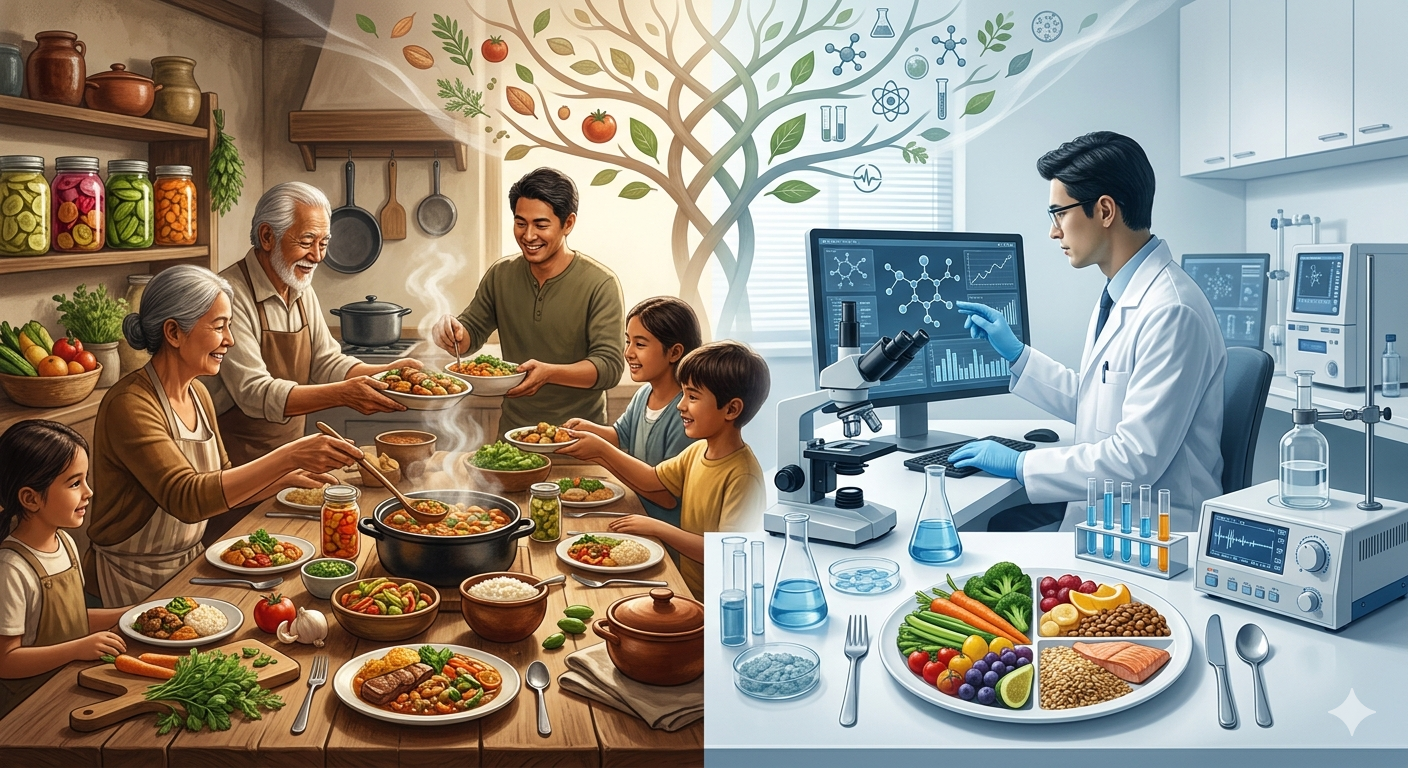
Modern nutrition science has given us valuable knowledge.
We can measure calories, protein, carbohydrates, fats, vitamins, minerals, fiber, cholesterol, sodium, blood sugar, hormones, and many other markers. We can study how different foods affect the body. We can identify nutrient deficiencies, food allergies, metabolic risks, and patterns linked with health outcomes.
This knowledge matters.
But nutrition science is not the whole story of eating.
People do not eat nutrients. They eat meals. They eat traditions. They eat family memories, regional dishes, comfort foods, religious foods, holiday foods, survival foods, and foods shaped by climate, geography, migration, identity, and daily routine.
This is why food culture matters as much as nutrition science.
A diet that looks perfect on paper may fail if it does not fit a person’s culture, taste, budget, kitchen skills, family life, digestive tolerance, or social environment. A traditional meal that looks simple may carry deep wisdom about balance, preservation, seasonality, satisfaction, and community.
Nutrition science can tell us what food contains. Food culture helps explain why people actually eat the way they do.
To build a healthier relationship with food, we need both.
What Is Food Culture?
Food culture is the shared system of habits, meanings, practices, recipes, rituals, and beliefs surrounding food.
It includes:
What people eat
How they prepare food
When they eat
Who they eat with
Which foods are used for celebrations
Which foods are avoided
How meals are structured
How ingredients are preserved
What flavors are valued
How recipes are passed down
How food connects to identity, religion, family, region, and memory
Food culture is not only found in old traditions. Every society has food culture, including modern fast-food culture, office snack culture, diet culture, convenience culture, and social media wellness culture.
The question is not whether we have food culture. The question is whether our food culture supports nourishment, balance, and wellbeing.
Traditional food cultures often developed slowly over generations. They were shaped by survival, climate, farming, fishing, migration, trade, religious rules, local ingredients, and family knowledge.
Modern food culture often develops quickly through advertising, convenience, global brands, social media, and industrial food systems.
That difference matters.
Nutrition Science Explains Food, But Culture Organizes Eating
Nutrition science can help us understand the body. It can tell us that protein supports tissue repair, fiber affects digestion, omega-3 fats play important roles, excess added sugar can be harmful, and micronutrients matter.
But nutrition science does not automatically tell us how to live.
It may tell us to eat more vegetables, but food culture teaches us how to make vegetables taste good. It may tell us to eat enough protein, but food culture shows whether that protein comes from fish, beans, eggs, yogurt, meat, tofu, lentils, or shellfish. It may tell us to reduce ultra-processed foods, but culture gives us the recipes, routines, and skills to replace them.
A scientific recommendation becomes useful only when it can become a meal.
For example, “eat more legumes” is a nutrition idea. But lentil soup, black bean stew, hummus, dal, fermented soybean dishes, and rice-and-bean meals are food culture. “Eat fermented foods” is a nutrition idea. But yogurt, kimchi, sauerkraut, kefir, miso, tempeh, sourdough, and fish sauce are cultural expressions.
Science gives principles. Culture gives practical forms.
Without culture, nutrition advice often becomes abstract, boring, or unsustainable.
Why Traditional Food Culture Often Contains Hidden Wisdom
Many traditional food habits developed before modern nutrition science, but that does not make them meaningless.
Traditional cultures often learned through observation and repetition. They noticed which foods spoiled quickly, which needed cooking, which caused discomfort, which stored well, which combinations were satisfying, which foods supported hard labor, and which dishes helped families survive difficult seasons.
Over generations, this practical knowledge became recipes, rules, rituals, and preferences.
A traditional dish may contain hidden logic.
A grain is paired with legumes.
A fatty food is paired with something sour.
A bland staple is paired with fermented sauce.
A spicy dish is paired with yogurt or cooling herbs.
A hard-to-digest food is soaked, fermented, or slow-cooked.
A seasonal food is dried, salted, smoked, or pickled.
A small amount of animal food flavors a larger plant-based meal.
A bitter herb balances a rich dish.
Not every traditional practice is perfect. Some were shaped by scarcity, limited options, or beliefs that may not apply today. But many traditional food patterns contain useful lessons because they were tested by daily life.
Food culture is often nutrition science in lived form.
Food Culture Makes Healthy Eating Sustainable
A diet is only useful if people can actually live with it.
Many modern diets fail because they ignore culture. They ask people to abandon their normal foods, family meals, celebrations, budget, cooking skills, and social life. Even if the diet creates short-term results, it may not last.
Food culture helps make healthy eating sustainable because it gives people meals they recognize, enjoy, and can repeat.
A person raised on rice does not necessarily need to eliminate rice to eat better. They may need to improve the whole meal around it: more vegetables, better protein, fermented condiments, smaller portions if needed, fewer sweet drinks, and less ultra-processed food.
A person raised on bread does not necessarily need to fear all bread. They may do better with traditional sourdough, whole-grain bread if tolerated, better toppings, soup-based meals, and less sweet packaged bread.
A person raised on beans does not need to follow a diet that treats beans as a problem for everyone. They may need proper soaking, cooking, seasoning, and portion awareness.
A culturally respectful diet modifies patterns instead of destroying them.
This matters because food is emotional. If healthy eating feels like losing your identity, it becomes harder to maintain.
Food Culture Teaches Meal Structure
Modern eating often lacks structure.
People snack throughout the day. They eat while driving, working, scrolling, or watching screens. They drink calories without noticing. They eat alone. Meals may be replaced by bars, shakes, packaged snacks, or delivery food.
Traditional food cultures often had stronger meal structures.
Breakfast, lunch, and dinner had recognizable patterns. Meals were shared. Foods were combined in expected ways. Staples were balanced with sides, soups, sauces, vegetables, proteins, or fermented foods. Special foods were reserved for celebrations. Certain foods belonged to seasons.
This structure helped people know how to eat without constantly making decisions.
Meal structure is underrated.
When meals have structure, eating becomes less chaotic. A person can build a plate more easily. They can feel satisfied. They can reduce random snacking. They can maintain routines.
Nutrition science may say “balance your macronutrients.” Food culture says, “Here is a soup, a staple, a side dish, a protein, and a condiment that work together.”
That is more practical.
Culture Shapes Taste
Taste is not purely biological. It is also learned.
Children learn which foods are normal by watching family and community. They learn whether vegetables are enjoyable, whether fermented foods are familiar, whether bitterness is acceptable, whether spice is comforting, whether fish smells good, whether sour flavors belong at meals, and whether home cooking matters.
Modern processed food culture can train taste in another direction. It can make people expect constant sweetness, softness, saltiness, and intense artificial flavors. Over time, simple whole foods may seem boring.
Food culture can either protect taste or distort it.
Traditional cuisines often use herbs, spices, fermentation, acidity, bitterness, and texture to create satisfying food without relying only on sugar and refined fats. They teach the palate to appreciate complexity.
This is one reason returning to traditional flavors can be powerful. It helps people enjoy real food again.
A healthy diet is easier when healthy food tastes like home.
Food Culture Protects Against Over-Simplified Diet Rules
Nutrition trends often reduce food to one enemy or one hero.
Carbs are bad.
Fat is bad.
Meat is bad.
Grains are bad.
Dairy is bad.
Fruit is sugar.
Salt is dangerous.
Fermented foods are magic.
Protein fixes everything.
Fiber fixes everything.
Food culture is more balanced because it sees foods in patterns.
A traditional diet may include rice, but not as soda, pastries, and candy. It may include wheat, but as bread with soup, not endless packaged snacks. It may include meat, but often with vegetables, herbs, broth, sour condiments, or staples. It may include dairy, but as yogurt, cheese, or cultured foods. It may include salt, but as part of preservation and meal balance.
This does not mean traditional diets are always healthy. It means they often resist the overly simplistic thinking of modern diet culture.
Food culture reminds us that the form of a food matters. The meal matters. The amount matters. The preparation matters. The lifestyle matters.
A single nutrient rarely tells the whole story.
Food Culture and Identity
Food is one of the strongest forms of identity.
People remember the foods of childhood. They remember the smell of a family kitchen, the taste of a holiday dish, the soup made during illness, the bread from a local bakery, the condiment that appeared at every meal, or the fruit that marked a season.
Food can connect people to ancestry, homeland, religion, family, and community. For migrants, food may become one of the most important ways to preserve identity in a new place.
This emotional dimension matters for health.
If nutrition advice insults or dismisses someone’s food culture, it creates resistance. If it tells people their traditional foods are primitive, unhealthy, or wrong, it may damage trust. If it forces people to eat in ways that feel foreign and joyless, it may not last.
A better approach is to ask: how can this person’s food culture be supported, improved, and adapted for modern health?
For example:
Keep the traditional soup, but reduce processed meat.
Keep the rice, but add more vegetables and protein.
Keep the bread, but choose better quality and pair it well.
Keep the fermented condiment, but use salt-aware portions.
Keep the family meal, but reduce sugary drinks.
Keep the celebration food, but return to normal balanced eating afterward.
Healthy eating should not require cultural erasure.
Why Modern Nutrition Often Feels Confusing
Modern nutrition feels confusing partly because it separates people from food culture.
When people lose traditional food knowledge, they become more dependent on external rules. They look for diet plans, influencers, labels, apps, and marketing claims. They no longer know how to build meals from basic ingredients, balance flavors, use leftovers, cook legumes, prepare vegetables, or preserve foods.
This creates a vacuum. Diet culture fills it.
Instead of inherited meal patterns, people get conflicting advice. Instead of family recipes, they get packaged “health foods.” Instead of cooking skills, they get meal replacement products. Instead of food wisdom, they get fear.
Food culture gives people a foundation. Without it, every new trend feels persuasive.
This is why rebuilding food culture is not nostalgic. It is practical.
A person with strong food culture knows how to eat without chasing every trend.
Science Without Culture Can Become Cold
Science is essential, but when nutrition becomes only scientific, it can become cold and mechanical.
People may start seeing food only as fuel, macros, blood markers, or risk factors. They may fear normal foods. They may feel guilty about celebrations. They may treat meals as calculations instead of human experiences.
This can lead to stress, rigidity, and disconnection.
Food culture brings warmth back to eating. It reminds us that meals are also about pleasure, gratitude, family, tradition, hospitality, and belonging.
A person can care about blood sugar and still enjoy a traditional meal. A person can care about protein and still respect cultural dishes. A person can reduce ultra-processed foods without becoming afraid of every ingredient. A person can improve health without turning eating into a punishment.
The goal is not to reject science. The goal is to humanize it.
Culture Without Science Can Also Be Limited
At the same time, food culture alone is not enough.
Some traditional practices may not fit modern lifestyles. Some preserved foods may be too salty for people with certain conditions. Some traditional diets were shaped by scarcity and may lack nutrients if not adapted. Some cultural habits may include excessive alcohol, refined sweets, fried foods, or large portions in modern contexts. Some inherited beliefs about food may not be accurate.
Modern science helps us update tradition.
It can identify nutrient deficiencies.
It can improve food safety.
It can explain allergies and intolerances.
It can help manage diabetes, kidney disease, heart disease, celiac disease, gout, and other conditions.
It can show why some foods are risky in certain amounts.
It can help people adapt traditional diets to modern health needs.
The best approach is not culture against science. It is culture with science.
Food culture gives meaning. Nutrition science gives measurement and correction.
Together, they are stronger.
Traditional Diets Were Not Perfect
It is important not to romanticize the past.
Traditional diets were shaped by survival, not always by ideal health. People experienced famine, infections, parasites, nutrient deficiencies, unsafe water, and limited medical care. Some traditional foods were eaten because there were no alternatives. Some preservation methods used large amounts of salt. Some cultural practices restricted foods in ways that may not be helpful today.
Food culture should be respected, but not blindly followed.
The goal is to learn from tradition while improving it with modern knowledge.
For example, a traditional salted food can be enjoyed in smaller amounts. A traditional grain dish can be balanced with more vegetables and protein. A festival sweet can remain a celebration food instead of becoming a daily snack. A fermented food can be used carefully by people who tolerate it. A culturally important meal can be adapted for people with diabetes, high blood pressure, food allergies, or digestive conditions.
Respect does not mean refusing change. Living food cultures adapt.
Food Culture Helps Reduce Ultra-Processed Eating
One of the most useful roles of food culture today is that it can help people move away from ultra-processed foods.
Ultra-processed foods often replace meals with products. They are easy to eat quickly, alone, and repeatedly. They are usually designed for convenience and strong stimulation rather than cultural meaning or nourishment.
Food culture does the opposite. It encourages meals, cooking, sharing, structure, identity, and tradition.
A person who knows how to make a simple traditional soup may be less dependent on instant noodles. A person who knows how to prepare beans well may be less dependent on packaged snacks. A person who has a satisfying breakfast tradition may be less likely to rely on sugary cereal. A person who enjoys fermented vegetables, herbs, sauces, and real condiments may not need artificial flavor snacks.
Food culture gives people alternatives.
The answer to ultra-processed eating is not only willpower. It is better food environments, better skills, better routines, and better cultural anchors.
Food Culture Teaches Moderation Through Context
Many traditional cultures include rich foods, sweets, alcohol, fried foods, and feast foods. But these foods often had context.
They belonged to festivals, seasons, religious events, weddings, harvests, holidays, or special family gatherings. They were not necessarily eaten all day, every day.
Modern food systems remove special foods from their original context. Sweets, fried foods, rich snacks, and alcohol can become daily habits. Celebration foods become convenience foods. Seasonal treats become year-round products.
Food culture can help restore boundaries.
It teaches that not every food needs to be banned, but not every food needs to be daily. Some foods belong to celebration. Some belong to ordinary meals. Some belong to small portions. Some belong to special seasons.
This kind of cultural moderation is often more sustainable than strict restriction.
Food Culture Makes Nutrition Personal
A healthy eating pattern should fit the person.
Food culture helps personalize nutrition because it starts from real life. It asks:
What foods do you already know?
What did your family cook?
What staples are familiar?
What flavors do you enjoy?
What foods are affordable?
What cooking methods are realistic?
What foods feel comforting?
What medical needs must be considered?
What traditions do you want to keep?
What habits need to change?
This approach is more respectful and more practical than giving everyone the same meal plan.
For example, two people may both need to eat more fiber. One might do that through beans, corn tortillas, salsa, and vegetables. Another through lentil soup, whole grains, herbs, and yogurt. Another through rice, vegetables, seaweed, and fermented foods. Another through oats, berries, nuts, and root vegetables.
The goal can be similar, but the cultural path can differ.
That is the strength of combining nutrition science with food culture.
How to Use Food Culture to Eat Better
You can use food culture as a practical tool for modern wellness.
Start by looking at your own food background. What traditional dishes were built from whole ingredients? Which meals felt balanced and satisfying? Which cooking methods did your family or culture use? Which condiments, soups, grains, vegetables, proteins, or fermented foods appeared often?
Then ask what needs updating.
Maybe the traditional base is strong, but modern additions are the problem: sugary drinks, packaged snacks, refined desserts, fast food, or oversized portions. Maybe the meal pattern is good, but you need more protein. Maybe the recipes are nourishing, but you need less salt. Maybe you tolerate some traditional foods well and others poorly.
You do not need to return to the past exactly. You can keep the wisdom and adjust the details.
Try this simple process:
Choose one traditional meal you enjoy.
Identify the whole-food ingredients in it.
Reduce the most processed elements.
Add vegetables, herbs, or protein if needed.
Use traditional condiments wisely.
Keep portions realistic.
Eat slowly and without distraction when possible.
Notice how your body responds.
This is how food culture becomes a modern health tool.
Questions to Ask About Your Food Culture
To understand your own food culture more clearly, ask:
What foods do I associate with home?
Which traditional meals are naturally balanced?
Which family foods are celebration foods, not daily foods?
Which modern foods have replaced traditional meals?
Which cooking skills have been lost?
Which preserved or fermented foods are part of my background?
Which staple foods do I tolerate well?
Which foods cause discomfort?
How often do I eat with others?
Do I eat meals or mostly snacks?
What would my diet look like if I kept my culture but reduced ultra-processed foods?
These questions are more useful than simply asking, “Is this food good or bad?”
They help you see the pattern.
Practical Examples of Culture and Science Working Together
Example 1: Rice-based meals
Culture may provide rice as a staple. Science may suggest balancing blood sugar and nutrients. A practical meal might include rice with fish, eggs, tofu, vegetables, soup, herbs, and fermented condiments, rather than rice alone with sweet drinks and processed meat.
Example 2: Bread-based meals
Culture may include bread. Science may suggest choosing better quality carbohydrates and enough protein. A practical meal might include sourdough or whole-grain bread with eggs, yogurt, cheese, beans, vegetables, olive oil, or soup, rather than sweet packaged bread and sugary spreads.
Example 3: Dairy traditions
Culture may include yogurt, cheese, kefir, or milk. Science may remind us that lactose tolerance varies. A practical approach might be fermented dairy for those who tolerate it, lactose-free options when needed, or non-dairy alternatives for people who do not tolerate dairy.
Example 4: Fermented foods
Culture may include fermented vegetables, sauces, or drinks. Science may help people understand sodium, histamine, food safety, and gut health. A practical approach is to use fermented foods in small amounts with meals and adjust based on tolerance.
Example 5: Celebration sweets
Culture may include sweets for holidays. Science may warn against frequent added sugar. A practical approach is to keep sweets meaningful and occasional rather than turning them into daily snacks.
Food Culture and Community
Food culture also matters because eating is social.
People are more likely to maintain habits when those habits are supported by family, friends, and community. A person who tries to eat better alone may struggle if their environment is full of processed snacks and no one cooks. But when a household cooks, shops, and eats together, healthy changes become easier.
Traditional food cultures often used community to support eating patterns. Meals were shared. Cooking knowledge was passed down. Children watched adults prepare food. Recipes were learned through participation.
Modern life often isolates eating. People eat alone, order individually, snack privately, and cook less. Rebuilding food culture can mean rebuilding social connection around food.
This does not require large family meals every day. Even small rituals matter: cooking once a week with family, preparing soup for the next day, sharing a meal without screens, teaching children a recipe, or inviting friends for a simple home-cooked meal.
Food culture turns eating from a private struggle into a shared practice.
Common Myths About Food Culture
Myth 1: Nutrition science is more important than food culture
Science is essential, but it becomes practical only when translated into real meals. Culture helps people apply nutrition in daily life.
Myth 2: Traditional food is automatically healthy
Traditional food can contain wisdom, but it is not perfect. Some traditions need to be adapted for modern health needs.
Myth 3: Healthy eating means abandoning cultural foods
Often, the better approach is to improve traditional meals rather than replace them completely.
Myth 4: Food culture is only about taste
Food culture includes preservation, meal structure, cooking skills, digestion, social habits, identity, and sustainability.
Myth 5: Modern people do not need food culture
Everyone has food culture. The issue is whether it is shaped by real meals and tradition or by advertising, convenience, and ultra-processed products.
A Balanced Framework: Science Gives the What, Culture Gives the How
A useful way to think about the relationship is this:
Nutrition science helps identify what the body needs.
Food culture helps decide how those needs become meals.
Science may say: eat enough protein.
Culture says: fish soup, lentils, eggs, yogurt, beans, tofu, or meat stew.
Science may say: eat more fiber.
Culture says: beans, vegetables, oats, roots, whole grains, fruits, herbs, or traditional plant dishes.
Science may say: reduce added sugar.
Culture says: keep sweets for celebrations, drink unsweetened tea, enjoy whole fruit, and return to savory meals.
Science may say: support gut health.
Culture says: fermented vegetables, yogurt, sourdough, miso, pickles, legumes, fiber-rich meals, and slow cooking.
Science gives direction. Culture gives shape.
Conclusion
Food culture matters as much as nutrition science because eating is not just a biological act. It is also a human act.
Science helps us understand nutrients, disease risk, metabolism, digestion, and health markers. But culture helps us turn that knowledge into meals, habits, skills, flavors, memories, and routines that can last.
A healthy diet cannot live only in research papers. It must live in kitchens, families, markets, traditions, and daily life.
Food culture teaches us how to cook, how to combine foods, how to preserve seasonal abundance, how to enjoy vegetables, how to use condiments, how to structure meals, how to celebrate without eating chaotically every day, and how to connect food with meaning.
Modern wellness often looks for the perfect diet. Food culture reminds us that the best diet is not only nutritionally sound. It is also livable, satisfying, respectful, and sustainable.
We need nutrition science to guide us.
We need food culture to ground us.
When the two work together, eating becomes more than a rulebook. It becomes a wiser relationship with food, body, history, and community.
Disclaimer: This article is for educational purposes only and is not medical advice. Nutrition needs vary by individual. If you have a medical condition, food allergy, digestive disorder, pregnancy-related concern, eating disorder history, or specific dietary need, consult a qualified healthcare professional before making major dietary changes.