
Modern nutrition often focuses on what we eat.
Traditional food wisdom asks a deeper question: how was the food prepared?
This question matters more than many people realize. A grain can be raw, refined, soaked, sprouted, fermented, stone-ground, boiled, or baked. A bean can be hard, gas-forming, and difficult to digest, or it can be soaked, cooked slowly, seasoned, and turned into a nourishing meal. Milk can spoil quickly, or it can become yogurt, kefir, butter, or cheese. Fish can decay within hours, or it can be dried, salted, smoked, or fermented into a long-lasting source of flavor and nutrients.
Traditional food preparation was not random. It was not simply about taste or habit. It was a survival technology developed over generations.
Before refrigerators, food labels, supplements, freezers, pasteurization, canned goods, chemical preservatives, and global shipping, people had to know how to make food safe, edible, digestible, and useful. They had to solve practical problems: spoilage, toxins, scarcity, seasonality, hard textures, bitter flavors, nutrient loss, and food storage.
The hidden wisdom behind traditional food preparation is this: humans did not only adapt to food. We also adapted food to ourselves.
Traditional Preparation Was the Original Food Technology
When people hear the word “processed,” they often think of packaged snacks, refined cereals, fast food, sweetened drinks, and artificial ingredients. But processing food is not always bad. Humans have processed food for a very long time.
Cooking is processing.
Fermentation is processing.
Drying is processing.
Grinding is processing.
Soaking is processing.
Salting is processing.
Sprouting is processing.
Smoking is processing.
Peeling is processing.
Pounding is processing.
The key difference is purpose.
Traditional processing usually helped make food safer, more digestible, more flavorful, or more stable. Industrial processing often focuses on speed, shelf life, cost reduction, convenience, and repeat consumption.
A traditionally prepared food usually begins with a recognizable ingredient and uses time, heat, water, salt, microbes, air, pressure, or skill to transform it. An ultra-processed food often breaks ingredients down into refined components and rebuilds them into a product designed to be convenient and highly palatable.
This distinction is important.
A fermented cabbage and a packaged cheese-flavored snack are both “processed,” but they are not the same kind of food. One is transformed by salt, time, microbes, and tradition. The other is manufactured from refined ingredients, flavorings, and industrial techniques.
Traditional food preparation teaches us that not all processing is harmful. Some forms of processing are part of what made human food possible.
Why Traditional Cultures Prepared Food Carefully
Traditional food preparation methods developed because people needed to solve real problems.
Some foods spoil quickly.
Some foods are poisonous if prepared incorrectly.
Some foods are hard to chew.
Some foods are difficult to digest.
Some foods contain natural defense compounds.
Some foods are seasonal and must be stored.
Some foods are bland unless seasoned or transformed.
Some foods are scarce and must be stretched.
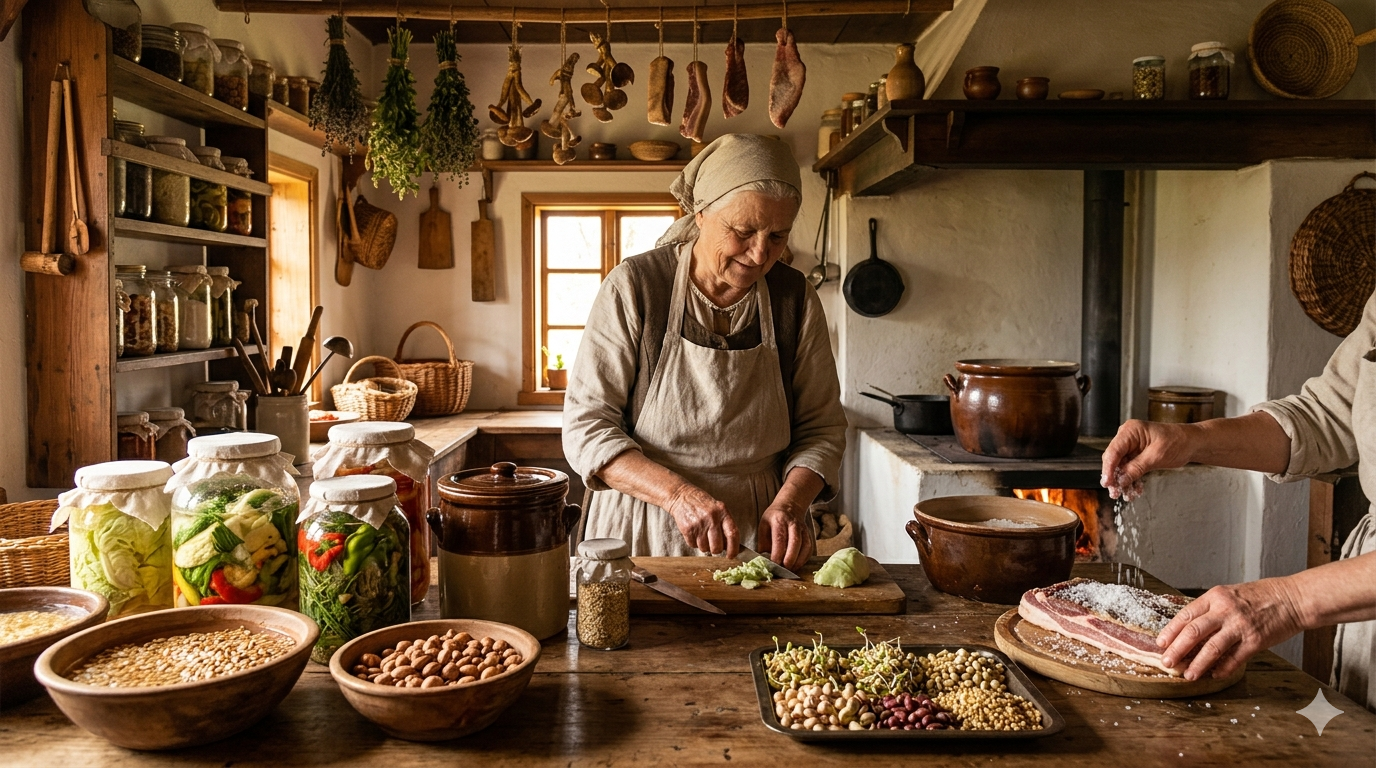
A traditional kitchen was not only a place to cook. It was a place of chemistry, microbiology, preservation, ecology, and family memory, even if people did not use those modern words.
Many traditional cooks knew through experience that beans needed soaking, roots needed cooking, grains often benefited from fermentation, milk could become cultured dairy, fish could be preserved with salt, and tough meat could become tender through slow cooking.
They may not have known the exact molecular explanation, but they knew what worked.
This is why traditional preparation should not be dismissed as old-fashioned. Many old food practices were practical solutions to problems modern eaters barely notice because industry now hides those problems from us.
Cooking: The Transformation That Made Us Human
Cooking is one of the most important food preparation methods in human history.
Heat changes food. It softens tough fibers, improves flavor, kills many harmful microorganisms, makes some starches more digestible, denatures proteins, and allows humans to extract more energy from certain foods.
Cooking also made food safer and more social. A cooked meal often brings people together around fire, stove, table, or kitchen. It creates rhythm and ritual. It turns ingredients into cuisine.
In traditional diets, cooking was not limited to one method. People roasted, boiled, steamed, grilled, baked, simmered, stewed, smoked, and slow-cooked foods depending on their environment and tools.
Each method had a purpose.
Boiling helped soften grains, roots, and tough meats.
Roasting concentrated flavor.
Steaming preserved delicate textures.
Slow cooking broke down tough fibers.
Smoking added flavor and helped preserve food.
Baking transformed dough into bread.
Grilling added taste and made meat easier to eat.
Modern life often treats cooking as an inconvenience. Traditional wisdom sees cooking as part of nourishment.
A home-cooked meal is not automatically healthy, but cooking gives you control over ingredients, preparation, seasoning, and balance. It reconnects food with intention.
Soaking: A Simple Method with Deep Value
Soaking is one of the quietest traditional food preparation methods, but it can be very useful.
Many grains, legumes, nuts, and seeds are dry storage foods. They are designed by nature to survive until conditions are right for growth. Because of this, they may contain compounds that protect them from pests, spoilage, or early germination.
Soaking helps begin the process of softening and rehydrating these foods. It can reduce cooking time, improve texture, and make some foods easier for certain people to digest.
Beans are the classic example. Many people experience gas or bloating from beans. Soaking, rinsing, and cooking them thoroughly can help reduce some of the compounds that contribute to digestive discomfort.
Traditional cultures often soaked beans, lentils, rice, grains, nuts, or seeds before cooking. Sometimes soaking was combined with fermentation, sprouting, grinding, or long simmering.
Modern convenience often skips this step. Canned foods and quick-cook products can be useful, but they may also disconnect people from the preparation knowledge that made staple foods more digestible.
Soaking teaches patience. It reminds us that some foods become better when given time.
Sprouting: Waking Up the Seed
Sprouting is another traditional method that changes food by using the seed’s own biology.
A seed is dormant. When soaked and exposed to the right conditions, it begins to germinate. This process changes enzymes, texture, flavor, and nutrient availability.
Sprouted grains, legumes, and seeds have appeared in many traditional food cultures. They can be eaten fresh, cooked, dried, ground into flour, or used in fermented foods.
The deeper lesson of sprouting is that food is alive before it becomes food. Traditional people often understood this intuitively. They knew that seeds, grains, and legumes were not inert objects. They could be awakened, transformed, softened, or prepared in stages.
Sprouting is not necessary for every diet, and not every sprouted food is automatically ideal for everyone. But it shows how traditional preparation often worked with natural processes rather than against them.
Modern food processing often forces speed. Sprouting requires timing, observation, and care.
Fermentation: Letting Microbes Do the Work
Fermentation may be the most fascinating traditional food preparation method because it involves cooperation with microorganisms.
Bacteria, yeasts, and molds can transform foods in ways humans cannot do alone. They can create acids, gases, alcohol, enzymes, aromas, textures, and flavors. They can preserve food, make it tangy, make it rise, make it creamy, make it savory, or make it more complex.
Fermentation gave us foods such as yogurt, kefir, cheese, sauerkraut, kimchi, miso, tempeh, natto, sourdough, vinegar, fermented fish sauce, pickles, beer, wine, and countless regional foods.
Fermentation was important because it solved multiple problems at once.
It preserved seasonal foods.
It improved flavor.
It sometimes improved digestibility.
It helped make simple staples more interesting.
It reduced waste.
It created cultural identity.
A fermented food is not just an ingredient. It is an event. It shows what happens when food, microbes, salt, water, temperature, time, and human skill meet.
Modern people often think of fermentation only as a gut health trend. Traditional cultures used it as a practical tool for survival and taste long before microbiome science existed.
Drying: Saving Food by Removing Water
Water allows life, but it also allows spoilage. Many microbes need moisture to grow. Drying food removes water and helps extend shelf life.
Traditional cultures dried fruits, fish, meat, herbs, mushrooms, grains, vegetables, and roots. Drying could happen in the sun, near fire, in wind, in dry air, or through smoke.
Drying was especially useful in places with strong sun, dry climates, or seasonal abundance. A large catch of fish, a fruit harvest, or a supply of herbs could be preserved for later.
Dried foods were lightweight, portable, and concentrated. They could be stored, traded, carried during travel, or used in soups and stews.
Modern food systems still use drying, but often in very different ways. Some dried foods are simple and traditional. Others are turned into sugary snacks, flavored powders, instant products, or highly processed ingredients.
Traditional drying reminds us that preservation can be simple. Sometimes food lasts longer when nature is used wisely.
Salting: Flavor, Preservation, and Control
Salt is one of the most important tools in food history.
It adds flavor, supports preservation, controls fermentation, draws out moisture, and helps make foods last longer. Salted fish, cured meats, pickled vegetables, cheeses, fermented sauces, and preserved condiments all show the power of salt.
Before refrigeration, salt could mean survival. It allowed communities to preserve fish, meat, vegetables, and dairy. It also supported trade, travel, and food storage.
But salt is a tool, not a free pass. Many traditional preserved foods are salty, and modern diets often already contain too much sodium from packaged products. The traditional use of salt was often tied to whole meals, physical labor, and preservation needs. Modern excess salt often comes from ultra-processed foods, fast food, and packaged snacks.
This is another example of context.
Salt in a small amount of fermented vegetable eaten with a meal is different from constant intake of salty processed snacks. Traditional food wisdom used salt with purpose. Modern food industry often uses it for overconsumption.
Smoking: Preservation Through Fire and Flavor
Smoking food combines drying, heat, and compounds from wood smoke. It has been used to preserve fish, meat, and other foods in many cultures.
Smoking helped reduce moisture, discourage spoilage, and add distinctive flavor. It also allowed communities to store animal foods longer, especially when combined with salting or drying.
The smell of smoked food often carries deep cultural memory. It can remind people of winter storage, outdoor cooking, family gatherings, fishing communities, or rural kitchens.
However, smoking also requires balance. Some modern smoked and processed meats may contain high levels of salt, additives, or compounds that raise health concerns when eaten frequently. Traditional smoked foods were often used differently: as preserved foods, flavoring ingredients, seasonal foods, or part of physically active lifestyles.
The lesson is not that smoked food is universally good or bad. The lesson is that preservation methods should be understood in their full context.
Grinding and Milling: Turning Hard Foods Into Daily Staples
Grains and seeds often require grinding before they become usable in many dishes. Traditional cultures used stones, mortars, pestles, hand mills, and later larger mills to turn grains into flour, meal, paste, or batter.
Grinding made foods easier to cook and eat. It allowed the creation of bread, porridge, noodles, flatbreads, dumplings, cakes, and fermented batters.
But grinding also changed food. Once a grain is ground, it has more surface area and can digest more quickly. If the outer layers are removed, fiber, minerals, and other nutrients may be reduced. Highly refined flour behaves differently from whole or traditionally ground grains.
Traditional milling was often slower and less refined than modern industrial milling. Many traditional grain foods were also fermented, soaked, or cooked with other ingredients.
Modern refined flour products can be very different from traditional grain preparations. This is why it is misleading to discuss “bread” or “grains” as if all forms are the same.
The preparation method changes the food.
Slow Cooking: Making Tough Foods Tender
Traditional diets often used parts of plants and animals that modern convenience culture ignores.
Tough cuts of meat, bones, cartilage, roots, stems, beans, and fibrous vegetables all benefit from slow cooking. Long simmering can soften texture, extract flavor, create broths, and make food more satisfying.
Slow cooking was also economical. It allowed people to use what they had. Instead of wasting tough or imperfect ingredients, they transformed them into soups, stews, porridges, broths, and one-pot meals.
This is practical wisdom.
Modern diets often favor tender, fast-cooking, premium, or processed foods. Traditional cooking knew how to turn humble ingredients into nourishment.
A slow-cooked stew is not just a recipe. It is a philosophy: time can turn difficulty into depth.
Peeling, Pounding, Washing, and Leaching
Some traditional preparation methods are less glamorous but extremely important.
Peeling can remove bitter skins, dirt, waxy layers, or toxic parts of plants. Washing can remove soil, insects, or surface compounds. Pounding can break tough fibers, release starches, or create pastes. Leaching can help remove unwanted compounds from certain plants.
In some food cultures, these methods are essential for safety. Certain roots or plants require careful preparation before they are edible. Cassava, for example, must be properly processed because some varieties contain compounds that can be harmful if not handled correctly.
This reminds us that nature is not automatically safe. Traditional cultures often respected food because they understood that food could nourish or harm depending on preparation.
Modern wellness sometimes romanticizes “natural” foods. Traditional food wisdom is more realistic. It knows that natural foods may need knowledge, technique, and caution.
Combining Foods: The Wisdom of the Whole Meal
Traditional preparation is not only about what happens to one ingredient. It is also about how foods are combined.
Many traditional meals balance staples with protein, fat, acid, herbs, spices, fermented foods, and vegetables.
Rice may be eaten with fish, vegetables, broth, fermented sauce, or pickles. Beans may be cooked with herbs, spices, grains, or animal foods. Bread may be paired with cheese, olive oil, soup, or fermented vegetables. Meat may be eaten with bitter greens, sour condiments, roots, or herbs. Dairy may be fermented and eaten with grains, fruit, or savory dishes.
These combinations often improve flavor, satisfaction, and dietary balance.
Modern nutrition often isolates foods. Traditional cuisine builds meals.
A food that seems plain or incomplete alone may make perfect sense in a meal pattern. This is why studying traditional diets requires looking at the whole plate, not single ingredients.
Traditional Preparation and Digestive Tolerance
Many people today struggle with digestive discomfort. While medical evaluation is important for persistent symptoms, traditional preparation offers useful clues.
Some people tolerate legumes better when they are soaked and cooked thoroughly. Some tolerate dairy better when it is fermented. Some tolerate grains better when they are sourdough-fermented or eaten in less refined forms. Some tolerate vegetables better cooked than raw. Some tolerate starches better when eaten with protein and fat rather than alone.
This does not mean traditional preparation solves every digestive problem. Conditions such as celiac disease, food allergy, inflammatory bowel disease, irritable bowel syndrome, lactose intolerance, histamine intolerance, and other disorders require individualized care.
But preparation matters.
The modern habit of eating quick, raw, refined, packaged, or poorly prepared foods may not suit everyone. Traditional kitchens often softened, cooked, fermented, soaked, and balanced foods in ways that respected digestion.
The Loss of Preparation Skills in Modern Life
One of the biggest changes in modern eating is not only what people eat. It is what people no longer know how to do.
Many people no longer know how to cook beans from dry.
They do not ferment vegetables.
They do not make broth.
They do not understand sourdough.
They do not know how to use bitter greens.
They rarely cook whole fish.
They do not preserve seasonal foods.
They do not soak grains.
They do not cook from basic ingredients.
They rely on packages, delivery, and ready-made meals.
This loss of skill makes people dependent on the food industry.
When preparation knowledge disappears, convenience fills the gap. And convenience often comes with refined starch, added sugar, industrial oils, artificial flavors, and high salt.
Recovering even a few preparation skills can change the way a person eats.
You do not need to become a traditional chef. Learning how to cook a simple soup, soak beans, roast vegetables, prepare eggs, make yogurt bowls, use herbs, cook rice properly, or assemble balanced meals can make modern eating more grounded.
Food skills are health skills.
Traditional Preparation vs Modern Ultra-Processing
This distinction is central.
Traditional preparation often works with food.
Ultra-processing often rebuilds food into products.
Traditional preparation may use time, heat, microbes, salt, water, air, pressure, and skill. Ultra-processing often uses refined ingredients, additives, flavor systems, industrial extraction, artificial textures, and marketing.
Traditional preparation usually makes food part of a meal. Ultra-processing often creates products designed for snacking, convenience, and repeat eating.
Traditional preparation often requires participation. Ultra-processing removes effort from the eater.
This does not mean every packaged food is bad. Some modern conveniences are helpful. Frozen vegetables, canned beans, plain yogurt, quality canned fish, and pre-washed greens can support real meals.
The goal is not to reject modern life. The goal is to know the difference between food that has been prepared and food that has been engineered.
How to Bring Traditional Preparation Into Modern Life
Traditional food preparation does not need to be complicated. Start with simple habits.
Soak dry beans before cooking.
Cook soups and stews more often.
Use herbs and spices instead of relying only on packaged sauces.
Try plain yogurt or kefir if tolerated.
Choose sourdough bread over sweet refined bread when it fits your diet.
Roast roots and vegetables instead of buying chips.
Eat whole fruit instead of fruit juice.
Use fermented vegetables as a small side dish.
Learn one traditional recipe from your family or culture.
Cook grains with broth, herbs, or vegetables for more flavor.
Make simple dressings with vinegar, olive oil, herbs, and spices.
Use leftovers creatively in soups, bowls, or omelets.
The point is not to do everything at once. The point is to rebuild a relationship with food preparation.
Small skills compound.
A Practical Framework: The Five Questions
Before eating or preparing a food, ask five questions.
1. Has this food been transformed in a helpful way?
Cooking, soaking, fermenting, drying, or sprouting may improve the food. Refining, sweetening, flavoring, and deep-frying may change it in less helpful ways.
2. Is this preparation traditional or industrial?
Traditional does not always mean healthy, but it often reveals why a food was prepared that way.
3. Does this method improve digestibility, safety, flavor, or storage?
A good preparation method usually solves a real problem.
4. What is this food eaten with?
A food’s effect changes when it is part of a balanced meal.
5. How does my body respond?
Personal tolerance matters. Even traditionally prepared foods may not suit everyone.
This framework helps modern eaters move beyond simple food labels.
Common Myths About Traditional Food Preparation
Myth 1: Traditional preparation is outdated
Many traditional methods remain useful because they address real food problems: spoilage, digestibility, flavor, storage, and safety.
Myth 2: Raw is always better
Some foods are excellent raw, but many foods become safer or more digestible when cooked or prepared properly.
Myth 3: All processing is bad
Cooking, fermenting, soaking, drying, and grinding are forms of processing. The real concern is ultra-processing that strips food down and encourages overconsumption.
Myth 4: Traditional methods are too difficult
Some are complex, but many are simple: soaking beans, cooking soup, fermenting vegetables, roasting roots, or using herbs.
Myth 5: Preparation does not change nutrition
Preparation can change digestibility, texture, food safety, nutrient availability, and how satisfying a meal feels.
Conclusion
Traditional food preparation contains hidden wisdom because it reflects generations of human problem-solving.
People learned to cook because food became safer and easier to eat. They soaked beans and grains because digestion mattered. They fermented foods because microbes could preserve and transform ingredients. They dried, salted, and smoked foods because seasons were unpredictable. They slow-cooked tough ingredients because waste was not an option. They combined foods into meals because satisfaction, flavor, and balance mattered.
Modern nutrition often asks, “What should I eat?”
Traditional wisdom adds, “How should this food be prepared?”
That second question can change everything.
A grain is not just a grain. A bean is not just a bean. Milk is not just milk. Fish is not just fish. Vegetables are not just vegetables. The method matters. The meal matters. The culture matters. The body matters.
The goal is not to return to the past or reject modern convenience. The goal is to recover the useful parts of traditional food intelligence and apply them in realistic ways.
Cook more. Soak when needed. Ferment if it fits your life. Use herbs. Respect time. Build meals from real ingredients. Pay attention to digestion. Choose preparation methods that make food more nourishing, not merely more addictive.
Traditional food preparation reminds us that food is not only something we consume. It is something we participate in.
And that participation may be one of the most important missing ingredients in modern eating.
Disclaimer: This article is for educational purposes only and is not medical advice. Traditional food preparation methods may not be suitable for every person or every food. If you have a medical condition, food allergy, digestive disorder, immune system concern, pregnancy-related concern, or specific dietary need, consult a qualified healthcare professional before making major changes to your diet.