
Fruit is one of the most loved foods in the world.
It is colorful, sweet, refreshing, and easy to enjoy. Many people see fruit as a symbol of health, nature, freshness, and clean eating. A bowl of berries, a sliced mango, a ripe banana, a juicy orange, or a crisp apple feels simple and wholesome.
But there is an important question we rarely ask:
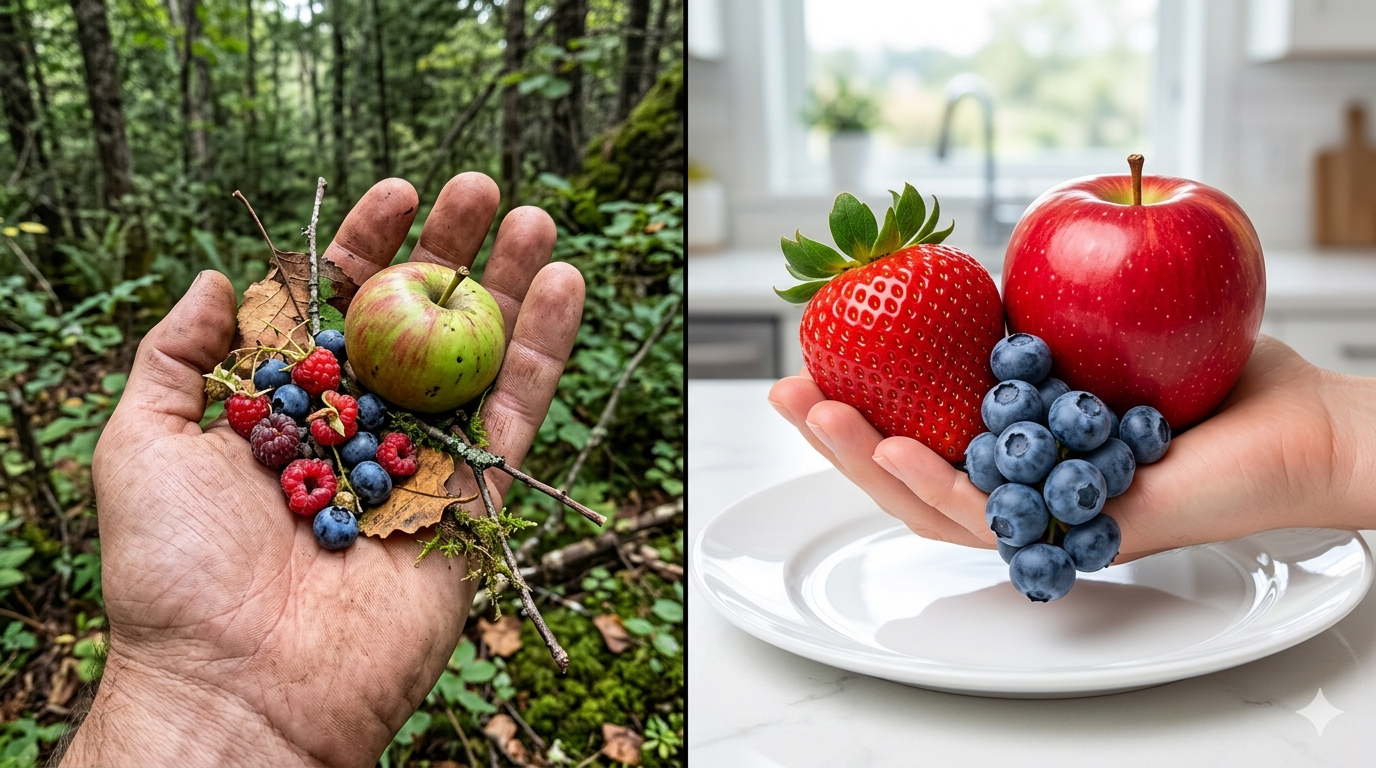
Are the fruits we eat today the same as the fruits humans encountered in the wild?
The answer is no.
Modern fruits are often very different from their wild ancestors. Over many generations, humans selected, cultivated, and bred fruits to be larger, sweeter, juicier, softer, easier to peel, less bitter, less fibrous, more colorful, and easier to transport. This process gave us many delicious fruits, but it also changed the way fruit fits into the human diet.
This does not mean modern fruit is bad. Whole fruit can still be a valuable part of a balanced diet. But understanding how fruit has changed helps us eat it with more awareness.
Modern fruit should not be feared, but it should not be misunderstood either.
Wild Fruits Were Often Smaller and Less Sweet
When many people imagine ancient humans eating fruit, they picture something similar to today’s supermarket fruit: large apples, sweet bananas, seedless grapes, juicy oranges, soft peaches, and ripe mangoes.
But wild fruits were often quite different.
Many wild fruits were smaller, more fibrous, more tart, more bitter, and less consistently sweet. They often contained more seeds, thicker skins, tougher textures, and less edible flesh. Some were only mildly sweet. Some were sour or astringent. Some were edible only during a short season. Some required knowledge to identify safely.
Wild fruits were not designed for human convenience. They evolved as part of plant reproduction.
Plants produce fruits to attract animals. Animals eat the fruit and help spread the seeds. Sweetness, color, aroma, and softness are part of that relationship. But in the wild, fruits also need to protect themselves. Seeds, skins, bitterness, tannins, sourness, and fibrous textures can all be part of a plant’s survival strategy.
Modern fruits have been shaped by human preference. We selected the fruits that tasted better, looked better, stored better, and produced more food.
The result is fruit that is easier to love, but often much less like its wild form.
Humans Selected Fruits for Sweetness
Humans naturally enjoy sweetness. This makes sense from an evolutionary perspective. In environments where food was limited, sweet taste often signaled energy-rich food. Ripe fruit could provide useful calories, water, and nutrients.
When humans began cultivating fruit plants, they naturally favored sweeter varieties. If one tree produced larger, sweeter fruit, people were more likely to protect it, plant its seeds, graft it, trade it, or cultivate it. Over time, the fruits people preferred became more common.
This process happened with many fruits.
Apples became sweeter and less bitter. Bananas became softer and more edible. Grapes became larger and sweeter. Citrus fruits became juicier. Peaches, plums, mangoes, melons, and many other fruits were selected for desirable traits.
This is not unnatural in a negative sense. Agriculture is part of human history. Humans have been shaping foods for thousands of years.
But it is important to recognize the change.
Modern fruits are often more pleasurable because we made them that way.
Seedless and Soft Fruits Are Human Achievements
Many modern fruits are easier to eat because they have fewer seeds or softer textures.
Seedless grapes, seedless watermelons, cultivated bananas, and many modern citrus varieties are examples of how humans selected fruit for convenience. A wild fruit may have many hard seeds, less flesh, and a tougher eating experience. A modern fruit may be mostly sweet edible pulp.
This convenience is one reason fruit consumption is easy today.
A person can eat a banana in seconds, drink orange juice quickly, snack on grapes without seeds, or blend multiple fruits into a smoothie. The friction is low.
In wild environments, fruit often required more effort. You had to find it, recognize it, harvest it, chew it, deal with seeds, and accept seasonal limits.
Modern fruit removes many of those limits.
Again, this is not necessarily bad. But it changes how much fruit people can eat without noticing.
Modern Fruits Are Available All Year
Seasonality is one of the biggest differences between wild fruit and modern fruit.
In the past, fruit was often seasonal. A fruit might appear for a few weeks or months, then disappear. People ate what was available in their environment. Some fruits could be dried, fermented, or preserved, but fresh fruit was not always available all year.
Today, many fruits are available almost constantly.
Bananas, apples, oranges, grapes, berries, mangoes, melons, and tropical fruits may appear in supermarkets year-round because of global agriculture, refrigeration, storage, shipping, and controlled growing conditions.
This constant access changes fruit from a seasonal food into an everyday food.
That can be helpful. Fruit can replace processed sweets and add variety to the diet. But it also means we can eat sweet fruits much more often than many humans did in the past.
A traditional diet might include fruit when nature provided it. A modern diet can include sweet fruit every day, plus juice, smoothies, dried fruit, fruit snacks, sweetened yogurt, dessert, soda, cereal, and other sweet foods.
The issue is not fruit alone. It is the modern abundance of sweetness.
Fruit Was Once Found, Not Purchased
Another difference is effort.
Wild fruit had to be found. People had to walk, climb, gather, compete with animals, identify edible plants, and harvest at the right time. Fruit eating was connected to movement, environment, and season.
Modern fruit can be bought without physical effort. It is washed, displayed, transported, packaged, sometimes peeled, sliced, dried, juiced, blended, canned, or frozen.
This changes the relationship between fruit and the body.
In the past, sweetness often came with activity. Today, sweetness can come while sitting at a desk, driving, watching television, or scrolling on a phone.
Food and lifestyle cannot be separated.
A physically active person eating seasonal fruit is in a different context than a sedentary person drinking fruit juice and eating sweet snacks throughout the day.
This is one reason ancestral nutrition always asks about lifestyle, not just ingredients.
Wild Fruits Had More Natural Barriers
Wild foods often come with natural barriers that slow intake.
Seeds, skins, tough fibers, sourness, bitterness, thorns, seasonality, distance, and effort all limit how much a person eats. These barriers are not always convenient, but they influence appetite and portion size.
Modern fruits often have fewer barriers.
They are sweeter, softer, larger, and easier to eat. Many are bred for a pleasant texture and less bitterness. Some are seedless. Some are sold pre-cut. Some are turned into juice or smoothies, which removes even more barriers.
This matters because the body responds differently to foods that require chewing and foods that are consumed quickly.
Whole fruit still has more structure than juice or candy, but modern fruit is often much easier to overconsume than wild fruit.
A bunch of seedless grapes can disappear quickly. A large smoothie can contain several servings of fruit. A glass of juice can contain the sweetness of multiple fruits without the same chewing effort.
Natural barriers are part of food wisdom. When they disappear, awareness becomes more important.
Modern Fruit Is Still Better Than Many Modern Sweets
It is important to keep this topic balanced.
The fact that modern fruits are sweeter than wild fruits does not mean they are equivalent to candy, soda, or pastries.
Whole fruits still provide water, fiber, vitamins, minerals, and plant compounds. They are usually more filling than processed sweets. They can help people reduce intake of less helpful desserts or sweet snacks. They are part of many healthy eating patterns.
An apple is not the same as a candy bar.
A bowl of berries is not the same as soda.
An orange is not the same as a pastry.
A banana is not the same as a sweetened breakfast cereal.
The food matrix matters. Whole fruit contains structure. It requires chewing. It brings nutrients along with sweetness.
The goal is not to make people afraid of fruit. The goal is to understand that fruit is best eaten as whole food, in reasonable portions, within a balanced diet.
Fruit Juice Is the Modern Form to Watch
If modern fruit is already sweeter and more available than wild fruit, fruit juice takes the change even further.
Juice removes much of the physical structure of fruit. It allows a person to consume the sugar from several fruits quickly, without the same chewing and fullness. Even 100% fruit juice can deliver a concentrated sweet drink.
This is very different from wild fruit eating.
A person would rarely find, peel, chew, and eat the equivalent of several oranges in a few seconds. But that is easy with juice.
Fruit juice may have a place in small amounts for some people, but it should not be treated as equal to whole fruit. For everyday nutrition, whole fruit is usually a better choice.
A simple principle is useful:
Eat your fruit more often than you drink it.
Smoothies Can Also Concentrate Fruit
Smoothies are often marketed as healthy, and they can be. But they can also concentrate fruit in a way that does not resemble traditional eating.
A smoothie may contain banana, mango, berries, juice, honey, sweetened yogurt, dried fruit, and other sweet ingredients. Because everything is blended, it is easy to drink more fruit than you would normally chew.
A better smoothie is balanced.
It may include one or two servings of fruit, plus protein, healthy fat, fiber, and no added sugar. Plain yogurt, kefir, unsweetened milk, nuts, seeds, or greens can make smoothies more meal-like.
Smoothies are not bad. But they should be built intentionally.
If a smoothie is basically dessert in a cup, it should be treated as dessert, not as unlimited health food.
Dried Fruit Is Traditional but Concentrated
Dried fruit is one of the oldest ways to preserve fruit. Traditional cultures dried grapes, figs, dates, apples, apricots, berries, mangoes, and other fruits to make seasonal abundance last longer.
Dried fruit can be useful, especially as part of traditional meals or travel foods. But it is concentrated.
When water is removed, sweetness becomes denser. It becomes easier to eat the sugar of many fruits in a small handful. Dried fruit may also stick to teeth and can be easy to overeat.
Traditional use of dried fruit was often practical: storage, travel, winter food, flavoring for dishes, or small amounts with nuts and grains. Modern use can become mindless snacking.
Dried fruit is not bad, but portion matters.
A few dates or dried figs can fit a meal. A large bag of sweetened dried fruit eaten like candy is a different pattern.
Bigger Fruit Means Bigger Portions
Modern fruit is often larger than its older or wild forms.
Large apples, huge bananas, oversized mangoes, seedless grapes, and large oranges can make portions bigger without people noticing. A “piece of fruit” is not always the same size.
This matters when someone eats several servings per day, drinks juice, blends smoothies, and snacks on dried fruit.
Portion awareness does not mean weighing every apple. It simply means recognizing that fruit size varies.
A small apple and a giant apple are not identical. Half a large mango may be a more reasonable portion than the whole fruit for some people. A small bowl of grapes may be better than eating directly from the bag.
Modern abundance requires modern awareness.
Fruit Sweetness Can Train the Palate
The human palate adapts.
If someone regularly eats very sweet foods, mildly sweet or savory foods may start to taste boring. This can happen with soda, candy, desserts, and ultra-processed foods, but it can also happen when someone constantly eats very sweet fruit products, juices, or smoothies.
Whole fruit is far better than refined sweets, but it is still part of the sweetness spectrum.
A balanced palate can enjoy fruit without needing every food to be sweet.
One practical approach is to eat fruit with meals or as dessert, rather than grazing on sweet foods all day. Another is to choose a variety of fruits, including tart, fiber-rich, or less sweet options such as berries, citrus, kiwi, apples, pears, or seasonal fruits that are not overly sweet.
Taste can be retrained.
When the overall diet becomes less sweet, simple fruit often tastes more enjoyable.
What This Means for Blood Sugar
Different fruits affect blood sugar differently, and people respond differently.
Whole fruits usually affect the body differently than juice because they contain fiber, water, and structure. However, very large portions of sweet fruit, dried fruit, juice, or smoothies may raise blood sugar more quickly for some people.
People with diabetes, insulin resistance, reactive hypoglycemia, or other metabolic concerns may need individualized guidance. They may still be able to enjoy fruit, but type, portion, timing, and pairing matter.
For example, some people may do better with berries, apples, pears, or citrus than with large servings of juice, dried fruit, grapes, or very ripe tropical fruit. Eating fruit with protein or fat, such as yogurt or nuts, may improve satiety for some people.
The goal is not to create fear. The goal is to make fruit fit the person.
If blood sugar is a concern, work with a qualified healthcare professional.
Fruit and the “Natural” Label
Modern marketing often uses the word “natural” to make fruit-based products sound healthy.
Fruit snacks, fruit strips, fruit juices, fruit drinks, smoothie bowls, fruit-flavored yogurts, breakfast bars, and sweetened dried fruit may all use fruit imagery. But many of these products are very different from whole fruit.
A product can contain fruit and still be high in sugar.
A product can be fruit-flavored without much real fruit.
A product can use fruit concentrate as a sweetener.
A smoothie bowl can contain more sugar than a dessert.
A dried fruit snack can be coated with extra sugar or oil.
The word “fruit” does not automatically make a product wholesome.
A useful question is: does this food still behave like whole fruit, or has fruit been turned into a sweet ingredient?
Whole fruit is usually the better default.
Wild Fruits Were Part of Ecosystems
Wild fruit was not just food. It was part of an ecosystem.
Birds, insects, mammals, soil, weather, seasons, and plant reproduction all shaped fruit availability. Humans were one participant in that system, not the sole designer.
Modern fruit agriculture is different. Orchards, plantations, irrigation, fertilizers, storage systems, pesticides, shipping, breeding programs, and global markets all shape what fruits are available.
This can be beneficial. Modern agriculture gives more people access to fruit. It can improve food security and variety. But it also changes our relationship with fruit. We may forget that fruit was once seasonal, ecological, and limited.
Thinking ecologically can encourage better choices:
Eat seasonal fruits when possible.
Value variety rather than eating the same fruit year-round.
Avoid wasting fruit.
Support farming methods that fit your values when available.
Understand that every fruit has a production story.
Fruit is not just a snack. It is part of a food system.
How to Eat Modern Fruit Wisely
Modern fruits can fit beautifully into a balanced diet. The key is to use them well.
Here are practical guidelines.
Choose whole fruit first
Whole fruit keeps the natural structure of the food. It requires chewing and is usually more satisfying than juice.
Treat juice as an occasional drink
Juice can deliver a lot of sugar quickly. Small amounts may fit some diets, but it should not replace whole fruit.
Be mindful with dried fruit
Use dried fruit in small portions, especially with nuts, yogurt, oats, or traditional dishes.
Build balanced smoothies
Use fruit, but also include protein, fiber, and healthy fats. Avoid adding juice, syrup, or sweetened yogurt unless you intentionally want a dessert-like drink.
Choose variety
Different fruits provide different fibers, colors, plant compounds, and flavors.
Let fruit replace processed sweets
Fruit is most helpful when it replaces candy, pastries, soda, or ultra-processed desserts most of the time.
Pair fruit if needed
Fruit with yogurt, nuts, cheese, seeds, or a meal may feel more satisfying than fruit alone for some people.
Watch your personal response
Energy, digestion, cravings, and blood sugar response can vary.
Better Fruit Choices for Everyday Eating
No fruit is universally best, but some fruits are easier to include regularly for many people.
Berries are colorful, flavorful, and often lower in sugar per serving. Citrus fruits provide acidity and vitamin C. Apples and pears are portable and fiber-rich. Kiwi offers tartness and vitamin C. Melons are hydrating. Stone fruits such as peaches, plums, and apricots can be enjoyed seasonally. Bananas, mangoes, grapes, and dates can be useful but are sweeter and easier to overeat for some people.
The best approach is not to rank fruits as good or bad. It is to match fruit to context.
Are you eating it as dessert?
As a snack?
After activity?
With breakfast?
In a smoothie?
As part of a child’s lunch?
For someone with blood sugar concerns?
For someone trying to replace candy?
The right fruit depends on the situation.
A Simple Fruit Framework
Use this framework when deciding how to include fruit in your diet.
1. Form
Whole, sliced, cooked, dried, juiced, blended, canned, or processed?
Whole is usually the best everyday form.
2. Sweetness
Is it mildly sweet, very sweet, dried, or concentrated?
The sweeter and more concentrated it is, the more portion matters.
3. Frequency
Is this occasional, daily, or constant grazing?
Even healthy foods can become unbalanced if eaten mindlessly all day.
4. Replacement
Is fruit replacing a less helpful sweet food, or adding more sweetness on top of many sweet foods?
Replacement is often more useful than addition.
5. Personal response
Does it support your digestion, energy, and appetite?
Your body’s response matters.
Common Myths About Modern and Wild Fruits
Myth 1: Modern fruit is bad because it is sweeter than wild fruit
Modern fruit is not automatically bad. It is simply different. Whole modern fruit can still be part of a healthy diet.
Myth 2: Fruit is always healthy in unlimited amounts
Fruit is nutritious, but form and portion matter. Juice, dried fruit, and large smoothies can concentrate sugar.
Myth 3: Wild fruit was basically the same as supermarket fruit
Many wild fruits were smaller, more fibrous, more sour, more bitter, seedier, and less consistently sweet.
Myth 4: Fruit juice is a natural health drink
Juice can be natural, but it is still a concentrated sweet drink compared with whole fruit.
Myth 5: Sweet fruit should replace vegetables
Fruit and vegetables are both valuable, but they are not the same. Vegetables provide different nutrients, fibers, textures, and savory meal roles.
What Modern Fruit Teaches Us About Food Evolution
Modern fruit is a clear example of how humans shape food.
We did not simply find today’s apples, bananas, grapes, oranges, peaches, and melons exactly as they appear in supermarkets. We helped create them through selection, cultivation, trade, storage, and agricultural skill.
This is not something to feel guilty about. It is part of human food history.
But it teaches an important lesson: foods change.
When foods change, our eating habits should adapt.
A fruit that was once small, seasonal, and hard to obtain may become large, sweet, seedless, and available every day. That changes its role in the diet.
Modern fruit can be enjoyed, but it should be eaten with awareness, especially in a world already full of sweetened foods.
Conclusion
Modern fruits are not the same as wild fruits.
They are often larger, sweeter, softer, juicier, less bitter, less fibrous, less seedy, and more available than the fruits humans encountered in wild environments. This change happened because humans selected fruits we enjoyed and made them easier to grow, transport, sell, and eat.
This does not make modern fruit unhealthy. Whole fruit remains one of the better ways to enjoy natural sweetness. It can provide water, fiber, vitamins, minerals, and valuable plant compounds. It can help replace more processed sweets and support a balanced diet.
But modern fruit should be understood in context.
Whole fruit is different from juice.
Dried fruit is concentrated.
Smoothies can be balanced or excessive.
Fruit products are not always the same as fruit.
Very sweet fruits are easier to overeat than wild fruits would have been.
Personal tolerance and metabolic health matter.
The best approach is not fear and not blind enthusiasm. It is respect.
Enjoy fruit mostly in whole form. Choose variety. Be mindful with juice and dried fruit. Let fruit replace ultra-processed sweets rather than adding more sweetness to an already sweet diet. Pay attention to seasonality, portion size, and how your body responds.
Modern fruit is a gift of agriculture and human preference. Used wisely, it can remain a beautiful part of modern wellness.
Disclaimer: This article is for educational purposes only and is not medical advice. If you have diabetes, kidney disease, digestive disorders, fructose intolerance, food allergies, dental concerns, pregnancy-related questions, or specific dietary needs, consult a qualified healthcare professional before making major dietary changes.