
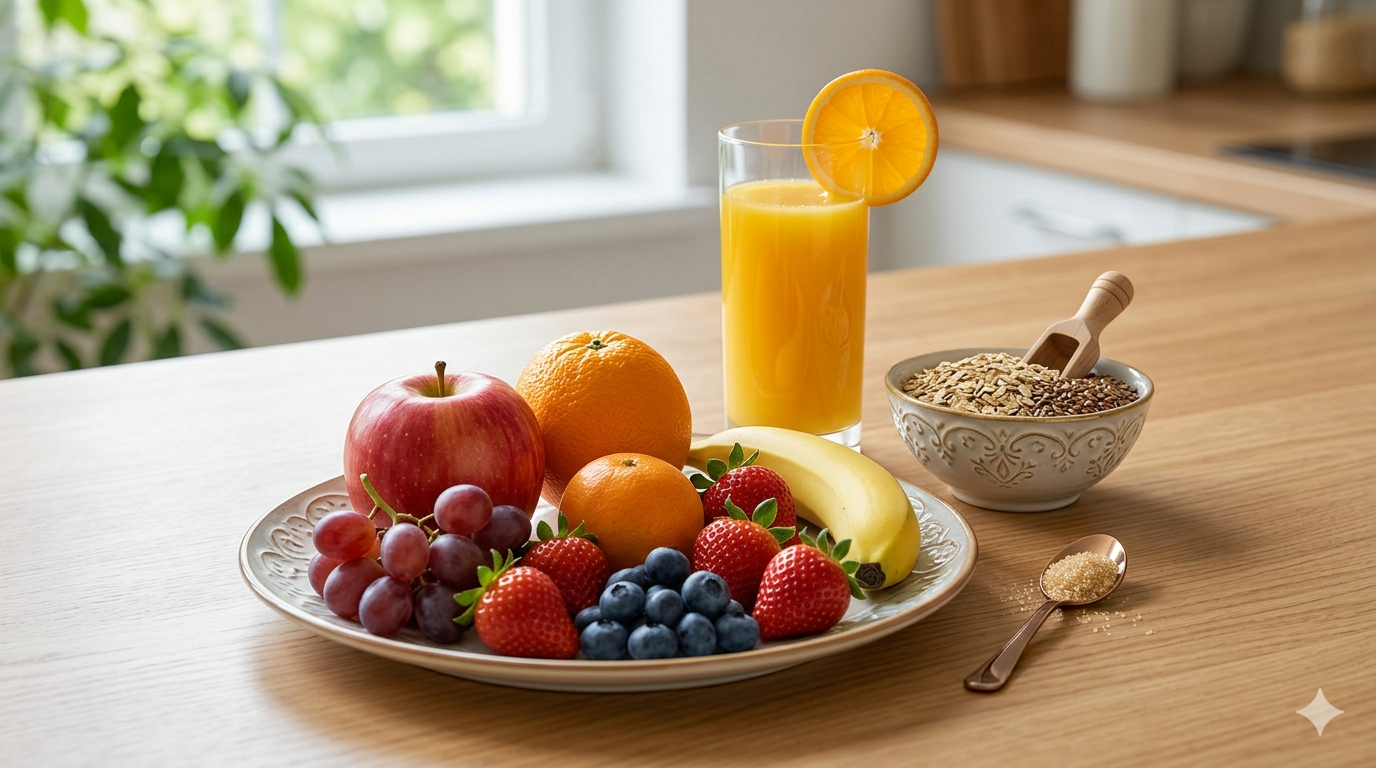
Fruit is often seen as one of the healthiest foods a person can eat.
It is colorful, naturally sweet, refreshing, rich in water, and often full of fiber, vitamins, minerals, and plant compounds. Parents encourage children to eat fruit. Doctors and dietitians often recommend fruit as part of a balanced diet. Many traditional cultures have valued seasonal fruits for generations.
But a useful nutrition question is rarely as simple as “Is this food healthy?”
A better question is: healthy in what form, for whom, in what amount, and in what overall diet?
Fruit can absolutely be part of a nourishing way of eating. Whole fruits can provide important nutrients and help replace less helpful sweet foods. But fruit is also nature’s sweetness. Modern fruits are often larger, sweeter, and more available than the wild fruits humans encountered in the past. Fruit juice, dried fruit, smoothies, and fruit-based snacks can affect the body differently from whole fruit.
This does not mean fruit should be feared. It means fruit should be understood.
A balanced view of fruit helps us appreciate its benefits without turning it into unlimited sugar or a miracle food. Like many traditional foods, fruit makes the most sense when we consider context.
Fruit Is One of Nature’s Original Sweet Foods
Long before candy, soda, pastries, sweetened cereal, and flavored drinks, fruit was one of the main sources of sweetness in the human diet.
For early humans, sweetness was useful information. A sweet taste often signaled that a fruit was ripe and contained energy. Color, smell, softness, and sweetness helped humans and other animals identify fruit that was ready to eat.
Plants also benefited from this relationship. Many fruits developed bright colors, appealing aromas, and sweet flesh because animals would eat them and spread their seeds. In this way, fruit became part of a long ecological exchange between plants and animals.
This is one reason humans are naturally drawn to fruit. Sweetness is not a modern invention. It is part of our sensory relationship with food.
However, there is an important difference between natural sweetness in whole fruit and the concentrated sweetness found in many modern foods. Whole fruit usually comes with water, fiber, structure, chewing effort, and natural limits. Modern sweet foods often remove those limits.
That difference matters.
Why Whole Fruit Can Be Valuable
Whole fruit can offer several benefits as part of a balanced diet.
Fruit provides water, which supports hydration and adds volume to meals or snacks. Many fruits contain fiber, which helps slow eating and supports digestive regularity for many people. Fruits also provide vitamins and minerals such as vitamin C, potassium, folate, and various antioxidants depending on the fruit.
Fruits also contain plant compounds such as polyphenols, flavonoids, carotenoids, and other phytochemicals. These compounds help give fruits their color, aroma, bitterness, tartness, and protective qualities. They are one reason colorful plant foods are often valued in traditional diets.
Fruit can also be useful because it satisfies the desire for sweetness in a less processed form. Choosing an apple, orange, berries, melon, pear, or peach instead of candy or a sweetened dessert can be a meaningful improvement for many people.
Fruit is also culturally important. It appears in traditional meals, seasonal rituals, family memories, and local food systems. In many regions, fruit marks the rhythm of the year: mango season, berry season, citrus season, apple harvest, fig season, melon season, or grape harvest.
So yes, whole fruit can be healthy.
But that does not mean every fruit product is equally beneficial.
Whole Fruit Is Not the Same as Fruit Juice
One of the biggest mistakes people make is treating fruit juice as the same as whole fruit.
It is not.
Whole fruit has structure. You chew it. It contains fiber, water, and intact plant tissue. It takes time to eat. It creates natural limits. Most people can eat one or two oranges, but drinking the juice of several oranges takes only a few seconds.
Fruit juice removes much of the chewing and often reduces the fiber structure that helps slow consumption. Even when juice is “100% fruit juice,” it can deliver a large amount of natural sugar quickly.
This does not mean a small glass of juice is dangerous for everyone. But it does mean juice should not be treated as a free replacement for whole fruit.
For everyday eating, whole fruit is usually the better choice.
A helpful rule is this: if you want fruit, eat fruit more often than you drink fruit.
Dried Fruit Is Concentrated Fruit
Dried fruit can be traditional, portable, and useful. Many cultures dried fruits to preserve seasonal abundance before refrigeration. Raisins, dates, figs, apricots, prunes, apples, mango, and other dried fruits have long histories in traditional diets.
But dried fruit is concentrated.
When water is removed, sweetness becomes denser. A handful of dried fruit may represent several pieces of fresh fruit. This makes dried fruit easy to overeat, especially when it is sweetened, coated, or mixed into snack products.
Dried fruit can still have a place in a balanced diet. It can be useful in small amounts with nuts, yogurt, oatmeal, traditional dishes, or travel foods. But it should be treated differently from fresh fruit.
A bowl of grapes and a handful of raisins are not the same eating experience.
Fresh fruit fills the stomach more because of its water content. Dried fruit delivers sweetness in a smaller package.
Smoothies Can Be Helpful or Overdone
Smoothies sit somewhere between whole fruit and juice.
Unlike juice, smoothies often keep the whole fruit blended, including fiber. This can be helpful. A smoothie with berries, yogurt, nuts, seeds, greens, or protein can be a convenient meal or snack.
But smoothies can also become sugar-heavy very quickly.
A large smoothie may contain several bananas, mango, fruit juice, honey, flavored yogurt, sweetened milk, and dried fruit. Because it is blended, it may be easier to consume more fruit than you would normally chew.
This does not make smoothies bad. It means composition matters.
A more balanced smoothie might include:
One or two servings of fruit
A protein source such as plain yogurt, kefir, milk, soy milk, or protein-rich food
A fiber or fat source such as chia seeds, flaxseed, nuts, or nut butter
Optional greens
No need for added sugar or fruit juice
Smoothies are best when they function as a balanced food, not a dessert disguised as a health drink.
Modern Fruits Are Often Sweeter Than Wild Fruits
Many fruits today are the result of long-term human selection.
Over generations, humans have favored fruits that are bigger, sweeter, juicier, less bitter, less fibrous, easier to peel, easier to transport, and more visually appealing. This is not automatically bad. It is part of agriculture and food history.
But it does mean modern fruit is not always the same as wild fruit.
Wild fruits were often smaller, more seasonal, more fibrous, more tart, and less consistently sweet. They were not available in unlimited quantities every day of the year. People had to find them, harvest them, share them, preserve them, or wait for their season.
Today, many people can buy sweet fruit year-round. Grapes, bananas, mangoes, apples, oranges, berries, melons, and tropical fruits may be available almost anytime. This is convenient and can be valuable, but it changes the context.
Fruit moved from seasonal opportunity to daily availability.
That shift matters especially when fruit is added on top of an already sweet modern diet.
Fruit in a Traditional Diet vs Fruit in a Modern Diet
Fruit behaves differently depending on the overall diet.
In a traditional diet with mostly whole foods, physical activity, seasonal eating, limited added sugar, and few processed snacks, fruit may be a natural and helpful source of sweetness.
In a modern diet already high in sweetened drinks, candy, pastries, breakfast cereals, flavored yogurts, desserts, and packaged snacks, fruit may become one more sweet item in an already sweet pattern.
This is why context is important.
If someone replaces soda, candy, and processed desserts with whole fruit, that may be a positive change. If someone adds large smoothies, juice, dried fruit, and sweet fruit snacks on top of an already sugar-heavy diet, the result may be less helpful.
Fruit is not the problem in isolation. The total sweetness load matters.
A useful question is: does fruit replace less helpful sweet foods, or does it add more sweetness to an already sweet diet?
Natural Sugar Is Still Sugar, But the Food Matrix Matters
Fruit contains natural sugars such as fructose, glucose, and sucrose. Some people hear this and become afraid of fruit. Others hear “natural” and assume it does not matter.
Both views are incomplete.
Yes, fruit contains sugar. But whole fruit is not the same as refined sugar or sweetened drinks because it comes in a food matrix. That matrix includes water, fiber, plant structure, vitamins, minerals, and phytonutrients. It also requires chewing and digestion.
The food matrix changes the eating experience.
An apple is not just sugar. It is a structured food. Orange juice, candy, and soda deliver sweetness differently. Dried fruit delivers sweetness differently again.
This is why it is too simple to say “fruit is sugar.” It is also too simple to say “natural sugar does not count.”
The truth is more balanced: fruit contains natural sugar, but whole fruit usually packages that sugar in a way that is different from refined sweet foods.
Does Fruit Affect Blood Sugar?
Fruit can affect blood sugar, but the effect depends on the fruit, portion size, ripeness, preparation, and the person.
Whole fruits with more fiber, water, and structure may have a gentler effect than fruit juice or dried fruit. Eating fruit with protein or fat, such as yogurt or nuts, may also change the overall meal response for some people.
However, people with diabetes, insulin resistance, reactive hypoglycemia, or specific metabolic concerns may need more personalized guidance. Some may tolerate berries or apples better than large servings of tropical fruit, juice, or dried fruit. Others may do well with a variety of fruits in appropriate portions.
The key is not fear. The key is observation and context.
If someone has blood sugar concerns, they should work with a qualified healthcare professional for individualized advice. Fruit can often still be included, but the type, amount, and timing may matter.
Fruit and Fructose: What to Understand
Fructose is a natural sugar found in fruit. It is also present in many sweeteners and processed foods.
Some health discussions warn about fructose because high intakes from sweetened drinks and refined sweeteners may contribute to metabolic stress in certain contexts. But it is important not to confuse whole fruit with large amounts of refined or liquid sugar.
Eating whole fruit in reasonable portions is different from drinking large quantities of soda, sweetened beverages, or fruit juice.
The concern is usually not an orange or a bowl of berries. The bigger concern is frequent intake of concentrated sugars in drinks, desserts, syrups, and ultra-processed foods.
That said, portions still matter. A person eating large amounts of very sweet fruit, dried fruit, juice, and smoothies every day may be consuming more sugar than they realize.
Fruit should be enjoyed, but not treated as unlimited.
Are Some Fruits Better Than Others?
No fruit is universally perfect, and no fruit is universally bad. But different fruits have different qualities.
Berries are often lower in sugar per serving and rich in color compounds. Citrus fruits provide vitamin C and refreshing acidity. Apples and pears provide fiber and are easy to carry. Bananas are convenient and energy-rich. Mangoes and grapes are sweeter and may be easy to overeat. Melons are high in water and refreshing. Avocados and olives are fruits but are much higher in fat and much lower in sweetness than typical fruits.
The best fruit choice depends on the person and the purpose.
If you want a light snack, berries, citrus, apples, or melon may work well. If you need quick energy after activity, banana or mango may fit. If you are adding fruit to yogurt, berries or chopped fruit may be useful. If you have blood sugar concerns, you may need to be more mindful with juice, dried fruit, grapes, and large portions of very sweet fruits.
Variety is helpful. Eating different fruits across seasons gives a wider range of flavors, fibers, colors, and plant compounds.
Fruit Should Not Replace All Vegetables
Some people use fruit as a substitute for vegetables because fruit tastes sweeter and is easier to enjoy.
Fruit is valuable, but it does not replace vegetables completely.
Vegetables often provide different fibers, minerals, bitter compounds, sulfur compounds, leafy greens, textures, and savory meal roles. Many vegetables are less sweet and can be eaten in larger amounts as part of meals. Leafy greens, cruciferous vegetables, herbs, roots, mushrooms, onions, peppers, and other plant foods bring diversity that fruit alone cannot provide.
A balanced plant intake usually includes both fruits and vegetables.
If someone dislikes vegetables, fruit can be a helpful starting point, but it should not be the entire plant category. Traditional diets often used herbs, spices, cooking methods, soups, sauces, fermentation, and fats to make vegetables enjoyable.
The goal is not fruit versus vegetables. The goal is plant diversity.
Seasonal Fruit Teaches Natural Moderation
Traditional fruit eating was often seasonal.
People ate fruits when they were ripe and available. Some fruits were dried, fermented, cooked, or preserved for later, but fresh fruit was often linked to specific times of year.
Seasonality created natural moderation. You might enjoy a fruit intensely during its season, then move on to other foods.
Modern food systems remove much of that limitation. This can be convenient, but it can also disconnect people from natural variety.
Eating seasonally when possible can help restore balance. Seasonal fruits often taste better, may be more affordable, and encourage dietary variety throughout the year.
You do not need to be strict. But noticing seasons can make fruit feel more special and less like a constant background snack.
Fruit as Dessert: A Traditional Idea Worth Reviving
In many traditional eating patterns, fruit served as a simple dessert.
Instead of ending every meal with pastries, candy, ice cream, or sweet drinks, fruit could provide a refreshing finish. A sliced orange, a bowl of berries, baked apples, figs, melon, or seasonal fruit can satisfy the desire for sweetness without relying on highly processed desserts.
This is one of the easiest ways to use fruit well.
If fruit replaces ultra-processed dessert most of the time, it can improve diet quality while still allowing sweetness.
The key phrase is “most of the time.” Enjoying traditional sweets or desserts occasionally is part of food culture. But fruit can be the everyday sweet food, while richer desserts remain special.
This helps restore the older idea that sweetness belongs in a meaningful place, not everywhere all day.
How Much Fruit Is Reasonable?
There is no single perfect amount of fruit for everyone.
A physically active person with good metabolic health may tolerate more fruit than someone with blood sugar concerns. A child, athlete, older adult, pregnant person, or person with specific medical needs may require different guidance. Cultural diet patterns also vary.
For many people, one to three servings of whole fruit per day can fit well into a balanced diet. Some people may eat more, especially if they are active and replacing processed sweets. Others may need less or choose lower-sugar options based on personal health needs.
A serving might look like:
One medium apple, orange, pear, or banana
One cup of berries or melon
Two small fruits such as plums or kiwis
Half a large mango
A small handful of dried fruit, used carefully
These are general examples, not strict rules.
The most important principle is to prioritize whole fruit, keep portions realistic, and avoid letting juice, smoothies, and dried fruit become oversized sugar sources.
Best Times to Eat Fruit
There is no universal rule that fruit must be eaten at a specific time.
Some people enjoy fruit with breakfast. Others prefer it as a snack, dessert, or part of a meal. Some people digest fruit better alone, while others do better pairing it with yogurt, nuts, cheese, or meals.
A few practical approaches include:
Fruit with protein: apple with yogurt, berries with kefir, pear with cheese, banana with peanut butter.
Fruit as dessert: orange slices, berries, baked apples, melon, or seasonal fruit after a meal.
Fruit around activity: banana, dates, or fruit smoothie after exercise if it fits your needs.
Fruit in meals: citrus in salads, berries in oats, apples in slaws, mango in salsa, pomegranate on vegetables.
The best time is the time that supports your energy, digestion, and overall eating pattern.
When to Be More Careful with Fruit
Most healthy people can include fruit comfortably. But certain situations may require more attention.
People with diabetes or blood sugar issues may need to choose portions and fruit types carefully. People with irritable bowel syndrome may react to certain fruits that are higher in fermentable carbohydrates. People with fructose malabsorption may need guidance on which fruits are better tolerated. People with kidney disease may need to monitor potassium-rich foods. People with dental concerns may need to be careful with frequent acidic or sweet foods. People trying to reduce cravings may need to avoid large amounts of dried fruit or juice.
This does not mean fruit is bad. It means individual context matters.
If fruit seems to cause digestive discomfort, blood sugar swings, cravings, or other issues, it may help to adjust type, amount, timing, or form. For persistent concerns, consult a qualified healthcare professional.
Fruit Products to Watch Carefully
Fruit appears in many modern products that look healthy but may not behave like whole fruit.
Examples include:
Fruit juice
Fruit drinks
Sweetened smoothies
Fruit snacks
Fruit leather
Fruit-flavored yogurt
Sweetened dried fruit
Fruit syrups
Fruit jams with high sugar
Fruit-based breakfast bars
Fruit-flavored cereals
Acai bowls with heavy sweet toppings
Smoothie bowls with large portions and syrups
These foods may contain fruit, but they can also contain added sugar, concentrated fruit puree, refined starch, low fiber, and large serving sizes.
A package with fruit on the label is not the same as fruit in its whole form.
When choosing fruit products, read the ingredients and ask: is this mostly whole fruit, or is it a sweet product using fruit as a health image?
Practical Ways to Eat Fruit Better
Fruit does not need complicated rules. A few simple habits can make it more useful.
Choose whole fruit more often than juice.
Eat fruit slowly and chew it.
Pair fruit with protein or fat if it helps you feel satisfied.
Use fruit to replace processed sweets most of the time.
Keep dried fruit portions small.
Build smoothies with balance, not just fruit and juice.
Try seasonal fruits for variety.
Do not let fruit replace vegetables completely.
Notice which fruits your body tolerates best.
Choose less processed fruit products.
Use fruit as part of meals, not constant grazing all day.
These habits allow fruit to remain enjoyable while keeping it in context.
A Simple Fruit Decision Framework
When deciding how to include fruit, ask five questions.
1. Is it whole, juiced, dried, blended, or processed?
Whole fruit usually offers the best natural structure. Juice and dried fruit are more concentrated.
2. How sweet and how large is the portion?
A small serving of berries is different from a large mango smoothie with juice and honey.
3. What is it replacing?
Fruit replacing candy or soda is usually helpful. Fruit added on top of many other sweets may be less useful.
4. How does my body respond?
Energy, digestion, cravings, and blood sugar response can vary by person.
5. Is my overall diet balanced?
Fruit works best in a diet that also includes protein, vegetables, healthy fats, fiber, and minimally processed foods.
This framework is more useful than simply asking, “Is fruit healthy?”
Common Myths About Fruit
Myth 1: Fruit is always healthy in any amount
Whole fruit can be healthy, but amount and form matter. Juice, dried fruit, and oversized smoothies can deliver a lot of sugar quickly.
Myth 2: Fruit is just sugar
Fruit contains natural sugar, but whole fruit also contains water, fiber, vitamins, minerals, and plant compounds. It is not the same as candy or soda.
Myth 3: You should avoid fruit if you want to eat well
Most people do not need to avoid whole fruit. Fruit can be part of a balanced diet, especially when it replaces ultra-processed sweets.
Myth 4: Fruit juice is equal to whole fruit
Juice lacks much of the structure and chewing experience of whole fruit. It is easier to consume quickly and in large amounts.
Myth 5: All fruits affect the body the same way
Different fruits vary in sugar, fiber, water, acidity, plant compounds, and personal tolerance.
Conclusion
So, are fruits always healthy?
The most balanced answer is: whole fruits can be a healthy part of many diets, but fruit is not unlimited magic. Form, portion, personal tolerance, and overall diet matter.
Fruit is one of nature’s original sweet foods. It provides water, fiber, vitamins, minerals, color, flavor, and plant compounds. It can help replace less helpful sweets and reconnect us with seasonal eating.
But fruit juice is not the same as whole fruit. Dried fruit is concentrated. Smoothies can be balanced or excessive. Modern fruits are often sweeter and more available than the wild fruits of the past. And people with certain health conditions may need a more personalized approach.
The goal is not to fear fruit. The goal is to respect it.
Eat fruit mostly in its whole form. Enjoy seasonal variety. Use fruit as a better everyday sweet choice. Be mindful with juice, dried fruit, and oversized smoothies. Pay attention to how your body responds.
Fruit belongs in a thoughtful diet, not as a rule, not as a cure, and not as an unlimited snack.
When eaten with awareness, fruit can be one of the most enjoyable bridges between natural sweetness and modern wellness.
Disclaimer: This article is for educational purposes only and is not medical advice. If you have diabetes, kidney disease, digestive disorders, fructose intolerance, food allergies, dental concerns, pregnancy-related questions, or specific dietary needs, consult a qualified healthcare professional before making major dietary changes.