
Modern nutrition advice often feels confusing. One expert says to eat more protein. Another says to cut back on animal foods. Some diets praise grains, while others blame them for many modern health problems. One person feels better with dairy, while another feels bloated after a small glass of milk. Some people thrive on higher-carbohydrate diets, while others struggle with blood sugar and cravings when they eat too many refined carbs.
This confusion leads to an important question: instead of asking only “What is the best diet?”, should we also ask, “What kinds of foods did humans adapt to eating over time?”
That is where ancestral nutrition comes in.
Ancestral nutrition is not about copying one exact ancient diet. It is not about pretending we all lived the same way in the past. Human diets have always been diverse. People living near the ocean ate differently from people living in forests, mountains, deserts, grasslands, or cold northern climates. Food traditions were shaped by climate, geography, culture, season, survival, and available technology.
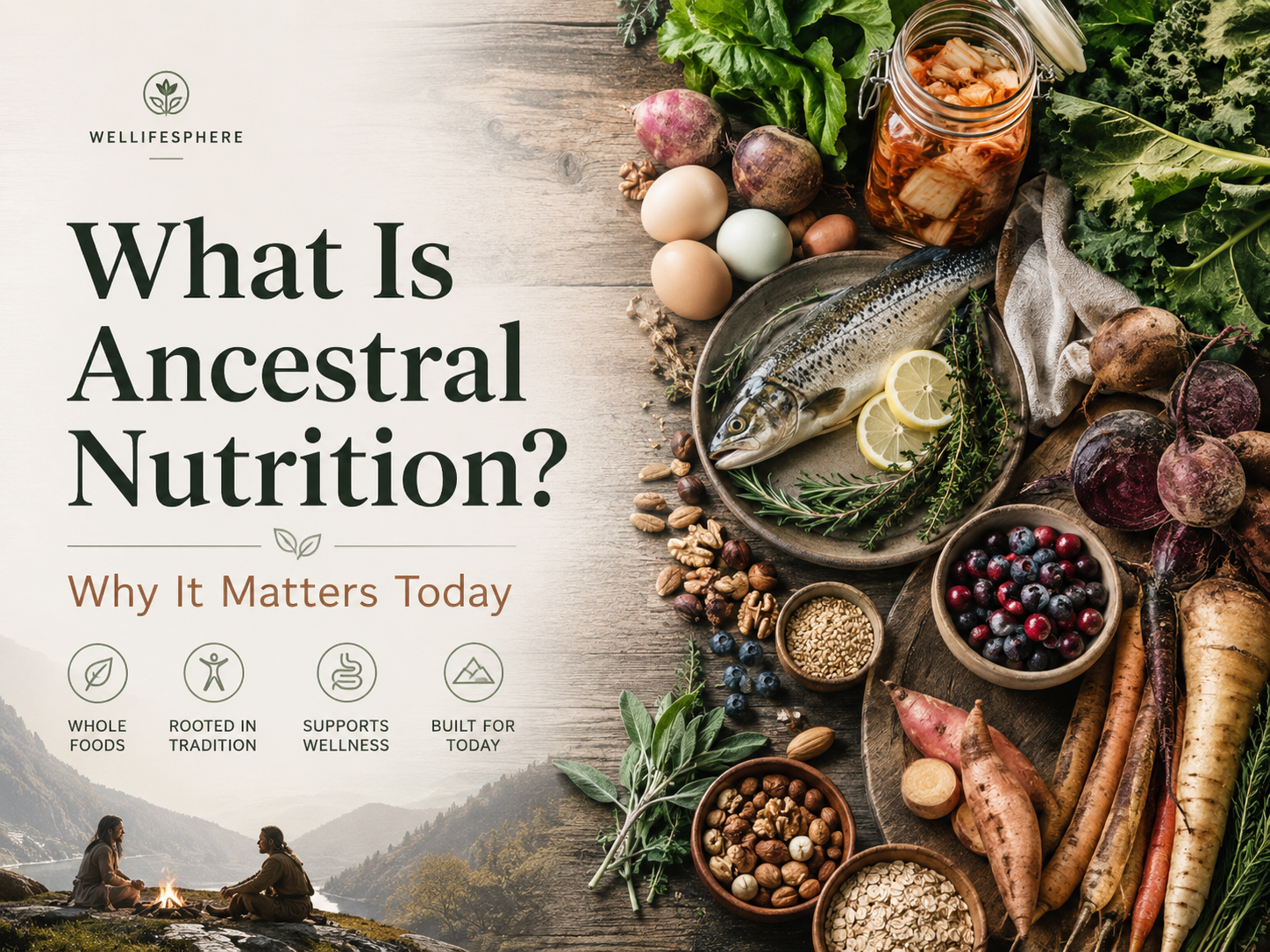
At its core, ancestral nutrition is a way of looking at food through the lens of human history. It asks how our bodies, cultures, and food preparation methods developed together over thousands and even millions of years. It also asks why many modern foods may create problems when they are separated from the traditional contexts in which humans learned to eat.
What Is Ancestral Nutrition?
Ancestral nutrition is an approach to eating that studies the relationship between human biology, traditional diets, and long-term food adaptation.
It focuses on questions such as:
What did different human populations traditionally eat?
How were foods prepared before modern processing?
Which foods became common only recently?
How did cooking, fermentation, soaking, drying, smoking, and grinding make foods safer or more nutritious?
Why do some people tolerate certain foods better than others?
How has modern food changed faster than the human body can adapt?
This approach does not claim that everything old is good or everything modern is bad. Instead, it encourages a more thoughtful way of eating. It reminds us that food is not just calories, protein, fat, and carbohydrates. Food is also culture, environment, preparation, adaptation, and lifestyle.
For example, wheat is not just “good” or “bad.” Some traditional communities ate wheat in forms that were fermented, stone-ground, or slowly prepared. Modern wheat products, however, are often highly refined, rapidly digested, and eaten in large amounts with added sugar and industrial fats. The same food category can behave very differently depending on how it is processed and consumed.
The same idea applies to dairy, meat, fish, fruit, beans, grains, alcohol, and fermented foods. Context matters.
Ancestral Nutrition Is Not One Single Diet
A common misunderstanding is that ancestral nutrition means everyone should eat like prehistoric hunter-gatherers. That is too simple.
There was never one universal ancestral diet.
Coastal groups often relied heavily on fish, shellfish, seaweed, and marine animals. Arctic populations adapted to diets rich in animal fat and protein. Tropical communities often ate fruits, tubers, insects, fish, and plant foods. Agricultural societies developed grain-based diets, fermented foods, dairy traditions, legumes, and regional cooking methods.
Human beings survived because they were flexible eaters. We learned to use fire, tools, cooking, fermentation, preservation, and cooperation to turn many difficult foods into reliable sources of nourishment.
This is one reason ancestral nutrition should not become a rigid ideology. It is better understood as a framework, not a fixed menu.
The goal is not to recreate the past perfectly. The goal is to learn from the past so we can make better choices in the present.
Why Traditional Food Preparation Matters
One of the most important lessons from ancestral nutrition is that traditional food preparation methods were not random. Many of them helped make food safer, easier to digest, or more nutrient-dense.
Before modern factories, people had to solve practical food problems. Grains could be hard to digest. Beans could cause digestive discomfort. Some plants contained natural defense chemicals. Milk spoiled quickly. Meat and fish needed preservation. Fruits were seasonal. Water was not always safe.
Traditional cultures developed methods such as:
Soaking grains and legumes
Fermenting vegetables, dairy, grains, and sauces
Drying fish, meat, fruit, and herbs
Smoking and salting foods
Cooking tubers and roots
Sprouting seeds
Grinding grains with stones
Using spices and herbs for flavor and preservation
These practices often improved digestibility, extended shelf life, reduced certain unwanted compounds, and created new flavors. Fermentation, for example, can transform raw ingredients into foods with deeper flavor, beneficial microbes, and different nutritional qualities.
Modern food processing is different. It often focuses on speed, shelf stability, low cost, and high palatability. It may remove fiber, minerals, natural fats, and protective food structures while adding refined sugar, refined oils, artificial flavors, and excess salt.
This does not mean all modern processing is harmful. Freezing vegetables, pasteurizing unsafe milk, and improving food hygiene can be helpful. But ancestral nutrition reminds us to ask whether a food has been processed to nourish us or processed mainly to make us eat more of it.
Why Modern Diets Can Be So Different
For most of human history, food required effort. People had to hunt, gather, fish, farm, cook, grind, ferment, preserve, or trade. Today, food is available almost everywhere, all the time, with very little physical effort.
This is a major shift.
Modern diets often include large amounts of refined flour, added sugar, sweetened drinks, seed oils, processed meats, packaged snacks, and ultra-palatable convenience foods. These foods are easy to overeat because they combine fat, sugar, salt, softness, flavor, and speed in ways rarely found in traditional diets.
At the same time, many people move less, sleep worse, spend less time outdoors, experience chronic stress, and eat more often throughout the day.
Ancestral nutrition matters because it helps explain why the modern food environment can overwhelm the body. The problem is not always one single ingredient. It is the total mismatch between modern abundance and the conditions in which human metabolism developed.
Our bodies evolved in environments where food availability changed, physical movement was normal, meals took work, and highly concentrated sweetness was rare. Today, the opposite is often true.
Why There Is No Perfect Diet for Everyone
One of the most useful ideas in ancestral nutrition is that people are not identical. A food that works well for one person may not work well for another.
Dairy is a clear example. Some populations developed the ability to digest lactose into adulthood, while many others did not. This means milk can be a useful food for some people and a source of digestive discomfort for others.
The same can apply to alcohol tolerance, starch tolerance, gluten sensitivity, spicy foods, fermented foods, seafood, and high-fat diets. Genetics, childhood diet, gut microbiome, health status, culture, and lifestyle all influence how someone responds to food.
This does not mean nutrition is completely personal and has no rules. Many broad principles still make sense: eat mostly whole foods, avoid excessive ultra-processed foods, get enough protein and fiber, pay attention to metabolic health, and choose foods that fit your body.
But ancestral nutrition teaches humility. It reminds us not to force one diet onto everyone.
The Role of Animal Foods
Animal foods have played an important role in many human diets. Meat, fish, eggs, shellfish, and dairy can provide protein, fat, vitamin B12, iron, zinc, iodine, calcium, omega-3 fats, and other nutrients.
However, ancestral nutrition does not simply say “eat more meat.” It asks what kind of animal foods were eaten, how they were obtained, how active people were, and what the rest of the diet looked like.
There is a major difference between occasional wild meat eaten within a physically active lifestyle and large amounts of processed meat eaten with refined bread, fried foods, sugary drinks, and little movement.
Fish also shows the importance of context. Fish can provide valuable omega-3 fats and protein, but it can also raise questions about mercury, pollution, freshness, and sustainability. Traditional seafood diets often included local knowledge about seasons, preparation, preservation, and balance.
The ancestral view is not extreme. It is contextual.
The Role of Plant Foods
Plant foods are also complex. Fruits, vegetables, tubers, grains, legumes, nuts, seeds, herbs, and spices have nourished humans in many different environments.
But plants are not passive. Many contain natural defense compounds that may affect digestion or nutrient absorption. Traditional food preparation often helped manage these compounds through cooking, soaking, fermenting, peeling, grinding, or sprouting.
This is why ancestral nutrition avoids simplistic slogans like “all plants are healthy” or “all grains are bad.” Some plant foods are highly nutritious. Some require careful preparation. Some people tolerate certain plant foods better than others.
Fruit is another useful example. Wild fruits were often smaller, more fibrous, and less sweet than many modern varieties. Whole fruit can be part of a healthy diet, but fruit juice and large amounts of concentrated sweetness can affect the body differently.
Again, context matters.
What Ancestral Nutrition Can Teach Us Today
Ancestral nutrition does not require us to abandon modern life. Instead, it can guide us toward more grounded habits.
A modern ancestral-inspired diet may include:
Whole or minimally processed foods
Seasonal fruits and vegetables
Properly prepared grains and legumes if tolerated
Quality animal foods if desired
Fermented foods
Traditional fats and cooking methods
Less added sugar
Fewer ultra-processed snacks
More home-cooked meals
More attention to digestion and personal tolerance
It also encourages lifestyle habits that support nutrition: movement, sunlight, sleep, social eating, time outdoors, and a healthier relationship with food.
This broader view is important because diet is not separate from life. Traditional food cultures were connected to work, family, land, climate, rituals, and community. Modern eating often happens alone, quickly, distractedly, and under stress.
Ancestral nutrition invites us to slow down and reconnect food with the body, the kitchen, and the rhythms of daily life.
Common Myths About Ancestral Nutrition
Myth 1: It means eating only meat
Some ancestral diets included a lot of animal food, but many also included tubers, fruits, grains, legumes, nuts, seeds, vegetables, and fermented foods. Human diets were diverse.
Myth 2: It means avoiding all modern foods
Not all modern food technology is harmful. Food safety, refrigeration, freezing, and better hygiene can be beneficial. The main concern is the rise of ultra-processed foods designed for overconsumption.
Myth 3: It is the same as the Paleo diet
Paleo is one version of ancestral thinking, but ancestral nutrition is broader. It includes traditional agricultural diets, fermented foods, dairy cultures, grain preparation, and regional food wisdom.
Myth 4: Traditional foods are always healthy
Not always. Some traditional practices were shaped by survival, scarcity, or necessity. Ancestral nutrition should be combined with modern scientific understanding.
Myth 5: Everyone should eat the same way
Different people have different backgrounds, tolerances, and health needs. Ancestral nutrition supports personalization, not rigid rules.
How to Apply Ancestral Nutrition in Modern Life
You do not need to live on a farm or follow a strict diet to apply ancestral nutrition. Start with simple changes.
Cook more meals from basic ingredients. Choose foods that still look like food. Replace sweetened drinks with water, tea, or other unsweetened options. Try fermented foods if you tolerate them. Pay attention to how your body responds to dairy, wheat, beans, alcohol, and high-sugar foods. Eat protein with meals. Include fiber-rich foods. Reduce ultra-processed snacks. Move your body daily.
Most importantly, stop thinking of food only as a list of nutrients. Food is a relationship between your body, your culture, your environment, and your habits.
Conclusion
Ancestral nutrition matters today because modern people are living in a food environment that is very different from the one that shaped human biology. We have more food than ever, but not always better nourishment. We have more choices, but also more confusion.
By studying traditional diets, food history, and human adaptation, we can make wiser decisions without becoming extreme. We can appreciate animal foods without overusing processed meats. We can value plant foods while respecting traditional preparation. We can enjoy fruit without turning it into unlimited sugar. We can understand dairy, grains, fish, and fermented foods in the context of individual tolerance.
Ancestral nutrition is not about going backward. It is about using the past to see the present more clearly.
The best question is not simply, “What should humans eat?” A better question is: “What foods fit my body, my culture, my lifestyle, and the long story of human adaptation?”
That question may lead to a more balanced, realistic, and sustainable way of eating.
Disclaimer: This article is for educational purposes only and is not medical advice. If you have a medical condition, food allergy, digestive disorder, or specific dietary concern, consult a qualified healthcare professional before making major changes to your diet.